
Lieferung heute & morgen

Qualitätsgarantie

Willkommens-Angebote freischalten: KOSTENLOSE Lieferung | Bis zu 80 % RABATT | Kostenlose 30-Tage-JoyPlus-Testphase
App herunterladen
A fruit and vegetable peeler is a staple in many British kitchens. Even so, the difference between a practical kitchen tool and a disappointing purchase often only becomes clear after a few weeks: the blade no longer glides smoothly, the handle feels insecure in your hand or residue builds up in hard-to-reach areas.
Three marketing pitfalls in particular can lead to unnecessary spending:
A straight blade is usually suitable for potatoes, carrots, apples and cucumbers. A swivel peeler with a moving blade can adapt to rounded or uneven surfaces. This helps remove the skin more evenly.
Soft-skinned foods such as tomatoes, peaches, kiwis and mangoes require different features. A tomato peeler with a serrated or double-serrated blade can grip the surface without putting too much pressure on the fruit when used correctly. This design is not automatically suitable for hard root vegetables.
A special asparagus peeler is a sensible choice if you regularly prepare larger quantities of asparagus. A classic fruit peeler can do the job, but it does not always offer the right guidance or control.
With a stainless steel peeler, rust-resistant blades and a smooth surface are practical selection criteria. However, the term “stainless steel” alone does not explain every feature. You should also look for:
A ceramic peeler is lightweight and corrosion-resistant. However, its blade may be more sensitive to impacts or incorrect use. These tools are not designed for hard, frozen foods or bones. Wooden handles should generally be washed by hand and thoroughly dried afterwards.
A peeler should be easy to clean after use with warm water and mild washing-up liquid. For dishwasher use, always follow the specific product description. Even if a vegetable peeler is dishwasher-safe, washing it by hand may be gentler on the surface and cutting performance in everyday use.
For longer tasks, a non-slip handle and well-balanced weight are important. Left-handed users should check whether the blade can be used from both sides. With all models, do not touch the cutting edge with your fingers, store the peeler safely and keep it away from children.

Why this product suits this profile: A classic fruit peeler for households looking for a compact tool for everyday food preparation.
The product description focuses on its basic function as a fruit peeler rather than highlighting additional features without a specific purpose.
Compact design and use as a simple peeling knife for fruit and vegetables.
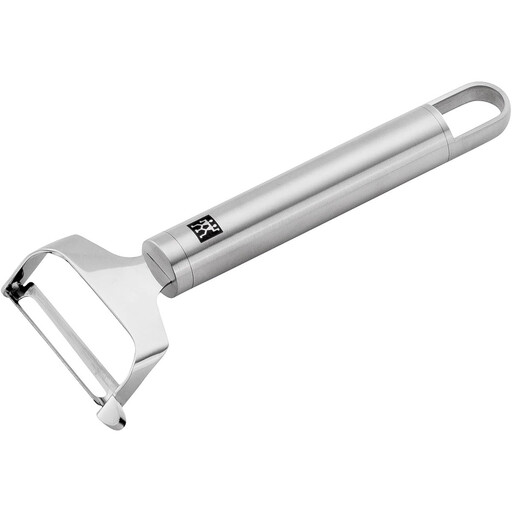
Why this product suits this profile: This model is aimed at users who want to combine a moving blade, stainless steel construction and suitability for both right- and left-handed users.
The swivel blade is explicitly described as moving, allowing it to follow the contours of fruit and vegetables. Dishwasher suitability is also specified.
18/10 stainless steel according to the product details, 17 cm length, 96 g weight and suitable for both right- and left-handed users.
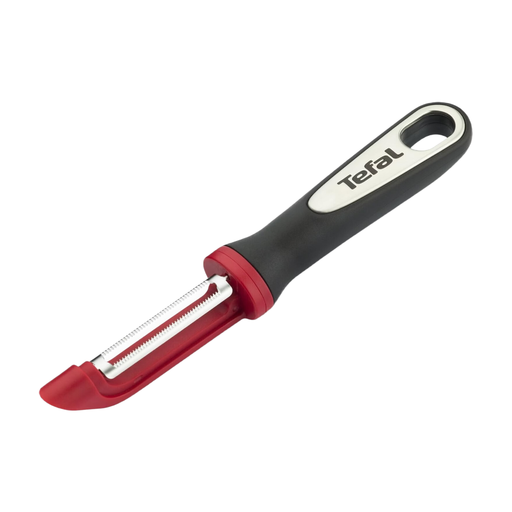
Why this product suits this profile: For households and keen bakers who regularly prepare tomatoes, peaches or other soft-skinned foods.
The double-serrated stainless steel blade is specifically designed for soft-skinned produce. This makes it clear what the peeler is intended for.
Ergonomic plastic handle, 28.8 cm length and dishwasher-safe according to the product details.
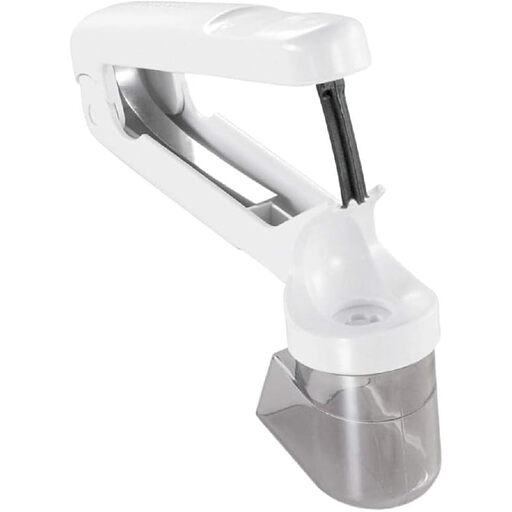
Why this product suits this profile: A useful addition for anyone who often prepares cherries for cakes, jam or desserts alongside peeling fruit and vegetables.
Its intended use is clearly described: removing the stones from and splitting fresh or preserved cherries. Cleaning under running water and in the dishwasher is specified.
Collection container, foldable handle and stated dishwasher suitability.
We have put together a complete, regularly updated list of products that fully meet these strict selection criteria and the safety regulations applicable in the EU.
Depending on your kitchen, a single fruit and vegetable peeler can be usefully complemented by other tools:
When choosing sets, consider whether you will genuinely use the additional functions. Two simple, suitable tools may be more practical in everyday use than a comprehensive set with attachments that are rarely needed.
For potatoes and carrots, a potato peeler with a straight stainless steel blade is usually a good choice. For uneven tubers, a swivel peeler may follow the surface more easily. A secure blade attachment and a handle that sits safely in your hand are important.
There is no general answer. Ceramic is corrosion-resistant and lightweight, but it can be damaged by impacts or incorrect use. Stainless steel is versatile and often easier to handle in everyday use. Material quality, care and the intended use are the decisive factors.
No. Dishwasher suitability depends on the model, handle material and manufacturer’s instructions. Hand washing is preferable for wooden handles and certain ceramic peelers. After every wash, the peeler should be completely dry before being stored safely.