
Lieferung heute & morgen

Qualitätsgarantie

Willkommens-Angebote freischalten: KOSTENLOSE Lieferung | Bis zu 80 % RABATT | Kostenlose 30-Tage-JoyPlus-Testphase
App herunterladen
The search for the right frying pan can be frustrating. The market is filled with promises of durability and perfect searing results. But reality often tells a different story: the expensive non-stick coating fails after just a few months, the steak cooks unevenly, or the new pan for induction heats up too slowly. As a Joybuy Product Recommendation Officer, I'll filter the facts from the marketing noise and show you what really matters to make an informed decision.
Before we dive into the important features, let's look at the typical pitfalls that often lead to disappointment and unnecessary expense.
To avoid a bad purchase, you should focus on three core aspects: the material, the base construction, and the right size for your needs.
The material determines the cooking properties, durability, and maintenance required.
A thick, warp-resistant base is the most important quality feature. It retains and distributes heat evenly across the entire cooking surface. So-called sandwich bases, where a layer of heat-conductive aluminum or copper is enclosed between two layers of stainless steel, are an excellent choice. For induction cooktops, a fully magnetic base is crucial for efficiency and even heat distribution.
The right size depends on your household size and your cooking habits.
Instead of presenting an overwhelming list, we have selected models that meet specific needs and avoid the pitfalls mentioned earlier.
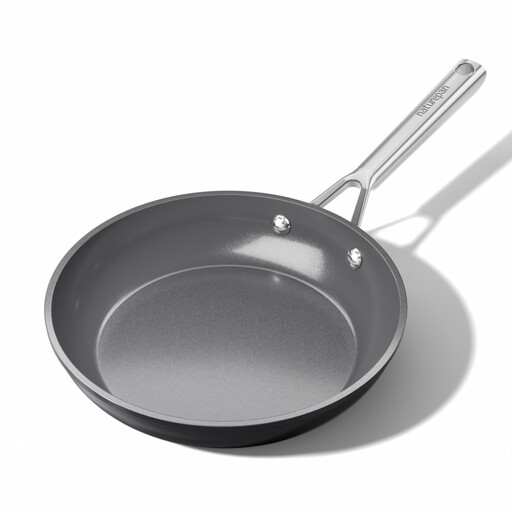
Why This Fits Their Persona: Ideal for users who cook daily and prioritize toxin-free food preparation. The ceramic coating allows for low-fat frying, and its easy cleanup simplifies daily use.
Reinforced with diamond and titanium particles, this ceramic pan is designed for durability and is more resilient than basic ceramic coatings. The optimized base ensures fast, even heat distribution and prevents hot spots.
Free of PTFE, PFOA, and PFAS. The pan is compatible with all cooktops, including induction, and is oven-safe up to 260°C (500°F), expanding its versatility.
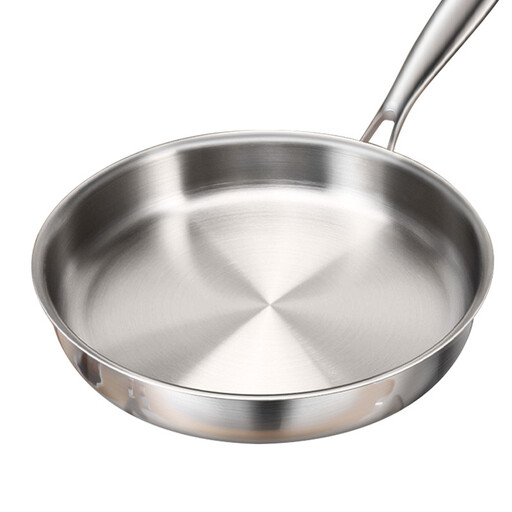
Why This Fits Their Persona: Perfect for cooks who demand precise control, high temperatures for searing, and maximum durability. This pan is a workhorse designed for intensive use and demanding recipes.
The triple-ply construction (stainless steel-aluminum core-stainless steel) prevents the base from warping and guarantees absolutely even heat distribution. As it is uncoated, there is no coating that can wear out.
Excellent heat conduction and retention for perfect searing results. The robust stainless steel pan is scratch-proof, corrosion-resistant, and suitable for all cooktops.
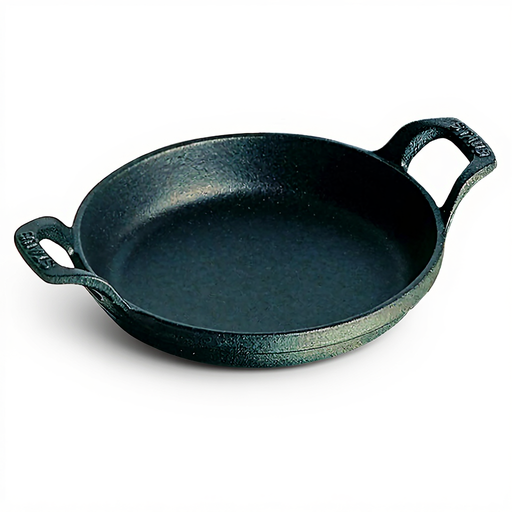
Why This Fits Their Persona: This small pan is ideal for preparing and serving single portions, side dishes, dips, or desserts. Its compact size and excellent heat retention make it a versatile tool for specialized tasks.
As a solid cast iron pan, it is immune to warping and hot spots. The enameled interior is durable and doesn't require the complex seasoning of raw cast iron, yet it still offers outstanding heat distribution.
Superior heat retention keeps food warm for a long time. The pan is extremely versatile (all cooktops, oven, grill) and its design also makes it an elegant serving pan.
For demanding tasks like searing at very high temperatures, we have curated a special selection that meets these requirements.
Avoid metal utensils; use wood, silicone, or plastic cookware instead. Allow the pan to cool after use before cleaning it with warm water and a soft sponge. Even if many pans are labeled as dishwasher-safe, hand washing is gentler on the coating and significantly extends its lifespan. Avoid heating the empty pan on the highest setting.
A good pan for induction has a thick, completely flat, and fully ferromagnetic base. A simple test: if a magnet holds firmly to the entire base, the basic requirement is met. High-quality models often feature a multi-layer sandwich base that combines the magnetic outer layer with a heat-conductive aluminum core to ensure fast and even heating.
Modern PTFE coatings are PFOA-free and are considered safe for health with proper use (at temperatures below 260°C / 500°F). A ceramic pan is inherently free of fluoropolymers (like PTFE), which makes it attractive to users who wish to avoid any plastics in their cookware. Both pan types are safe when used correctly. The choice is often a matter of personal preference.