
Lieferung heute & morgen

Qualitätsgarantie

Willkommens-Angebote freischalten: KOSTENLOSE Lieferung | Bis zu 80 % RABATT | Kostenlose 30-Tage-JoyPlus-Testphase
App herunterladen
The right frying pan needs to do more than simply look good. In UK households, the type of hob, portion size, cleaning effort and desired cooking temperature are key factors in everyday usability. If you focus only on non-stick claims or an eye-catching product description, you can quickly end up with a pan that does not suit the way you cook.
The description pan suitable for all hobs should be checked carefully. An induction pan needs a magnetically compatible base. Oven suitability is a separate consideration too: a pan may work on gas, electric, ceramic and induction hobs, but still be unsuitable for the oven because of its handle material.
The maximum temperature is also important. Depending on the model, specifications can range from 150 °C to 350 °C, for example. If you are looking for a pan for oven dishes, gratinating or finishing food in the oven, check this limit before buying.
A coated frying pan, or non-stick pan, makes it easier to fry with little fat and simplifies cleaning. However, the coating requires suitable kitchen utensils. Metal turners, knives and abrasive cleaners can damage the surface.
“Dishwasher-safe” also does not automatically mean that the coating will remain unchanged in the long term. Many models recommend gentle hand washing. Temperature, cleaning products and mechanical stress all affect the care required.
A heavy cast iron pan retains heat for a long time, but is considerably more demanding to lift and clean than an aluminium pan. A 26 cm pan provides more cooking space, but also requires more room on the hob and in the cupboard.
A 24 cm frying pan is often suitable for one or two portions. A 26 cm frying pan is more versatile for several ingredients or larger portions. The key factor is not just the external diameter, but also the usable cooking surface.
An enamelled cast iron pan does not require traditional seasoning. Nevertheless, hot pans should be allowed to cool down gradually and should not be doused with cold water, helping to protect both the material and the enamel.
The following details are relevant for a non-stick pan:
Wooden, plastic or silicone utensils are the safest choice for many coatings. A carbon steel pan without a traditional coating, on the other hand, can be used with metal utensils, provided the patina is not scraped off aggressively.
A round frying pan distributes heat in line with the shape of round hobs. A grill pan has raised ridges that create grill marks and collect liquid or fat in the grooves. However, the ridged surface is not practical for every dish: eggs, sauces and very small ingredients are generally easier to prepare on a smooth surface.
A serving pan with two handles or an additional helper handle can be taken straight from the hob to the table. Cast iron stays hot for a long time, so a heat-resistant trivet is essential.
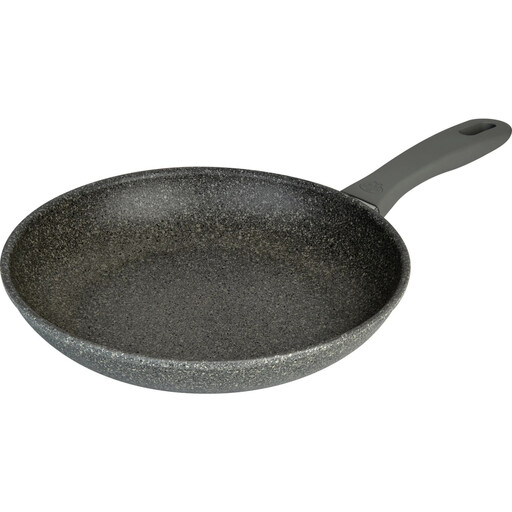
Why this product suits this profile: This 24 cm aluminium pan is designed for one or two people and features a 5-layer Granitium Extreme coating. It is suitable for gas, electric, ceramic and induction hobs.
The specific diameter and stated induction suitability help prevent unsuitable purchases for smaller households. The maximum oven temperature is 160 °C and should be taken into account.
Non-stick coating, Thermopoint temperature indicator, dishwasher suitability according to the product details, and a weight of approximately 1.04 kg.
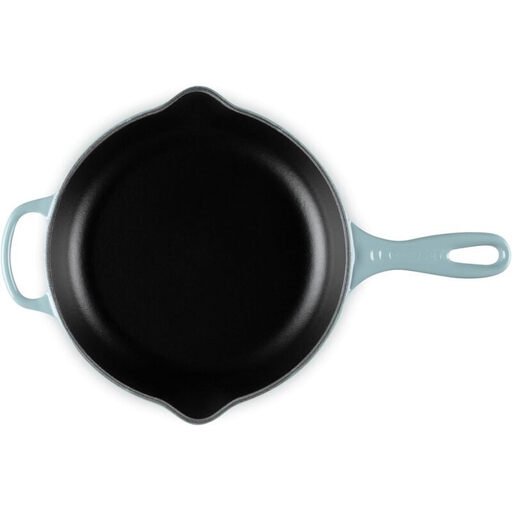
Why this product suits this profile: This enamelled cast iron pan is designed for frying and serving and, according to the product details, is suitable for all hob types including induction, as well as for use in the oven and under the grill.
The 350 °C temperature limit, helper handle and pouring spouts are clearly specified. The 1.93 kg weight should be considered when making your purchasing decision.
Enamelled interior and exterior surfaces, excellent heat retention and the option to use it as a serving pan. Hand washing is recommended despite the stated dishwasher suitability.
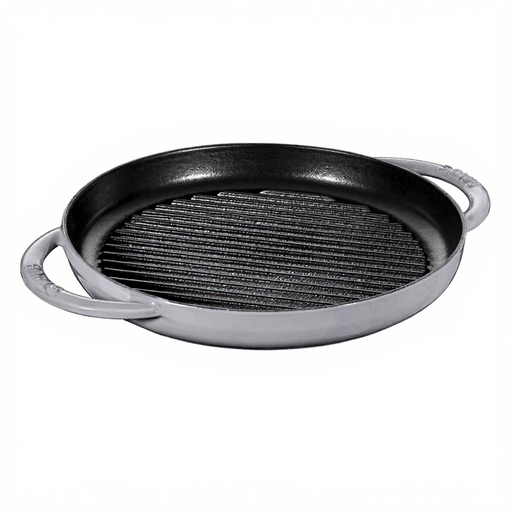
Why this product suits this profile: This enamelled cast iron grill pan features raised ridges, two handles and, according to the product details, is suitable for all hob types including induction, as well as for use in the oven and under the grill.
Its induction suitability and stated heat resistance up to 260 °C are clearly specified. At approximately 2.7 kg, it requires a secure grip.
Grill ridges for distinctive surfaces, an enamelled interior and two handles for moving the pan with oven gloves. Hand washing is recommended.
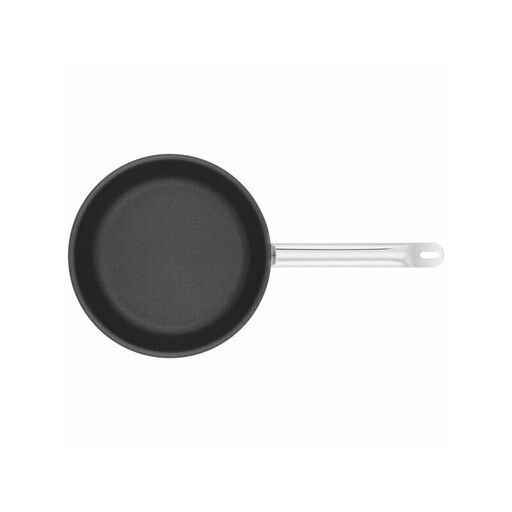
Why this product suits this profile: This stainless steel pan, with a three-layer SIGMA-Clad construction and Duraslide Ultra PTFE coating, is suitable for all hob types including induction.
The permitted oven temperature of 230 °C is clearly stated. Non-metal utensils and preferably hand washing are recommended for protecting the coating.
26 cm frying surface, aluminium core for heat transfer and stated dishwasher suitability. The product details also mention a handle that stays cool for longer.
We have put together a complete, regularly updated list of products that fully meet these strict selection criteria and the safety regulations applicable in the EU.
An induction pan needs a magnetic base. The product details should explicitly state “suitable for induction”. If a pan is described as suitable for all hob types, also check its oven suitability and temperature specification if you want to use it for a variety of purposes.
A 24 cm frying pan is often suitable for one or two portions and requires relatively little storage space. A 26 cm frying pan offers more room for several ingredients. For families or large portions, an even larger diameter may be useful, provided the hob heats the surface evenly.
There is no reliable one-size-fits-all answer. Its lifespan depends on the quality of the coating, temperature, utensils, cleaning and frequency of use. A cast iron or carbon steel pan can last for many years with the right care, but it requires more maintenance than a traditional non-stick pan.