
Lieferung heute & morgen

Qualitätsgarantie

Willkommens-Angebote freischalten: KOSTENLOSE Lieferung | Bis zu 80 % RABATT | Kostenlose 30-Tage-JoyPlus-Testphase
App herunterladen
A frying pan should perform reliably every day: on an induction hob, for searing, cooking vegetable dishes or simmering with the lid on. The choice ranges from coated aluminium frying pans to uncoated stainless steel, carbon steel and cast iron pans. Marketing terms alone, however, are of limited help when deciding which one to buy.
Three common misconceptions often lead to the wrong purchase:
A coated aluminium frying pan usually heats up quickly and is handy for eggs, pancakes, fish and other delicate foods. A ceramic frying pan can offer a smooth, easy-to-clean surface. For ceramic coatings, check the temperature limits given by the manufacturer and which kitchen utensils they recommend. Wooden, silicone or plastic turners reduce the risk of scratches.
An uncoated stainless steel frying pan is less prone to damage from kitchen utensils and can be used for a wide range of cooking when you control the temperature properly. Food may stick more at first. Preheating the pan, adding a little oil and cooking over a controlled medium heat can help.
A cast iron pan retains heat for a long time. However, it is heavier, should not be put into cold water and needs to be dried thoroughly after cleaning. An uncoated carbon steel pan also needs to be cared for with a thin layer of oil. These materials are generally not suitable for the dishwasher or prolonged soaking.
For induction, the pan must be explicitly listed as compatible. A multi-layer base made from stainless steel and aluminium can distribute heat more evenly and improve stability. For gas, electric, ceramic or halogen hobs, check the manufacturer’s instructions too.
Oven suitability is a separate consideration. It is not just the pan body that matters, but also the handle and, where applicable, the lid. For example, a model with a stainless steel handle may be suitable for the oven up to a specified temperature; Bakelite or wooden handles may have limitations. The handle will get hot in the oven, so use heat protection.
A 24 cm frying pan is often suitable for one or two portions, smaller households and compact hobs. A 28 cm pan offers more cooking space for family meals, vegetables or cuts of meat. A deep sauté pan or wok is a good choice if you want to make sauces, stews or braised dishes as well as fry food.
A frying pan with a lid helps retain liquid and heat in the food and reduces splashing. Before buying, check whether the lid is included and whether it can also go in the oven. The actual base area matters too: the stated diameter does not always correspond to the usable cooking surface.
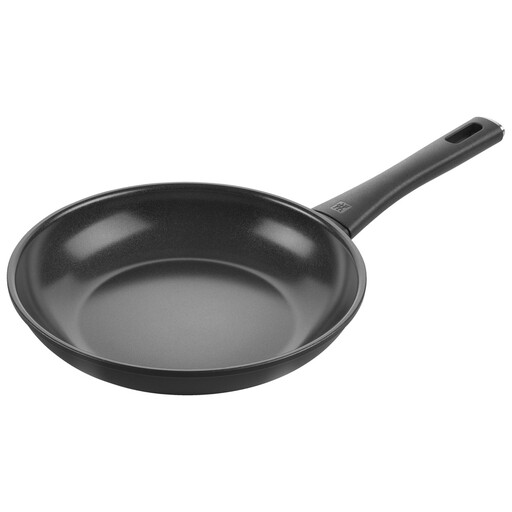
Why this product suits this profile: This compact 24 cm forged aluminium pan is designed for everyday portions. It is listed as suitable for gas, induction, ceramic and halogen hobs, and for oven use up to 250 °C.
The technical details specify the diameter, base size and maximum oven temperature. The CeraForce ceramic coating is described as PTFE- and PFOA-free; metal utensils and high heat when the pan is empty should be avoided.
24 cm diameter, 0,95 kg net weight and quick heat transfer thanks to the aluminium construction. Dishwasher cleaning is listed as suitable, although hand washing is recommended to protect the coating.
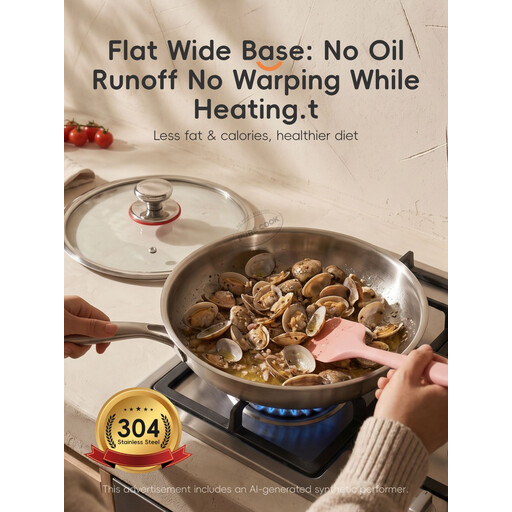
Why this product suits this profile: This 28 cm pan combines 304 stainless steel with an aluminium core and a glass lid. It is suitable for frying, sautéing and braising on a range of hob types.
The three-layer construction is clearly specified and does not rely on a non-stick coating. That means no coating to care for, although controlling the temperature is still important with stainless steel.
Listed as suitable for induction, gas, ceramic and halogen hobs, and for oven use up to 220 °F according to the product details. Lid included and dishwasher-safe.
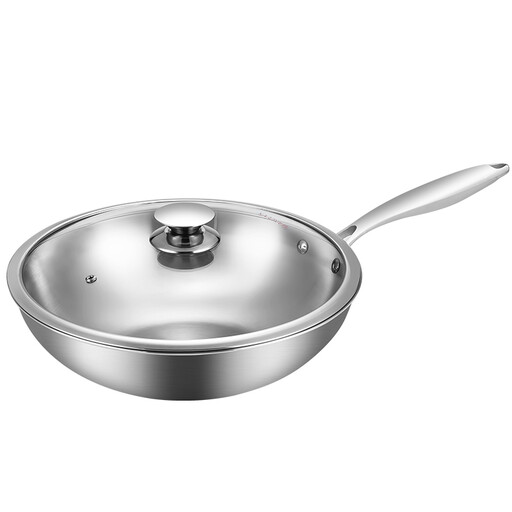
Why this product suits this profile: This uncoated wok is designed for stir-frying, searing and everyday cooking. Its three-layer base supports use on induction, gas, electric and ceramic hobs.
The product details explicitly state that it has no non-stick coating. So there is no coating that can be damaged by unsuitable utensils; however, you will need to preheat the pan and use the hot-pan, cold-oil method.
Uncoated 304 stainless steel, 28 cm diameter and a glass lid. Dishwasher-safe; hand washing with a soft sponge is recommended to care for the surface.
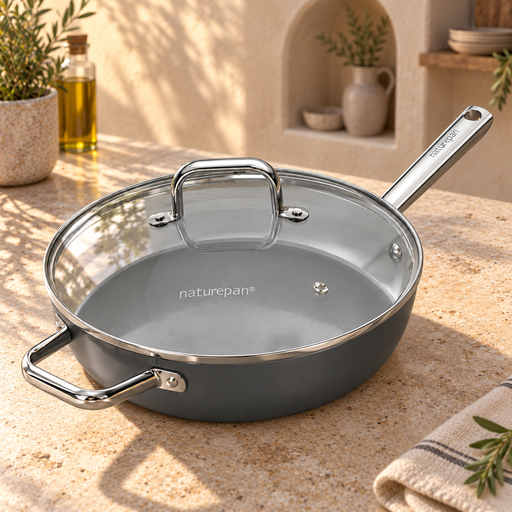
Why this product suits this profile: The high sides and included lid make this pan suitable for sauces, vegetable dishes, braised meals and larger portions.
The specifications state the 28 cm diameter, 7,5 cm body height, compatible hob types and maximum oven temperature of 260 °C. The ceramic coating calls for low to medium heat and suitable kitchen utensils.
High sides, glass lid, induction compatibility and dishwasher-safe cleaning. Hand washing is recommended to protect the surface.
We’ve put together a complete, regularly updated list of products that meet these strict selection criteria and fully comply with the safety regulations in force in the EU.
An induction frying pan needs a base that the manufacturer identifies as suitable for induction. Stainless steel models with a magnetic layer in the base and many coated aluminium pans with an integrated stainless steel base are designed for this. Check that the information on the packaging matches the product page.
A coated frying pan is easy to clean after many types of food. However, it needs suitable kitchen utensils and careful use at the right temperature. An uncoated stainless steel pan is less prone to scratching, but takes more practice when it comes to heat and oil. Cast iron and carbon steel need extra drying and care.
A 24 cm pan is handy for smaller portions and compact hobs. A 28 cm pan offers more usable space for family meals, several ingredients and wok cooking. The right size depends on the number of people you’re cooking for, the size of your hob, the pan’s weight and the storage space available.