
Lieferung heute & morgen

Qualitätsgarantie

Willkommens-Angebote freischalten: KOSTENLOSE Lieferung | Bis zu 80 % RABATT | Kostenlose 30-Tage-JoyPlus-Testphase
App herunterladen
A new frying pan should heat evenly, sit securely on the hob and be easy to clean after cooking. In practice, however, three common buying mistakes lead to unnecessary expense: a coating is mistaken for permanent durability, hob compatibility is checked only by a symbol, and size is judged by the outer diameter rather than the usable cooking surface.
This buying guide from the Joybuy Product Recommendation Officer will help you choose a frying pan, grill pan or deep pan based on clear, reliable criteria.
Even a non-stick frying pan described as scratch-resistant should not be used with metal utensils, knives or abrasive scouring pads. Excessive dry heating, sudden temperature changes and the dishwasher can all put additional strain on the coating. If you buy a coated pan, always follow the care instructions and the recommended temperature.
For induction hobs, a pan needs a magnetic base. A plain aluminium pan is not automatically suitable. A stainless steel or induction base can provide compatibility, but the manufacturer's specification should explicitly mention gas, ceramic, electric and induction. The Tefal C43604 Renew+ with ceramic coating, for example, is stated as suitable for gas, electric and glass-ceramic hobs, but not for induction.
A dishwasher-safe pan is convenient to clean, but frequent washing can put extra strain on coatings, handles or unprotected metal surfaces. With enamelled cast iron, hand washing is sometimes recommended even if the pan is labelled dishwasher-safe. What matters most is whether the cleaning method fits your own habits.
With an oven-safe pan, not only the pan body but also the handle, lid and coating must be suitable for the stated temperature. Always check the maximum oven temperature before buying.
A 20 cm frying pan is suitable for smaller portions, fried eggs or individual side dishes. A 24 cm to 26 cm frying pan is practical for many two-person households. A 28 cm frying pan offers more surface area for multiple portions. A 30 cm frying pan makes sense for larger households, but needs enough space on the hob and in the cupboard.
With a grill pan, the shape of the ridges matters as well as the diameter. Raised ridges create grill marks and allow liquid or fat to drain into the grooves. A deep pan with a lid, on the other hand, is ideal for braised dishes, sauces, vegetables and larger quantities.
Look for:
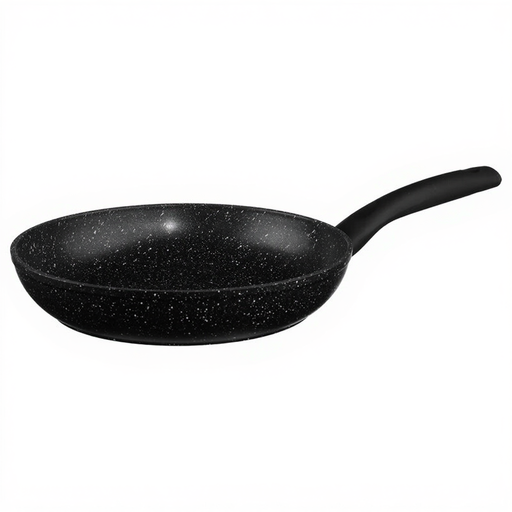
Why this product fits the profile: The 26 cm aluminium pan is designed for everyday portions and, according to the product information, features a reinforced stainless steel base suitable for all common hob types including induction.
The specifications clearly state the diameter, material, coating structure and hob compatibility. Hand washing is recommended to protect the surface.
26 cm diameter; three-layer non-stick coating according to the product description; ergonomic Bakelite handle.
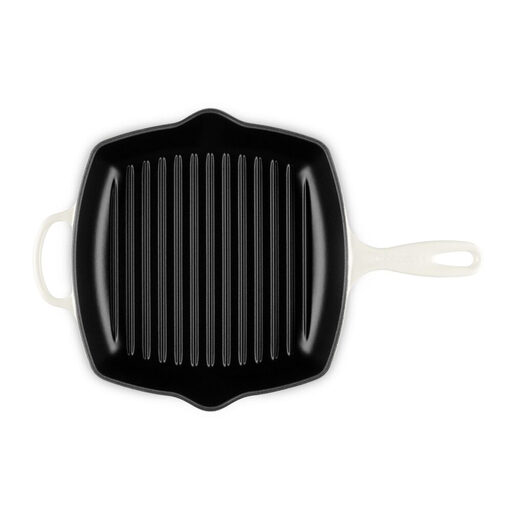
Why this product fits the profile: This enamelled cast iron pan is aimed at households that want grill marks, heat retention and the ability to use it on induction hobs and in the oven.
The product data specifies the material, hob types, oven suitability and the fact that dishwasher cleaning is not recommended. This reduces the risk of a wrong purchase due to unclear care instructions.
26 cm grilling surface; raised ribbed base; pouring spouts; suitable for gas, induction, ceramic, oven and grill.

Why this product fits the profile: The 28 cm deep pan with lid, steamer insert and spatula is designed for larger portions, sauces and combined cooking methods.
Instead of offering just a flat cooking surface, the set includes several clearly named components. Suitability for induction and other hob types is stated.
28 cm diameter; two layers of non-stick coating according to the product description; lid, steamer insert and spatula included.
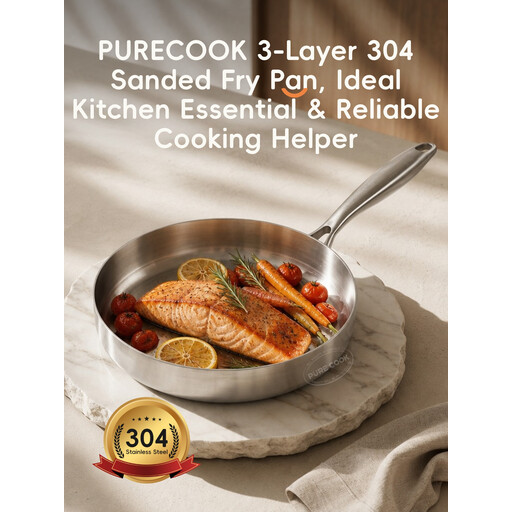
Why this product fits the profile: This uncoated stainless steel pan is ideal for buyers who want a pan for induction, gas, ceramic and the oven, and prefer to control the cooking process themselves.
According to the product description, the surface is coating-free. This eliminates the typical uncertainty about whether a non-stick layer has been damaged by the wrong utensils.
26 cm diameter; three-layer 304 stainless steel construction; suitable for induction, gas, ceramic and oven according to specifications; dishwasher-safe according to product data.
We have compiled a complete, regularly updated list of products that fully meet these strict selection criteria and the safety regulations in force in the EU.
For most dishes, a 24 to 26 cm frying pan is sufficient. If you want to fry several portions at once or prepare vegetables with a large volume, you can choose a 28 cm pan. What matters is the actual cooking surface, not just the rim diameter.
A pan for induction needs a magnetic base. Stainless steel or cast iron models are often suitable; with aluminium, an integrated induction base is required. The product description should explicitly state suitability. If in doubt, a magnet test on the base can give an initial indication, but does not replace the manufacturer's specification.
The lifespan depends on the type of coating, temperature, cleaning and the kitchen utensils used. Low to medium heat, wooden or silicone utensils, hand washing and avoiding dry overheating can help protect the surface. As soon as the coating visibly peels or the pan warps, it should no longer be used.