
Lieferung heute & morgen

Qualitätsgarantie

Willkommens-Angebote freischalten: KOSTENLOSE Lieferung | Bis zu 80 % RABATT | Kostenlose 30-Tage-JoyPlus-Testphase
App herunterladen
A frying pan needs to do more than simply sear meat in everyday use. It should work on your hob, distribute heat evenly, be easy to clean and, when needed, be suitable for use in the oven. However, many buying decisions come unstuck because product details are unclear or because features prove less useful in the kitchen than expected.
A non-stick frying pan can make cooking eggs, fish or vegetables easier. However, coatings are sensitive to overheating, metal utensils and abrasive sponges. What’s more, a ‘dishwasher-safe’ label doesn’t mean the coating will remain unchanged after frequent machine washing. For a longer lifespan, hand-washing is usually best.
A 28 or 30 cm frying pan gives you plenty of cooking surface, but it needs a suitably large hob zone. If the base extends well beyond the heated area, your food may not cook as well. 20 cm to 24 cm pans are often easier to handle for single portions and smaller households. Families often benefit from a 26 cm to 30 cm pan.
A cast-iron pan retains heat, but is considerably heavier than many aluminium or stainless steel models. According to the product details, a Le Creuset enamelled grill pan weighs around 2.9 kg. This makes it stable, but can be awkward when pouring or putting it away. A long handle and an additional helper handle also take up space on the hob and in the cupboard.
A stainless steel pan is uncoated and can be used for a wide range of cooking when you manage the temperature correctly. In a multi-layer construction, an aluminium core is often sandwiched between layers of stainless steel. This design can distribute heat across the surface more quickly. Without a traditional non-stick coating, the ‘hot pan, cold oil’ method can be useful: preheat the pan, add oil, then add your food.
A cast-iron pan retains heat for longer. This makes it well suited to high-heat searing and grill marks, but also makes it heavier and means you need to avoid sudden temperature changes. Enameled cast iron generally doesn’t need traditional seasoning. Always follow the manufacturer’s care instructions for the specific pan.
If you’re looking for a PFAS-free pan, check the full material description. PFAS, PFOA and PTFE are different terms and aren’t interchangeable. The product description for ZEROPAN models states that they have a ceramic coating free from PFAS, PFOA and PTFE. This is a product feature, not a medical or therapeutic claim.
For PTFE-coated models, such as the ZWILLING Pro, check the temperature limits and recommended kitchen utensils. Metal utensils can damage the surface. Don’t leave a coated frying pan empty over a high heat for an extended period.
A pan for induction needs a magnetic base. If a product is described as ‘suitable for all hob types’, check that the details specifically mention induction, gas, electric, ceramic and, where applicable, halogen hobs. Not every handle is automatically oven-safe either. Check:
A frying pan with a lid is also useful for braising, reducing and keeping food warm. Glass lids often have a lower maximum temperature than the pan itself.
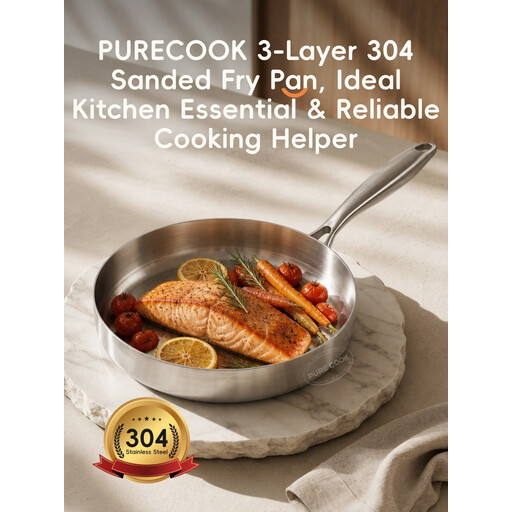
Why this product suits your needs: Its compact 20 cm size is ideal for individual portions, eggs, small one-pan dishes and kitchens with limited storage space. According to the product description, the pan can be used on gas, induction, ceramic and halogen hobs.
The three-layer construction and clearly stated size help you avoid choosing an oversized pan for small quantities. As no traditional coating is specified, there’s no risk of damaging it with utensils that aren’t suitable for coated pans.
304 stainless steel with an aluminium core, 20 cm diameter and, according to the product details, dishwasher-safe.
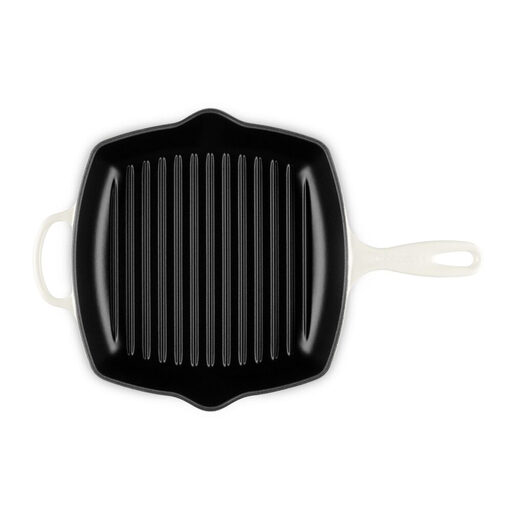
Why this product suits your needs: This enamelled cast-iron pan is designed for households looking to combine grill ridges and heat retention with use on induction, gas and ceramic hobs, as well as in the oven.
The product details clearly specify the material, weight, hob types, oven suitability and care instructions. This lets you plan for the heavier weight before buying, while the recommended hand-washing helps protect the enamel surface.
26 cm grilling surface with raised ridges, pouring spouts and, according to the product description, oven suitability.
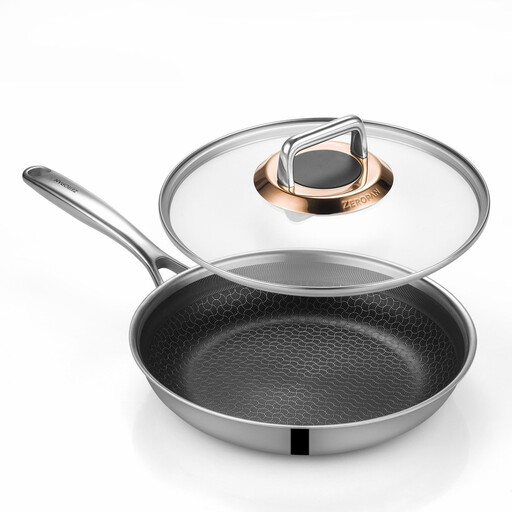
Why this product suits your needs: The 30 cm cooking surface and glass lid are made for family portions, braised dishes and cooking with less splashing. According to the product description, the pan is suitable for all common hob types.
The coating details are clearly stated: a ceramic coating free from PFAS, PFOA and PTFE. You should also take the large footprint and the manufacturer’s temperature guidance into account.
316 stainless steel interior, aluminium core, 430 induction base, glass lid and, according to the product details, dishwasher-safe.
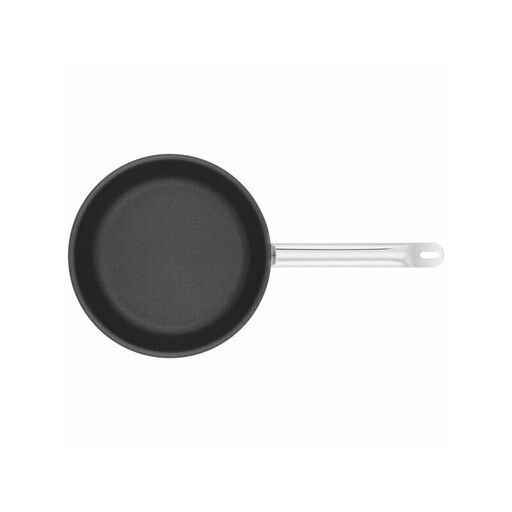
Why this product suits your needs: According to the product description, this 26 cm PTFE-coated pan is suitable for induction and other hob types. It’s designed for households that often cook eggs, fish or vegetables using little fat.
The maximum oven temperature of 230 °C and the recommendation to use non-metal kitchen utensils are clearly stated. This makes it easier to avoid overheating and scratches.
Three-layer SIGMA-Clad material, Duraslide Ultra coating and, according to the product details, dishwasher-safe.
We’ve put together a complete, regularly updated list of products that meet these strict selection criteria and fully comply with the safety regulations in force in the EU.
20 cm to 24 cm is usually enough for individual portions or small side dishes. A 26 cm pan is a versatile size for two to three portions. 28 cm to 30 cm pans offer more room for family meals, but need a suitably sized cooking zone and more storage space.
Look for models that explicitly state they have a magnetic induction base. Stainless steel alone isn’t enough to confirm this. Details such as ‘induction-compatible’ or a stated 430 stainless steel base offer clearer guidance.
Lifespan depends on the material, coating, temperature and care. Uncoated stainless steel and enamelled cast-iron pans can last a long time when treated properly. Coated models are more susceptible to scratches and overheating; if you notice visible damage, follow the relevant manufacturer’s recommendations.