
Lieferung heute & morgen

Qualitätsgarantie

Willkommens-Angebote freischalten: KOSTENLOSE Lieferung | Bis zu 80 % RABATT | Kostenlose 30-Tage-JoyPlus-Testphase
App herunterladen
A frying pan is part of the basic equipment in almost every kitchen. However, the wide choice often leads to poor purchases: the pan is unsuitable for the hob, the stated size does not describe the usable cooking surface, or the coating requires more care than the product description suggests. If you are looking for a frying pan for long-term use, you should therefore consider more than just the price and appearance.
An induction frying pan requires a magnetic base and should sit flat on the cooking zone. With gas, electric and ceramic hobs, other properties are important, such as shape retention and even contact with the heating surface. You should therefore check the specific hob types listed, rather than relying only on general marketing claims.
A coated frying pan often makes it easier to fry with little oil and to clean the pan. However, it should not be heated strongly while empty for extended periods. Metal cooking utensils can damage the surface unless the manufacturer specifically states that they are suitable.
An uncoated stainless steel frying pan, cast iron frying pan or carbon steel frying pan is generally more resistant to scratches, but requires controlled temperatures and the correct initial treatment. With cast iron and carbon steel, seasoning or regular oiling is part of the care routine.
A 24 cm frying pan is practical for smaller portions, eggs, pancakes or side dishes. A 28 cm frying pan offers more space for several portions, but also requires a larger cooking zone and is usually heavier. With a deep frying pan, the internal height is another factor. For casseroles, sauces and meals for several people, a deep frying pan with lid may be more practical than a standard shallow pan.
Coated models are practical for delicate foods and easy cleaning. Preferably use wooden, silicone or plastic turners, and follow the stated maximum temperature. A dishwasher-safe frying pan may be placed in the dishwasher according to the product information, but washing it by hand can still help protect the coating.
A coated pan should no longer be used if the coating is visibly peeling or has deep scratches. An uncoated pan, on the other hand, can often be re-treated, but is not automatically maintenance-free.
A heat-insulated handle makes working at the hob easier. When using the pan in the oven, the handle’s temperature limit must be checked separately. A glass lid may also have its own maximum temperature. Before buying, you should therefore compare the following information:
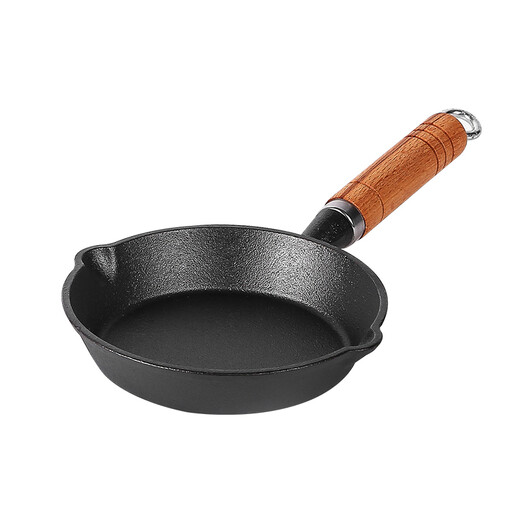
Why this product suits this profile: This compact cast iron frying pan is suitable for individual portions, butter, sauces or side dishes. It is specified as suitable for gas, electric, ceramic and induction hobs.
The uncoated surface makes it clear that seasoning and drying are necessary. It is explicitly not suitable for the dishwasher.
Compact diameter, good heat retention and no chemical non-stick coating according to the product information.
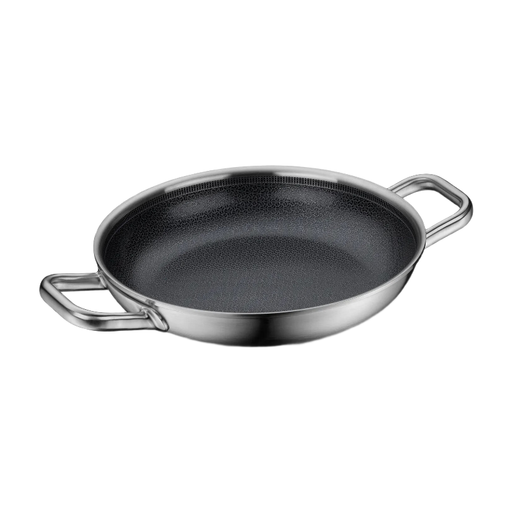
Why this product suits this profile: This 24 cm pan combines Cromargan stainless steel, an aluminium core and PermaDur coating with a honeycomb-style stainless steel structure.
The product information clearly specifies the hob types, oven suitability and dishwasher suitability. Empty overheating and abrasive cleaners should still be avoided.
Suitable for induction, compatible with several hob types and dishwasher-safe according to the product description.
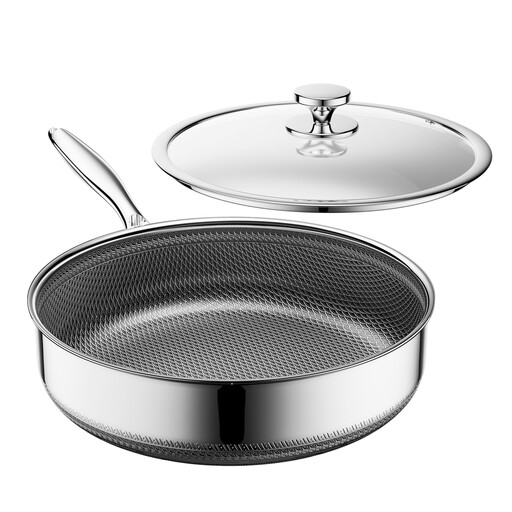
Why this product suits this profile: This deep stainless steel frying pan with ceramic coating, glass lid and suitability for gas, electric, ceramic, halogen and induction hobs supports frying, braising and preparing sauces.
The manufacturer states that it is free from PFAS, PTFE and PFOA. The temperature limits of 260 °C for the pan and 148 °C for the lid should be observed.
Deep design, glass lid, compatibility with all hob types and declared dishwasher suitability.
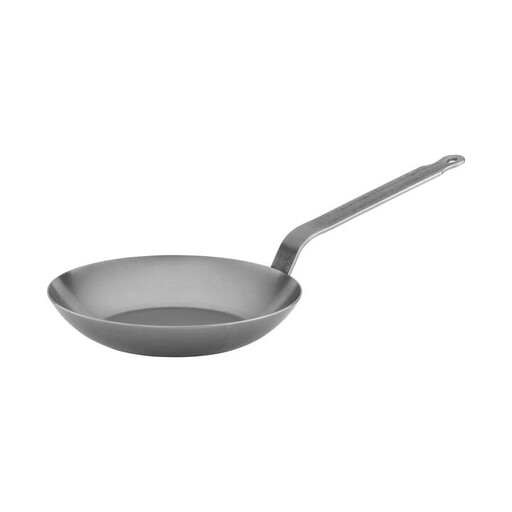
Why this product suits this profile: This carbon steel frying pan is specified as suitable for gas, induction, ceramic hobs, ovens and open flames. It is aimed at users who prefer high temperatures and a natural patina.
The care requirements are clear: season before first use, dry immediately and apply a thin layer of oil. The dishwasher is explicitly unsuitable.
24 cm diameter, steel handle, oven suitability and no chemical non-stick coating according to the product description.
We have put together a complete, regularly updated list of products that fully meet these strict selection criteria and the safety regulations applicable in the EU.
A frying pan with explicitly stated induction compatibility and a magnetic, flat base is suitable. Multi-layer stainless steel frying pans, cast iron frying pans and many coated models meet this requirement. With small pans, the size of the pan base should match the cooking zone.
A coated frying pan is often easy to clean when used carefully. Stainless steel is less susceptible to scratches and can often be placed in the dishwasher, but requires more attention to temperature and the amount of fat when frying. The right choice therefore depends on the level of care you are prepared to provide and the cooking methods you use.
Its lifespan depends on the material, temperature, cooking utensils and cleaning method. With proper care, cast iron and carbon steel can be re-treated. Coatings are more sensitive to overheating and scratches. Regularly check the coating, handle and whether the base is still flat before continuing to use the pan.