
Lieferung heute & morgen

Qualitätsgarantie

Willkommens-Angebote freischalten: KOSTENLOSE Lieferung | Bis zu 80 % RABATT | Kostenlose 30-Tage-JoyPlus-Testphase
App herunterladen
A frying pan is a staple in most British kitchens. Yet it's often only after you've bought one that you discover whether it's actually suitable for your hob, the dishes you cook most and your daily cleaning routine. A non-stick pan can quickly lose performance if used incorrectly, a stainless steel pan requires careful temperature control, and a cast iron pan brings significantly more weight and maintenance.
This buying guide will help you avoid common mistakes and choose the right frying pan for induction, gas, ceramic or electric hobs.
A pan for all hob types should be explicitly approved for the heat source you have at home. For induction, a magnetic base is essential. Claims like "suitable for gas and ceramic" are not enough for an induction hob.
It's also worth checking the base diameter. If the contact surface is noticeably smaller than the cooking zone, heat can distribute unevenly. With a 28 cm frying pan, it's not just the top diameter that matters – the base construction is equally important.
A non-stick frying pan makes cooking eggs, fish, pancakes or delicate vegetables much easier. However, it's not automatically indestructible. Metal utensils, heating the pan when empty, sudden temperature changes and abrasive cleaners can all damage the coating.
Even the label "dishwasher-safe pan" should be read carefully. Dishwasher compatibility doesn't necessarily mean the coating will stay in perfect condition over time. That's why many manufacturers still recommend hand washing, even if the pan is officially dishwasher-safe.
A 24 cm frying pan is ideal for smaller portions and households with limited space. The 26 cm frying pan is versatile for one to two people. A 28 cm frying pan offers more surface area for family-sized portions, but needs enough storage space and a suitably sized cooking zone.
Large cast iron pans retain heat well, but are heavier to handle. For quick meals, a lightweight aluminium pan can be more practical. The material should therefore match your cooking style, not just the marketing claims.
A non-stick pan supports low-fat cooking and is usually easy to clean. It's particularly suitable for beginners, as well as for eggs, fish and pancakes. Use kitchen tools made from wood, silicone or suitable plastic, and always stick to the recommended maximum temperature.
A stainless steel pan is generally uncoated and resistant to scratches. With an uncoated stainless steel pan, preheating and using the right amount of fat become more important. Multi-layer models with an aluminium core can conduct heat more quickly and evenly. The product details should also tell you which hob types it's suitable for.
A cast iron pan retains heat for longer and is ideal for searing, slow cooking or serving individual portions. Uncoated cast iron must be dried thoroughly after cleaning and regularly given a thin layer of oil to prevent rust. Dishwashers are usually not suitable for these models.
In stainless steel models with a tri-ply construction, layers of stainless steel typically surround an aluminium core. This build can provide more even heat distribution than a simple single-layer design. With non-stick aluminium pans, the low weight is a practical advantage, while a sturdy base helps maintain shape.
Also look for a secure handle, a well-designed pouring rim and, if needed, a matching lid. An oven-safe pan is only suitable for the oven if all components – including the handle and lid – are approved for the stated temperature.
Before you buy, these points should be clearly stated:
Non-stick models should be allowed to cool down before cleaning. With stainless steel, a soft sponge prevents unnecessary surface scratches. Cast iron should never be left soaking in water and must be dried immediately after washing.

Why this product fits the profile: This 26 cm aluminium pan is lightweight, non-stick and suitable for induction, gas and ceramic hobs according to the product details. That makes it ideal for everyday meals and smaller households.
The product details clearly state hob compatibility and explicitly recommend hand washing. This means the coating won't be mistakenly treated as dishwasher-safe.
26 cm diameter, lightweight design, smooth non-stick surface and a wooden handle with heat-insulating properties.
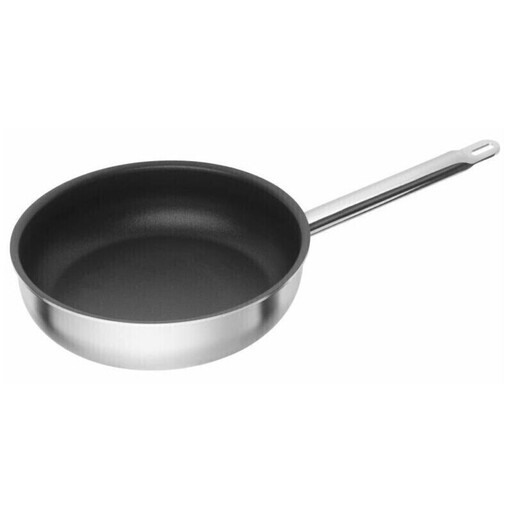
Why this product fits the profile: According to the product description, this model features a three-layer SIGMA-Clad construction, an aluminium core and a Duraslide Ultra PTFE coating. It's designed for multiple hob types, including induction.
The product data states a maximum oven temperature of 230 °C and includes warnings against prolonged dry heating and using metal utensils.
28 cm cooking surface, PTFE coating stated as PFOA-free by the supplier, oven-safe up to 230 °C and a riveted stainless steel handle.
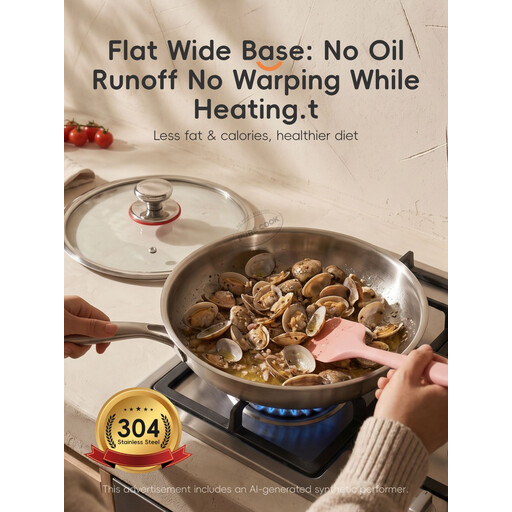
Why this product fits the profile: According to the product details, this 28 cm stainless steel pan has an aluminium core, is suitable for gas, induction, ceramic and halogen hobs, and comes with a glass lid.
The product details clearly distinguish between uncoated stainless steel, the lid, hob types and cleaning instructions. This reduces the risk of buying the wrong pan for family meals and braising.
Tri-ply construction, glass lid, pouring rim and dishwasher suitability according to the product description.
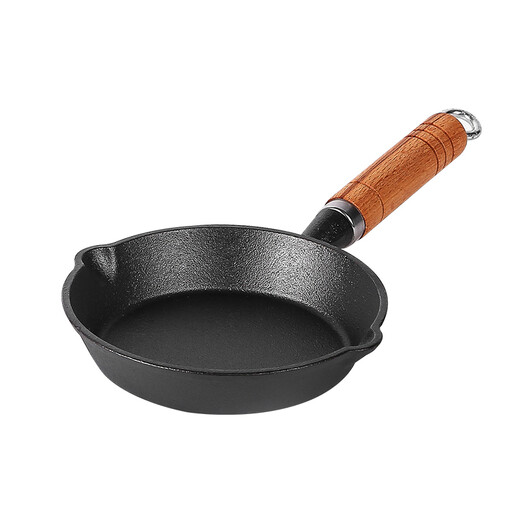
Why this product fits the profile: According to the product description, this small uncoated cast iron pan is ideal for individual portions, sauces, butter, eggs and serving.
The product details explicitly state that it is uncoated, requires seasoning, must be hand washed and needs careful drying.
10 cm diameter, suitable for induction, gas, electric hobs and the oven according to the supplier; heat-retaining cast iron.
We've put together a full, regularly updated list of products that meet these strict selection criteria and comply with all EU safety regulations.
For an induction hob, you need a model that is explicitly marked as induction-compatible and has a magnetic base. Many stainless steel pans with a bonded base, as well as non-stick aluminium pans with a suitable base, are designed for this. Always rely on the manufacturer's specification before buying.
The lifespan depends on the coating, temperature and care. Low to medium heat, suitable kitchen utensils and hand washing can help protect the surface. Heating the pan when empty, using sharp metal objects and abrasive cleaners can damage the coating. If you notice visible flaking or significant scratches, the pan should no longer be used.
A 24 cm frying pan is suitable for small portions and compact hobs. 26 cm offers a balanced everyday diameter for one to two people. 28 cm is a good choice if you regularly cook larger quantities, vegetable stir-fries or pieces of meat. The size of your cooking zone, storage space and the pan's weight are also important factors.