
Lieferung heute & morgen

Qualitätsgarantie

Willkommens-Angebote freischalten: KOSTENLOSE Lieferung | Bis zu 80 % RABATT | Kostenlose 30-Tage-JoyPlus-Testphase
App herunterladen
A frying pan is a staple in many British kitchens. Yet unclear information about coatings, hob compatibility or cleaning often leads to the wrong purchase. A pan can look versatile on paper, but in daily use it might be too small, too heavy or more high-maintenance than expected.
This buying guide shows which technical details really matter before purchasing a frying pan, and which model could suit different cooking habits.
A coated frying pan makes cooking eggs, pancakes or fish much easier. However, coatings are sensitive to high temperatures, sharp utensils and abrasive cleaning products. Even if a pan is labelled as a dishwasher-safe pan, regular machine washing can wear down the coating more than hand washing.
So pay attention to specific care instructions:
An induction frying pan needs a magnetic contact base that is large enough. With gas, electric and ceramic hobs, an even contact surface also matters. A pan rim with a 28 cm diameter does not automatically mean the entire surface sits directly over the heat source.
Check the details for induction, gas, electric, ceramic and halogen before buying. On small cooking zones, a large pan can heat unevenly.
A 24 cm frying pan works well for smaller portions, omelettes or individual side dishes. A 28 cm frying pan offers more space for two to three portions and is a practical standard size for many households. A 30 cm frying pan or larger is great for stir-fries and bigger quantities, but needs more storage space and a sufficiently large cooking zone.
You should also consider the rim, weight and handle design. A deep sauté pan with lid can be more versatile, but takes up more room when stored.
Aluminium with a non-stick coating usually heats up quickly and is easy to handle. With coated models, the pan should not be heated empty on a high setting for long periods. Metal turners, steel wool and harsh cleaners can damage the surface.
With claims like “PFOA-free” or “PTFE-free”, it’s important to know what the statement refers to. For the Ballarini CeraForce coating, the product information states PTFE- and PFOA-free properties. This is a product-specific claim and should not automatically be applied to other pans.
A stainless steel frying pan without coating is scratch-resistant and can be used with various kitchen utensils. However, stainless steel alone conducts heat less quickly than aluminium. Multi-layer constructions with an aluminium core combine the stainless steel surface with a heat-conducting layer.
With an uncoated stainless steel pan, more food may stick at first. Preheating, medium heat and enough oil are important parts of the cooking process. Water spots or rainbow-coloured discolouration can occur with stainless steel and can often be removed with mild acidic cleaners.
A ceramic frying pan with a ceramic coating is not the same as a pan made from solid ceramic. The body is often made of aluminium or stainless steel, while the inner surface has a ceramic coating. Low to medium heat, suitable utensils and gentle cleaning help to prolong its lifespan.
A wok pan with a 28 or 30 cm diameter is ideal for stir-fries, vegetables and larger portions. A lid is handy when you need to cook ingredients through, reduce sauces or keep food warm. For classic pancakes or single eggs, a flatter frying pan is usually more practical.
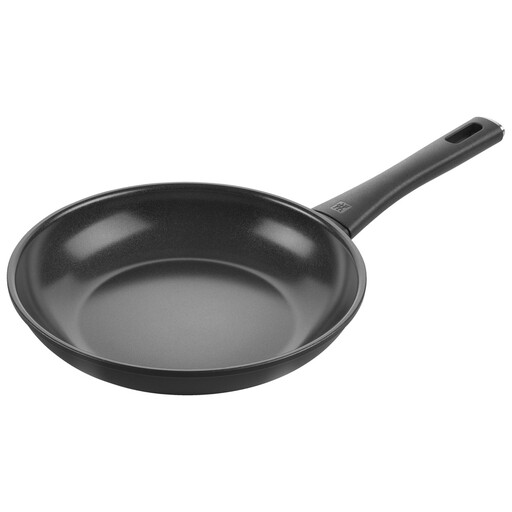
Why this product fits the profile: The compact 24 cm format is ideal for smaller households and everyday portions. According to the product information, the pan is suitable for gas, induction, ceramic and halogen hobs.
The product description specifies PTFE- and PFOA-free CeraForce ceramic coating, along with clear care instructions to prevent overheating and scratches.
24 cm diameter, aluminium body, ceramic coating and oven suitability up to 250 °C according to the manufacturer.
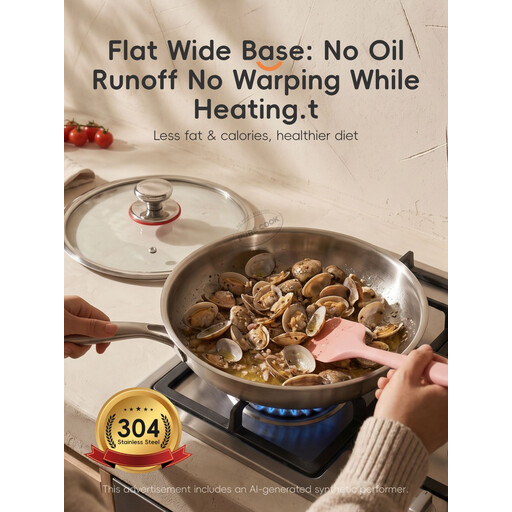
Why this product fits the profile: The three-layer construction of stainless steel, aluminium core and stainless steel is designed for even heat distribution. The glass lid expands its uses for braising.
The material layers and compatibility with gas, induction, ceramic and halogen are clearly stated, rather than just advertising versatility in general terms.
304 stainless steel, aluminium core, glass lid, oven suitability up to 220 °F according to the product information and dishwasher suitability.
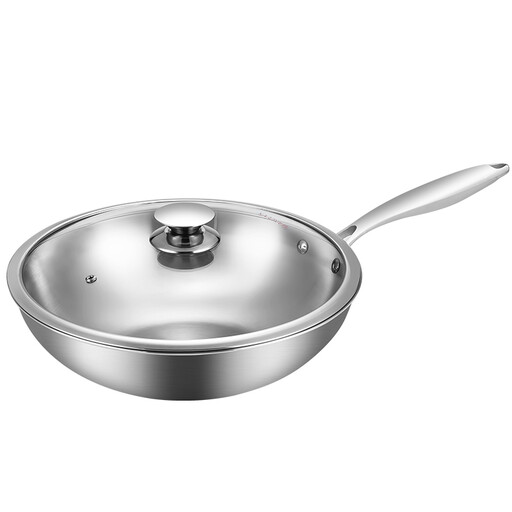
Why this product fits the profile: The 28 cm wok is aimed at households that frequently cook vegetables, meat or larger stir-fries and prefer an uncoated surface.
The product description explicitly states the absence of a non-stick coating. This makes expectations about care and preheating much clearer.
304 stainless steel, three-layer base, use on induction, gas, electric and ceramic hobs, plus dishwasher suitability according to the manufacturer.
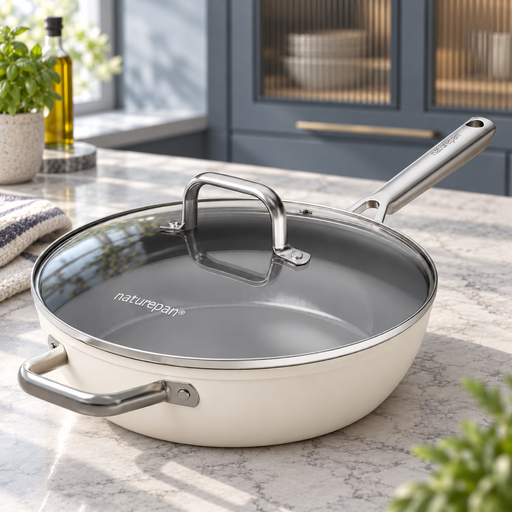
Why this product fits the profile: The deep shape and matching lid support frying, sautéing and braised dishes. The model is specified for induction, gas, electric and ceramic hobs.
The details explicitly mention oven use up to 230 °C without the lid, as well as a recommendation for hand washing, even though the pan is described as dishwasher-safe.
28 cm diameter, deep body, ceramic coating, glass lid and multiple hob types according to the product data.
We have put together a complete, regularly updated list of products that fully meet these strict selection criteria and the safety regulations in force in the EU.
A 24 cm frying pan is often enough for smaller portions, eggs or pancakes. For two full portions, a 28 cm frying pan offers more cooking space. The size of the cooking zone and available storage space are also important factors.
For an induction frying pan, the manufacturer must explicitly state induction compatibility. Models with a magnetic stainless steel base or multi-layer base are often designed for this. The pan should sit as fully as possible on the cooking zone.
It is not possible to give a reliable general lifespan. It depends on the type of coating, heat, utensils, cleaning and frequency of use. Visible scratches, peeling or a noticeably reduced non-stick effect are signs that it is time to replace the pan.