
Lieferung heute & morgen

Qualitätsgarantie

Willkommens-Angebote freischalten: KOSTENLOSE Lieferung | Bis zu 80 % RABATT | Kostenlose 30-Tage-JoyPlus-Testphase
App herunterladen
A frying pan needs to suit your hob, the quantity you are cooking and the way you prepare your food. Even so, many shoppers initially focus on colour, price or claims such as “scratch-resistant”, overlooking technical details. This can mean that the pan does not work on an induction hob, warps after a short time or is difficult to clean in everyday use.
A pan for gas and electric hobs will not automatically work on induction. It needs a magnetic base, usually made from stainless steel or fitted with a suitable induction disc. For an induction frying pan, the manufacturer should explicitly state that it is suitable for induction. The diameter of the base contact area is also relevant: a large 28 cm frying pan may have a significantly smaller base than its top rim.
A coated frying pan can make cooking and cleaning easier. However, “scratch-resistant” does not mean that metal utensils, high heat or abrasive cleaners are always harmless. With a non-stick frying pan, wooden, silicone or plastic utensils are generally the gentler choice. The manufacturer’s care instructions should always take priority.
Not every pan can be used in the oven. The pan body, handle material, lid and stated maximum temperature are all important. A Bakelite or plastic handle may limit oven use, while a cast iron handle is generally designed for higher temperatures. Likewise, a “dishwasher-safe pan” should not be taken to mean that it is ideal for every cleaning method: coatings and handles may be exposed to greater wear through frequent dishwasher cycles.
An aluminium frying pan is relatively light and responds quickly to changes in temperature. With a coating, it is suitable for eggs, vegetables, fish and dishes requiring little fat. An induction base broadens its hob compatibility.
A stainless steel frying pan is durable and often dishwasher-safe. However, when searing food, it requires the right preheating and fat technique to reduce sticking, particularly with delicate ingredients. A multi-layer construction with an aluminium core can improve heat distribution.
A cast iron frying pan retains heat for a long time and is suitable for high-heat searing and moving from the hob to the oven. The trade-off is that it is heavier. With enamelled surfaces, traditional seasoning is not required, although sudden temperature changes and abrasive cleaning should still be avoided.
Carbon steel combines high temperature resistance with comparatively easy handling. Its natural patina only develops through regular care. Water, lengthy soaking and the dishwasher are not recommended.
A sauté pan or deep serving pan is useful if you want to cook not only with heat and oil, but also make room for liquid, vegetables or pasta in the same pan. A frying pan set, on the other hand, is a good choice if you need different portion sizes and versatile cookware that saves space.
Check the following before buying:
Additional cookware should also match the intended use. An oven dish is suitable for bakes and lasagne, while a pizza tray is designed for flat doughs. These products do not replace a frying pan, but they can be a useful addition to your kitchen equipment.
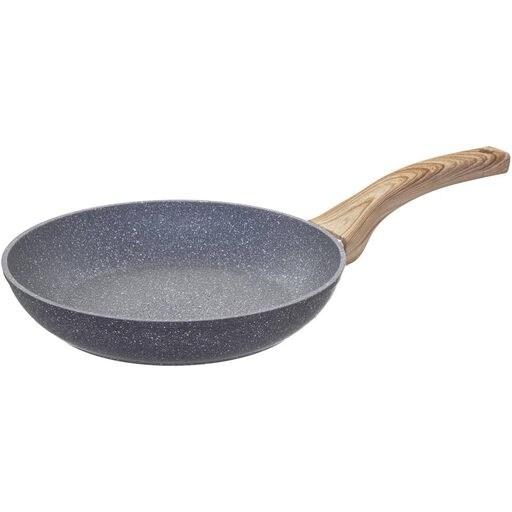
Why this product suits the profile: With a diameter of 28.5 cm and a capacity of 2 litres, this aluminium pan offers a practical size for several portions. According to the product details, it is suitable for gas, induction, ceramic and electric hobs.
The manufacturer’s details specify two non-stick layers, an induction base and dishwasher suitability. Hand-washing is nevertheless recommended to help protect the pan.
Aluminium body, 2-litre capacity and compatibility with several hob types.
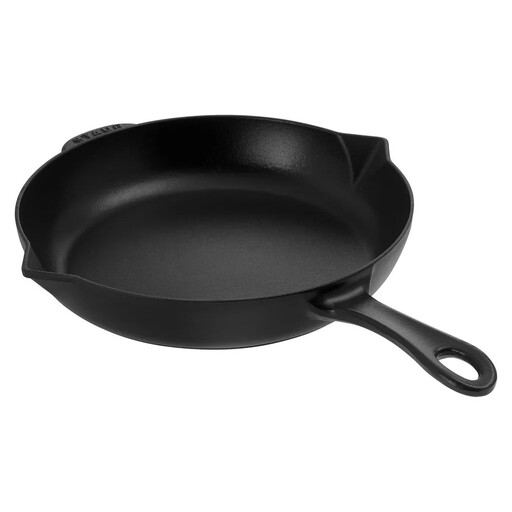
Why this product suits the profile: This 26 cm enamelled cast iron pan is listed as suitable for all hob types, including induction, as well as for use in the oven and under the grill.
The manufacturer clearly specifies the material, compatible hob types and oven suitability. At 2.58 kg, its weight should be taken into account before buying.
Enamelled cast iron, excellent heat retention and use on the hob, in the oven and under the grill.
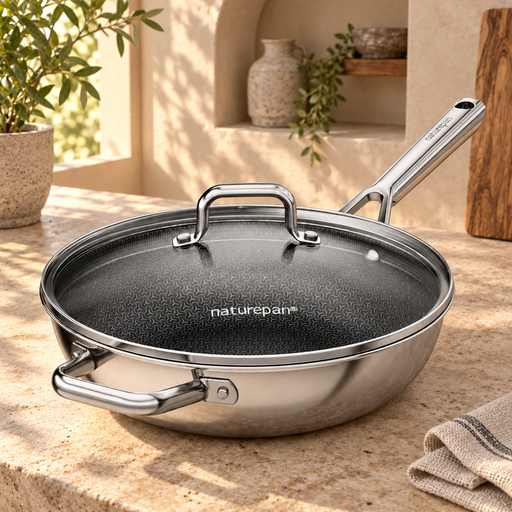
Why this product suits the profile: This deep 28 cm pan with lid is designed for frying, braising and covered cooking. It features a stainless steel body with an aluminium core.
The details specify compatible hob types, the lid, cleaning requirements and a maximum oven temperature of 230 °C without the lid. This helps set clear expectations for how it can be used.
Multi-layer stainless steel body, aluminium core, ceramic coating and matching lid.

Why this product suits the profile: The two sizes, 20 and 26 cm, cover individual portions and smaller family meals. The removable handle can be practical when camping or storage space is limited.
Both diameters are clearly specified. The product is also listed as suitable for all common hob types and features two non-stick layers; hand-washing is recommended.
Two sizes, removable handle, aluminium body and stated suitability for gas, induction, ceramic and electric hobs.
We have put together a complete, regularly updated list of products that fully meet these strict selection criteria and the safety regulations applicable in the EU.
An induction frying pan needs a magnetic base. The product details should explicitly list induction as a compatible heat source. If you are unsure, testing the base of the pan with a magnet can provide an initial indication; the manufacturer’s information is definitive, however.
A 28 cm frying pan is often suitable for several portions, vegetable dishes and larger cuts of meat. Also check the base area, rim height and the available space on your hob. A deep version is more versatile for braised dishes than a shallow pan.
Its service life depends on heat, cleaning, utensils and how frequently it is used. A coating may wear out prematurely if handled incorrectly. Following the care instructions and avoiding overheating the pan when empty will help reduce typical wear. If there is visible flaking or serious damage, the product should no longer be used.