
Lieferung heute & morgen

Qualitätsgarantie

Willkommens-Angebote freischalten: KOSTENLOSE Lieferung | Bis zu 80 % RABATT | Kostenlose 30-Tage-JoyPlus-Testphase
App herunterladen
Depending on your household, a frying pan may need to handle anything from small individual portions and family meals to steaks and slow-cooked dishes. But attractive product claims don’t automatically mean you’ll find the right pan. What matters are the technical details: material, hob compatibility, temperature limit, diameter and cleaning instructions.
A pan may be suitable for gas and electric hobs, but not for induction. For an induction frying pan, the base must be magnetically conductive. Look for details such as “induction ready” or an explicitly stated induction base, rather than relying on a general description such as “suitable for all hob types”.
A dishwasher-safe pan can go in the dishwasher according to the product description. However, harsh detergents, high temperatures and frequent washing can put extra strain on the coating and handles. Hand-washing is often recommended for coated models to help extend the life of the surface.
A 23 cm frying pan is suitable for smaller portions, side dishes and compact kitchens. For several portions or dishes with plenty of liquid, a diameter of 26 to 30 cm is more practical. Cast iron retains heat well, but is considerably heavier. A model weighing 1,93 kg should be safe to lift and handle when full, including when turning food.
A cast iron pan retains heat for longer, making it well suited to searing and slow cooking. Enameled cast iron doesn’t need traditional seasoning. However, it is heavier and takes longer to respond to changes in heat.
A stainless steel pan is usually uncoated and heat-resistant. With stainless steel, it’s especially important to preheat the pan and use fat correctly, as food can stick more easily if the temperature is wrong. Multi-layer constructions with an aluminium core can improve heat distribution.
Aluminium and coated pans are usually lighter. A coated frying pan can make it easier to release delicate foods such as eggs, pancakes and fish. Avoid using metal utensils or overheating these surfaces.
If you’re specifically looking for a PFAS-free pan, check for a clear statement from the manufacturer. PFAS, PFOA and PTFE are not interchangeable terms. So a claim such as “no intentionally added PFOA” does not automatically mean “PFAS-free”. Always check the exact product description.
The claims for the models below are presented as stated by the manufacturers. ZEROPAN describes certain pans as free from PFAS, PFOA and PTFE. Redchef also describes its ceramic coating as PFAS-free. These claims come from the respective product information and are not a medical assessment.
A shallow pan is suitable for fried potatoes, omelettes and quick-cooking dishes. A deep frying pan with a lid offers more capacity for sauces, slow-cooked dishes, vegetables or pasta. A glass lid lets you keep an eye on the cooking without opening the pan.
Also check:
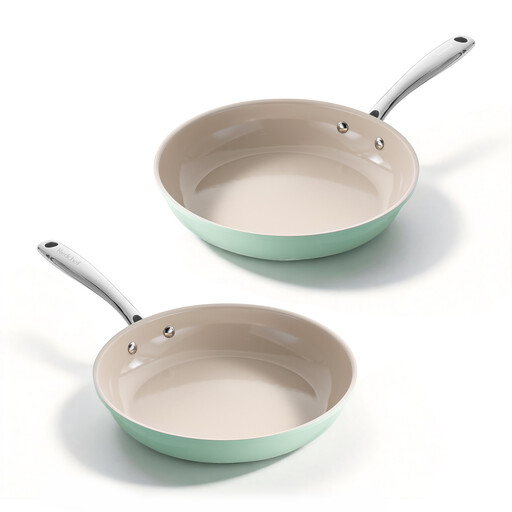
Why it suits this profile: The two diameters cover everything from small portions to everyday meals. The product description specifies a ceramic coating, forged aluminium and suitability for induction, gas and electric hobs.
Having two sizes reduces the risk of over- or underfilling a single pan, whatever the portion size. The manufacturer also states that the ceramic coating is PFAS-free.
Set includes 20 cm and 24 cm pans; oven-safe up to 842 °F, or approximately 450 °C, according to the product description.
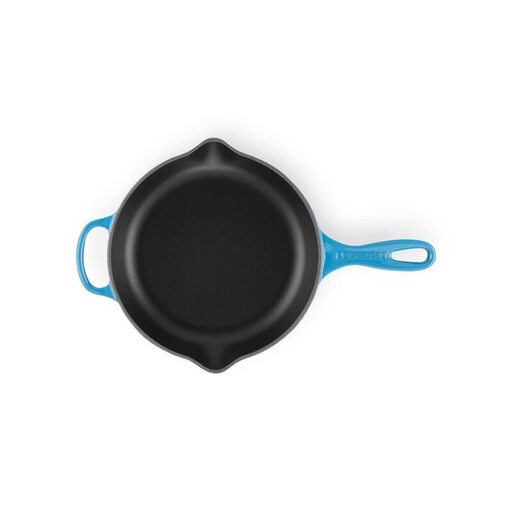
Why it suits this profile: This enamelled cast iron pan is designed for both cooking and serving. According to the product description, it is suitable for all hob types, including induction, as well as oven use.
The 23 cm diameter and 1,93 kg weight are clearly specified. This makes it easier to decide before buying whether the size and handling will suit your household.
Enamelled cast iron, two handles and pouring spouts; oven-safe up to 260 °C according to the product details.
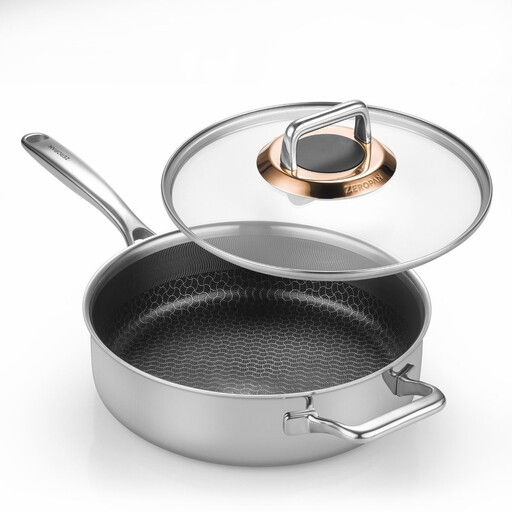
Why it suits this profile: Its deep sides make it suitable for searing, deglazing and slow cooking in one pan. The 26 cm diameter offers more capacity than a shallow pan.
The lid, side height and hob compatibility are all clearly specified. The product description states that the ceramic coating is free from PFAS, PFOA and PTFE.
316 stainless steel interior, aluminium core, induction base and toughened glass lid.
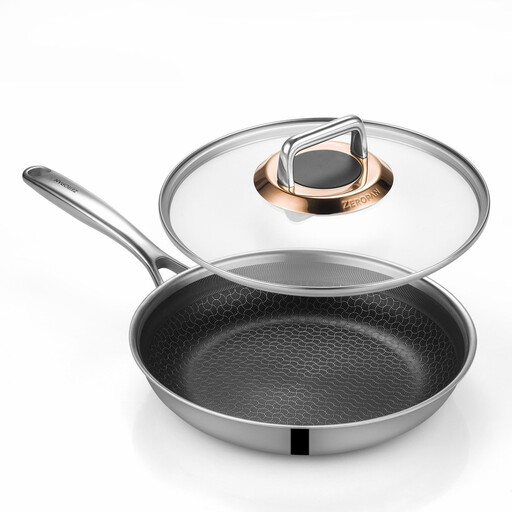
Why it suits this profile: Its large diameter is designed for several portions and larger ingredients. The three-layer construction combines stainless steel with an aluminium core.
The 30 cm size comes with specific details about the material, induction compatibility and oven-safety. This makes it easier to check that it’s suitable for your hob and oven.
316 stainless steel interior, 430 induction base, glass lid and stated dishwasher-safe design.
We’ve put together a complete, regularly updated list of products that meet these strict selection criteria and fully comply with the safety regulations in force in the EU.
Whatever the material, a few simple rules can help you look after your pan:
Choose a model with a magnetic base, such as a stainless steel induction base. The product description should explicitly state that it’s suitable for induction. A general claim that it works on “all hob types” is less precise than specific technical details.
A 20 to 24 cm frying pan is suitable for individual portions and smaller households. A 26 cm pan is a versatile middle ground. Sizes from 28 to 30 cm offer more cooking space for several portions, but need a suitably sized cooking zone and enough storage space.
A coated frying pan makes it easier to release and clean many types of food. A stainless steel pan has no traditional non-stick coating, but needs more care when it comes to preheating, temperature and the amount of fat you use. The right choice depends on your cooking habits, cleaning preferences and the level of heat resistance you need.