
Lieferung heute & morgen

Qualitätsgarantie

Willkommens-Angebote freischalten: KOSTENLOSE Lieferung | Bis zu 80 % RABATT | Kostenlose 30-Tage-JoyPlus-Testphase
App herunterladen
A new frying pan needs to perform reliably in daily use, sit well on your hob and be easy to clean without much effort. Yet flashy coating names, unclear size specifications and seemingly universal promises often lead to the wrong purchase. For home cooks, families and budget-conscious shoppers, clear, practical criteria matter more than marketing buzzwords.
Calling a pan induction-compatible doesn’t automatically mean it works equally well on every hob. For induction, the pan base must be magnetic and sit flat. With gas, electric and ceramic hobs, the base size and stability are also important. For halogen or infrared hobs, a separate manufacturer approval may be required.
A coated frying pan or non-stick pan makes cooking eggs, fish, vegetables and pancakes easier. However, its surface can be damaged by overheating, prolonged dry heating, metal utensils or harsh cleaning. “Scratch-resistant” should not be taken as a free pass for metal cutlery.
The stated size usually refers to the top rim. The usable base can be significantly smaller. A 28 cm pan is therefore not automatically ideal for every hob ring. For one to two portions, 20 to 24 cm is often enough, while family meals typically need 26 to 30 cm. With a serving pan, the weight should also be considered.
A ceramic pan or ceramic-coated pan can often be used with little fat and is suitable for delicate foods at low to medium heat. The surface should be treated with wooden, silicone or nylon utensils.
A stainless steel pan without a classic non-stick coating is great for searing and developing caramelised flavours. However, it requires the right preheating and oiling technique to prevent food from sticking. Hybrid models combine stainless steel surfaces with coated areas.
A cast iron pan retains heat for longer and is ideal for searing, slow cooking and moving from hob to oven. The higher weight – for example, 1.93 kg for a round 23 cm pan – matters when lifting and serving daily. Enamelled cast iron usually doesn’t need seasoning, but should not be cleaned with abrasive products.
Before buying, you should check at least the following details:
According to the product details provided, oven suitability ranges, depending on the model, up to 230 °C, 260 °C or, for a lid, only 148 °C. A glass lid can therefore have a lower temperature limit than the pan body.
“Dishwasher-safe pan” does not necessarily mean the dishwasher is the best choice for the surface. According to the product description, several models recommend hand washing with mild washing-up liquid and a soft sponge, despite being dishwasher-safe. The pan should be allowed to cool completely before cleaning. Placing hot cookware directly into cold water can encourage warping.
Special shapes serve their own purposes: a Tamagoyaki pan is designed for rectangular Japanese omelettes, while a tagine with a conical lid is intended for slow cooking. A pan set can save space and money, but is only worthwhile if the included sizes are used regularly.
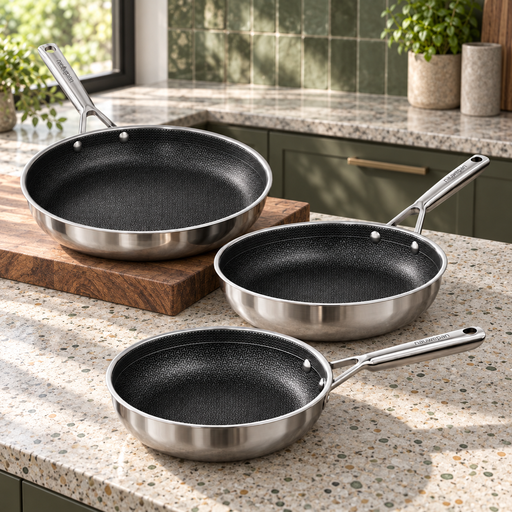
Why it fits: Three sizes cover single portions, side dishes and family meals. The set is specified for induction, gas, electric and ceramic hobs.
The graduated diameters reduce the risk of choosing a pan that is too large or too small for each intended use.
Multi-layer stainless steel body with aluminium core, ceramic coating and stated oven use up to 230 °C.
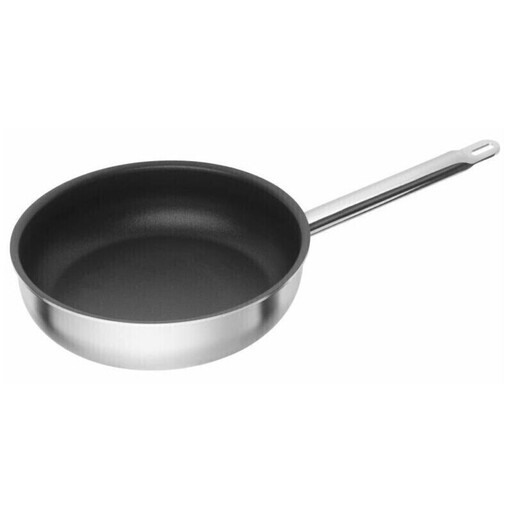
Why it fits: The 28 cm size is suitable for several portions. The three-layer SIGMA-Clad construction is designed for even heat distribution.
The product details specify exact hob types, a maximum oven temperature of 230 °C and care instructions for the coating.
PFOA-free Duraslide Ultra PTFE coating, riveted stainless steel handle and suitability for induction, gas, ceramic and oven.
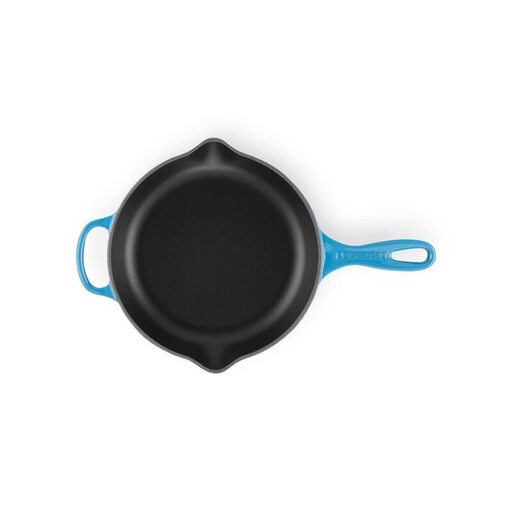
Why it fits: Enamelled cast iron is designed for slow cooking, searing and serving. According to the product details, the pan works on all hob types including induction.
The details on 260 °C maximum temperature, oven suitability and weight make the limits clear before purchase.
Enamelled surface, pouring spouts, helper handle and stated dishwasher suitability; hand washing is still recommended.
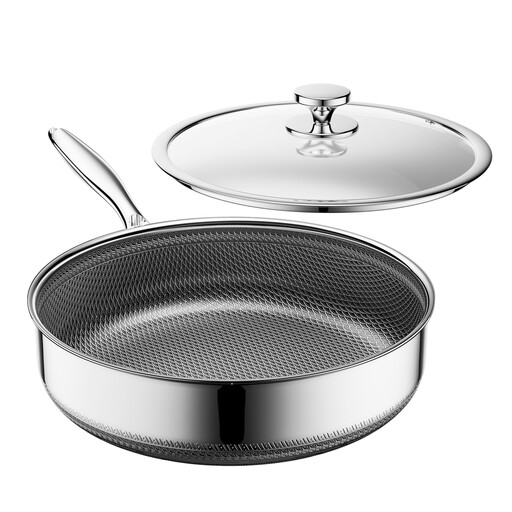
Why it fits: The deep shape with glass lid is suitable for larger quantities, braised dishes and foods that are cooked on the hob and then finished in the oven.
The separate temperature specifications for pan and lid prevent both components being treated with the same oven limit.
Specified for all common hobs, oven-safe up to 260 °C; the lid is suitable up to 148 °C according to the product description.
We have put together a current selection of products that take these selection criteria and the relevant safety information for the UK household into account.
For single portions and small households, 20 to 24 cm is usually sufficient. 26 to 28 cm offers more surface area for two to four portions. From 30 cm upwards, the size is mainly worthwhile for family meals, provided your hob ring and available storage space are suitable.
The key is an explicit induction label and a flat, magnetic base. With coated models, the recommended heat level should also be considered. For searing, stainless steel or cast iron models are suitable; for delicate foods, coated versions are often more practical.
A fixed lifespan cannot be reliably stated. It depends on heat, utensils, cleaning and frequency of use. Low to medium heat, soft kitchen tools and hand washing can protect the coating. If visible damage or flaking occurs, the pan should no longer be used.