
Lieferung heute & morgen

Qualitätsgarantie

Willkommens-Angebote freischalten: KOSTENLOSE Lieferung | Bis zu 80 % RABATT | Kostenlose 30-Tage-JoyPlus-Testphase
App herunterladen
A frying pan needs to suit your hob, your cooking style and how much effort you’re willing to put into cleaning. Yet product promises often lead to the wrong purchase. A supposedly easy-care surface can be sensitive to metal utensils, a large pan might not fit your cooking zone, and a heavy cast-iron frying pan can be impractical for everyday use.
The following points will help you assess technical specifications objectively and choose a frying pan that meets your needs.
A pan that claims to work on all hob types should be explicitly suitable for gas, electric, ceramic and induction. However, some models have restrictions: the De Buyer Choc Frying Pan 28 cm is not recommended for induction according to the product information. The ZWILLING Shine Grill Pan is specified for gas hobs only.
If you have an induction hob, you should also make sure the pan has a sufficiently large, flat base. The simple label “induction-compatible” doesn’t tell you how well the pan will actually match your cooking zone.
A non-stick frying pan is often designed for convenient frying and easy cleaning. But that only applies with proper use. High temperatures, prolonged dry-heating, metal cutlery and abrasive sponges can damage a non-stick coating.
For a non-stick pan, the instructions on temperature, kitchen utensils and cleaning are more important than any marketing claim about particularly easy handling. A stainless steel pan is generally less sensitive to scratches in this respect, but requires controlled heat and enough fat when searing.
A 28 cm frying pan offers more surface area for multiple portions, but also needs a suitable hob zone and more storage space. A 23 cm frying pan is more compact and works well for smaller households, side dishes or single portions. What matters isn’t just the rim diameter, but the actual usable base area.
With a sauté pan that has high sides, the extra volume can be useful for stews, sauces or one-pot recipes. A pan with a lid is particularly handy when food needs to finish cooking after searing, or when you want to keep liquid in the dish.
A cast-iron frying pan is heavy and retains heat for a long time. That can be helpful for searing or slow cooking. However, it requires more effort to lift and should be heated gradually. Enamelled cast iron is generally easier to clean than untreated cast iron according to product information; abrasive cleaning agents and metal pads are still unsuitable.
A stainless steel pan is robust and, in many cases, suitable for metal kitchen tools. Multi-layer constructions with an aluminium core, like the PURECOOK Tri-Ply 304 Stainless Steel Frying Pan, are designed to distribute heat more evenly across the surface. References to standards such as GB 4806.9 or US FDA relate to the standards stated by the supplier and are not automatically proof of every European product characteristic.
Aluminium heats up relatively quickly. With a non-stick frying pan, the coating protects against direct contact with the aluminium and makes food release easier. However, the coating remains a wear part and requires gentle use.
For a frying pan for induction, the induction compatibility must be explicitly stated in the technical specifications. If you plan to use it frequently in the oven, you also need to check the maximum temperature of the pan and lid, as well as the handle material. A lid may have a lower temperature limit than the pan.
Examples from product specifications:
A dishwasher-safe pan saves time, but manufacturers often still recommend hand washing for non-stick models to preserve the surface for as long as possible. For enamelled cast iron, the dishwasher is possible according to product information, but hand washing is also recommended.
For daily care:
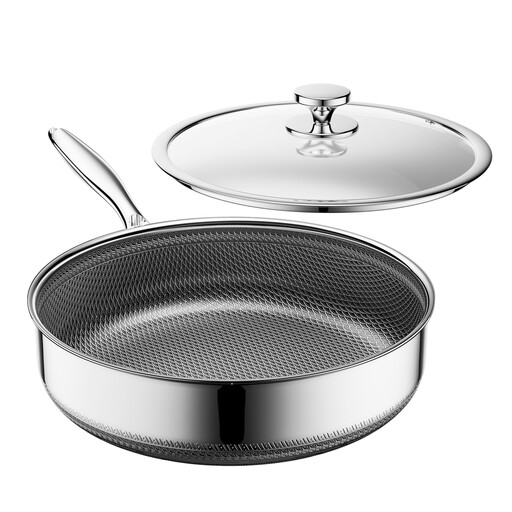
Why this product fits the profile: The combination of a lid, coated surface and suitability for all common hob types covers typical everyday dishes in a British household.
The technical specifications clearly state the hob types, oven temperatures and the care limits of the ceramic coating. Metal utensils and prolonged dry-heating should be avoided.
PFAS-, PTFE- and PFOA-free ceramic coating according to the product information; glass lid and oven safety up to 260 °C for the pan.
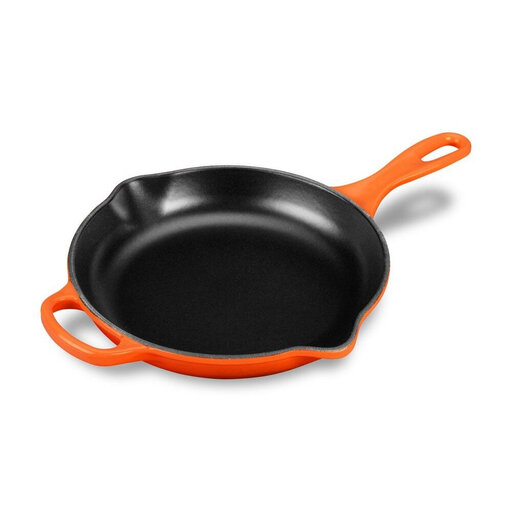
Why this product fits the profile: The enamelled cast iron is aimed at households that are willing to accept the weight, heat retention and use on both hob and oven.
The weight of 1.93 kg and the diameter of 23 cm are clearly stated. This allows you to check before buying whether the handling and cooking surface suit your household.
Enamelled cast iron, two pouring spouts and suitability for induction and oven according to the product information.
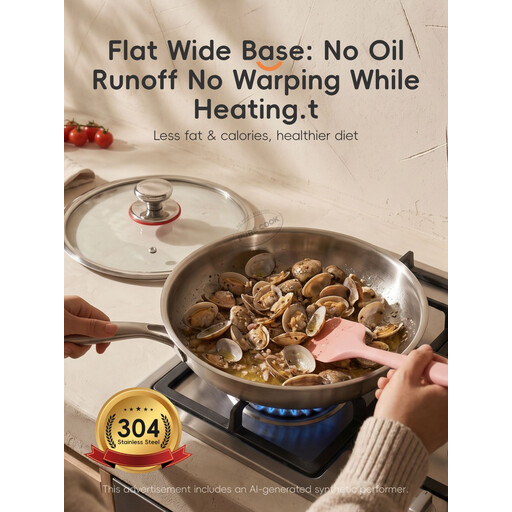
Why this product fits the profile: The 28 cm surface area, glass lid and multi-layer construction are suitable for family portions, sauces and stews on various hob types.
The specifications distinguish between pan and lid and list the compatible hob types. This avoids the common confusion between pan and lid temperatures.
304 stainless steel with aluminium core, lid included and suitability for gas, induction, ceramic and halogen according to the product description.
For eggs, fish and delicate foods, a non-stick frying pan with low to medium heat is practical. If you often sear meat and prefer a hard-wearing surface, you can choose a stainless steel pan or a cast-iron pan. Families generally benefit from 28 cm and higher sides, while 23 cm takes up less space for smaller portions.
An oven-safe frying pan should only be chosen if the handle, pan body and, where applicable, lid are approved for the desired temperature. For serving at the table, two pouring spouts or an additional helper handle are useful, and for heavy cast-iron models, also for safety reasons.
We have put together a complete, regularly updated list of products that fully meet these strict selection criteria and the safety regulations in force in the EU.
For multiple portions, a 28 cm frying pan is often more practical, provided your largest cooking zone covers the base adequately. A 23 cm pan is better suited to smaller quantities or a two-person household.
Stainless steel can stick more if the temperature is wrong or you use too little fat. However, the surface is generally more resistant to scratches. A non-stick frying pan is often easier to clean, but requires gentle handling and suitable kitchen tools.
It’s not possible to give a reliable lifespan for every model. It depends on temperature, frequency of use, cleaning method and the utensils you use. Hand washing, medium heat and kitchen tools made of wood, plastic or silicone can help preserve the coating in everyday use.