
Lieferung heute & morgen

Qualitätsgarantie

Willkommens-Angebote freischalten: KOSTENLOSE Lieferung | Bis zu 80 % RABATT | Kostenlose 30-Tage-JoyPlus-Testphase
App herunterladen
A frying pan has to handle many tasks in a British kitchen: sautéing vegetables, searing meat, frying eggs or finishing a dish in the oven. The choice ranges from non-stick frying pans and stainless steel and cast iron pans to carbon steel or hybrid pans. However, not every pan suits every cooking style.
Typical poor purchases result from three points:
The material affects heat distribution, weight, care requirements and the way food is seared.
An induction pan requires an induction-compatible base. For gas, electric and ceramic hobs, it is also important that the base sits flat and that its diameter matches the cooking zone. For a wok with a flat base, the actual contact area should match the hob.
If you want to finish pan dishes in the oven, check three details:
With non-stick models, the maximum oven temperature may be lower than with an uncoated stainless steel, cast iron or carbon steel pan. A lid may need to be removed before using the pan in the oven.
A 24 cm frying pan is suitable for smaller portions, eggs, side dishes or households with limited space. A 28 cm frying pan is practical if you regularly cook for several people. The upper diameter is not the only important measurement; the base diameter matters too. On a small hob, a large pan may remain cooler around the edges.
A pan with a lid is useful for stews, sauces and gentle finishing. For larger quantities or Asian dishes, consider a wok pan with higher sides. If you frequently move between the hob and oven, also look for a heat-resistant handle and a weight that is easy to control.
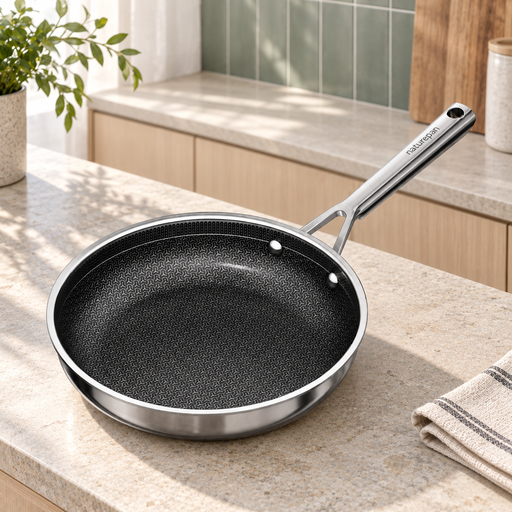
Why this product suits the profile: The 24 cm size is easy to handle for smaller households and everyday portions. According to the product specifications, the pan is suitable for induction, gas, electric and ceramic hobs.
The specifications list specific hob types and a maximum oven temperature of 230 °C. For the coating, low to medium heat and wooden, silicone or nylon utensils are recommended.
Multi-layer stainless steel body with an aluminium core, textured hybrid cooking surface and, according to the product data, dishwasher-safe construction. Hand washing is recommended to protect the surface.
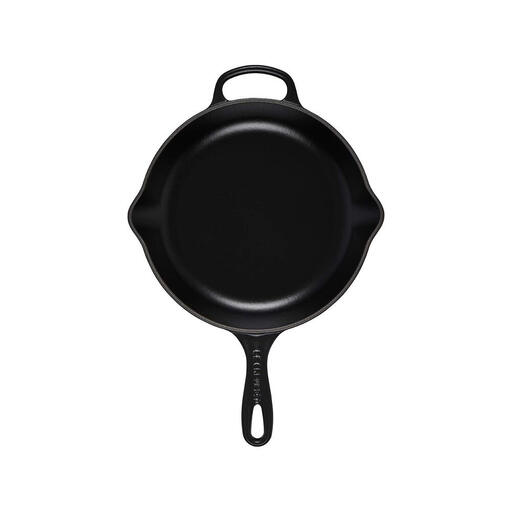
Why this product suits the profile: The enamelled cast iron construction is suitable for users looking for heavy cookware that can be used on the hob and in the oven. The helper handle makes the pan easier to handle despite its weight.
The product data specifies a clear temperature limit of 260 °C and advises gradual heating. The handle becomes hot and requires heat protection.
Enamelled surface, suitable for use on the hob and in the oven and, according to the product specifications, a capacity of 1.2 litres. Hand washing is recommended despite the stated dishwasher suitability.

Why this product suits the profile: The 32 cm wok pan is aimed at households that regularly prepare larger quantities, vegetable stir-fries or dishes using different cooking methods.
The product specifications list ceramic, gas, electric and induction as suitable hob types. The metal lid has an adjustable steam vent; the large cooking surface should match the hob.
Three-layer construction with an aluminium core, lid with steam vent, oven suitability for both the pan and lid and, according to the product data, dishwasher-safe construction.
We have put together a complete, regularly updated list of products that fully meet these strict selection criteria and the safety regulations applicable in the EU.
The service life of a frying pan depends on more than just its material. In particular, bear the following in mind:
An induction pan requires a magnetic base that sits flat. Stainless steel, cast iron and carbon steel may be suitable, provided the manufacturer explicitly states that they work with induction. With coated hybrid models, you should also check the maximum temperature and the approved hob type.
That depends on how the pan is used and cared for. A stainless steel pan is uncoated and can withstand high temperatures, but requires controlled preheating. A coated frying pan is often easier to use with delicate foods, but should not be overheated when empty or used with sharp-edged metal utensils.
For individual portions and small households, 20 to 24 cm is often sufficient. A 28 cm frying pan provides more room for several portions. For larger households or wok dishes, a bigger diameter may be useful, provided it suits your hob, storage space and ability to handle the weight.