
Lieferung heute & morgen

Qualitätsgarantie

Willkommens-Angebote freischalten: KOSTENLOSE Lieferung | Bis zu 80 % RABATT | Kostenlose 30-Tage-JoyPlus-Testphase
App herunterladen
A frying pan needs to do more in everyday use than simply withstand high temperatures. It should work on your existing hob, cook food evenly and be easy to clean. At the same time, models can differ considerably in terms of coating, weight, rim height and oven suitability.
If you only pay attention to colour, brand name or an apparently low price, you may overlook important details. The following points will help you avoid common buying mistakes and choose a pan that suits the way you cook.
A pan may be suitable for gas, electric, ceramic and induction hobs. However, the exact scope of the product is what matters. With some models, this information applies only to the cookware itself, while the handles or lids are not oven-safe. Halogen or infrared hobs may also require an additional compatibility check.
Before buying, you should therefore check:
A dishwasher-safe pan can be placed in the dishwasher, but this does not automatically mean that the coating will remain unchanged over the long term. Aggressive detergents, high temperatures and contact with other dishes can put greater strain on the surface.
For a coated frying pan, hand washing with warm water, mild washing-up liquid and a soft sponge is usually recommended. The manufacturer’s instructions take priority.
A non-stick pan makes it easier to fry delicate foods such as eggs, fish or pancakes. However, coatings are not designed for unlimited exposure to high heat or for being heated empty. If a pan is heated empty for a prolonged period, the surface may be damaged.
You should therefore pay attention to:
An aluminium pan is often comparatively light and heats up quickly. Models with coated aluminium are particularly suitable for gentle frying and foods that tend to stick. An integrated stainless-steel base may make the pan suitable for use on induction hobs.
Stainless steel distributes heat differently depending on its construction. Multi-layer pans with an aluminium core can improve heat conduction. A textured surface, as found on a hybrid pan, combines coated areas with exposed stainless-steel ridges. This can be useful for frying and searing, but requires appropriate heat control.
A cast-iron pan retains heat for a long time and is suitable for high-heat searing as well as use in the oven or on the barbecue. The trade-off is that it is considerably heavier. The weight of almost two kilograms for a cast-iron serving pan is noticeable in everyday use, particularly when pouring or moving it.
The right size depends on the size of your household, your hob and the quantity of food you normally cook:
A 28 cm pan requires a sufficiently large cooking zone. On a significantly smaller hob, heat distribution around the edge may be uneven. Rim height is also important for braised dishes. A sauté pan or serving pan with a lid and high sides holds more liquid than a shallow frying pan.
A PTFE-based coating, used on several coated models, is designed for frying delicate foods with little fat. Claims such as “PFOA-free” or “PFAS-free” should always be taken from the specific product data sheet and should not be applied generally to an entire product range.
Ceramic surfaces can be an alternative. A ceramic pan should also be used over medium heat and with suitable kitchen utensils. With removable handles, check before lifting the pan that the locking mechanism is fully engaged.
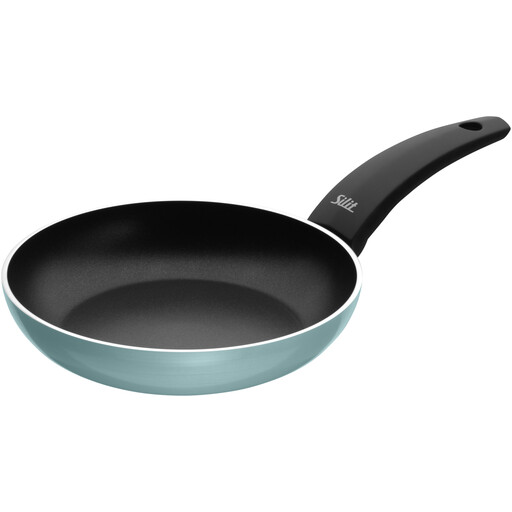
Why this product suits this profile: The compact aluminium design is easy to handle and suitable for gas, electric, ceramic and induction hobs. The 20 cm size is ideal for smaller portions and individual cooking zones.
The maximum oven temperature is stated as 70 °C. This makes it clear that the model is primarily intended for the hob rather than oven cooking.
Coated aluminium, low weight, Silitan non-stick coating and suitability for several hob types.
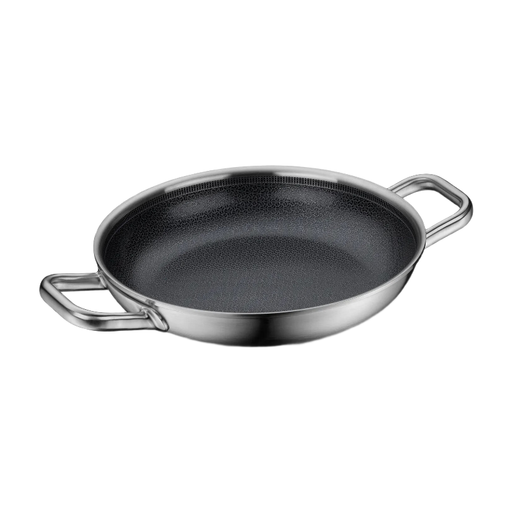
Why this product suits this profile: The three-layer construction with an aluminium core, Cromargan stainless steel and a textured interior is designed for users who want both the convenience of a coating and the ability to sear food at higher temperatures.
The product details state that it is suitable for induction, gas, electric and ceramic hobs, as well as the oven. They also warn against heating the pan empty and using aggressive cleaning products.
24 cm diameter, textured stainless-steel honeycomb surface, three-layer construction and dishwasher suitability according to the product details.

Why this product suits this profile: The high sides and set comprising a pan, lid, steamer insert and spatula are ideal for larger quantities, vegetable dishes and recipes involving several stages of preparation.
The dimensions, 28 cm diameter and induction suitability are clearly stated. Before buying, however, you should still check whether the deep shape is compatible with your existing cooking zone.
28 cm diameter, high sides, two-part non-stick coating, plus a lid and steamer insert included.
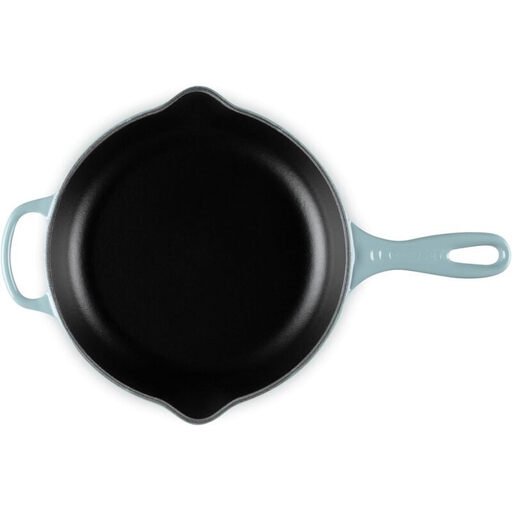
Why this product suits this profile: Enameled cast iron retains heat for a long time and, according to the product details, is suitable for induction, other hob types, the oven and the barbecue. Two pouring spouts and an additional handle make serving easier.
The higher weight is clearly stated. If you are looking for a pan that is easy to move, you should weigh this feature against its heat-retention properties.
Enameled cast iron, stated oven suitability up to 350 °C, and use as both a frying and serving pan.
We have put together a complete, regularly updated list of products that fully meet these strict selection criteria and the safety regulations applicable in the EU.
Regardless of the material, temperature and cleaning have a significant effect on a frying pan’s service life:
A 24 cm pan is suitable for smaller households and one or two portions. For families, several pieces of meat or larger portions of vegetables, a 28 cm pan provides more cooking surface. You should also measure the diameter of your cooking zone.
A coated frying pan or ceramic pan can reduce sticking when using only a small amount of fat. An intact surface, medium heat and following the care instructions are all important. Low-fat cooking also depends on the food and the cooking method.
No. Dishwasher suitability and oven safety are different properties. Restrictions may apply to the handle, lid or maximum temperature. Before buying, check the technical specifications for the particular model.