
Lieferung heute & morgen

Qualitätsgarantie

Willkommens-Angebote freischalten: KOSTENLOSE Lieferung | Bis zu 80 % RABATT | Kostenlose 30-Tage-JoyPlus-Testphase
App herunterladen
A frying pan has to do more in daily life than just sear meat. In British households, you’ll often be cooking vegetables, eggs, pancakes or crêpes too. At the same time, hobs, cooking habits and cleaning preferences vary widely. Choosing the wrong pan can quickly turn into a poor investment.
The label pan for all hob types sounds practical, but it’s only relevant if the base is actually compatible with your own hob. For induction, a pan needs a magnetic base. For gas and ceramic hobs, other features matter, such as stability and a flat contact surface.
Before you buy, you should check:
A coated frying pan makes it easier to release delicate foods. However, it doesn’t replace gentle use. Metal turners, steel wool, abrasive cleaners and heating it empty on high can damage the surface. Even a pan labelled as dishwasher-safe can suffer more wear from frequent dishwasher cycles than from careful hand washing.
Look for specific details about cleaning and which kitchen utensils are allowed. Terms like “granite”, “stone” or “titanium” don’t automatically describe real durability. What matters are the material specification, care instructions and temperature limits.
A 20 cm pan works for single portions, but is often too small for a family meal. A 30 cm frying pan offers more surface area, but needs a matching cooking zone and more storage space. A cast iron pan can retain heat for a long time, but comes with significantly more weight. The Le Creuset model at 23 cm, for example, weighs 1.93 kg.
Aluminium generally heats up quickly and is relatively light. A non-stick coating helps you cook eggs, fish or pancakes with less sticking. For that, you should only use wooden, plastic or silicone utensils, unless the manufacturer says otherwise.
Enamelled cast iron is an alternative for those looking for a robust construction, even heat distribution and heat retention. The heating time and weight are higher. With an enamelled surface, it’s also important to avoid abrasive cleaning products.
For everyday household use, 24 to 28 cm is often a practical range. 30 cm is better suited to larger quantities. A crêpe pan or pancake pan usually has a low rim, making it easier to flip the batter. For fried eggs or several small portions, an egg pan with separate moulds can be useful.
Check whether the pan is dishwasher-safe and whether the handle remains oven-proof. Some models can go in the oven, but only up to a certain temperature. For coated pans, hand washing is often the gentler option. A versatile kitchen pan should also have a secure handle, a stable base and clear safety instructions.

Why this product fits the profile: The 26 cm pan is ideal for those looking for a lightweight pan for breakfast, vegetables and simple dishes. According to the product details, it is suitable for induction, gas and ceramic hobs.
The details specify the hob types and recommend hand washing with a soft sponge. This helps you better assess the general “universal” claim.
26 cm diameter, aluminium body, non-stick coating and wooden handle; according to the product details, not dishwasher-safe.
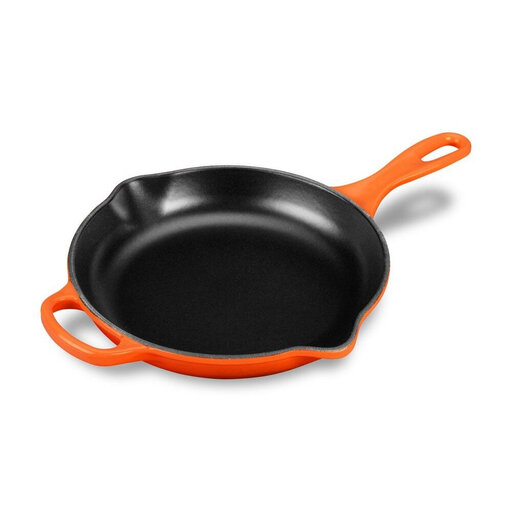
Why this product fits the profile: The enamelled cast iron pan is designed for those who prefer heavier cookware that is oven-safe and induction-compatible.
The weight of 1.93 kg and the helper handle are clearly stated. This allows buyers to assess beforehand whether the handling suits their kitchen.
23 cm diameter, enamelled cast iron, oven-safe, induction-compatible and, according to the product details, dishwasher-safe.
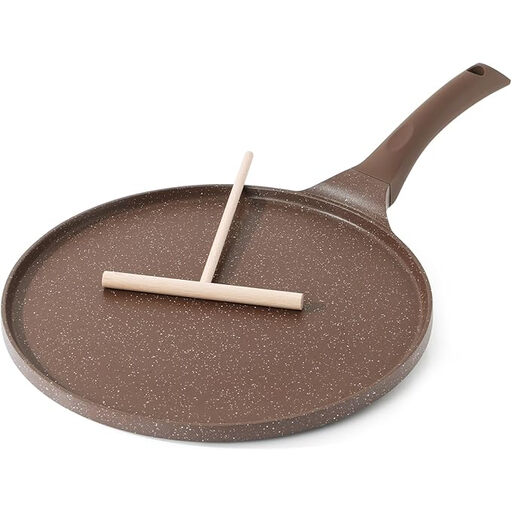
Why this product fits the profile: The flat shape with a low rim is aimed at households that regularly make crêpes, pancakes, tortillas or omelettes.
The product details mention hand washing, a maximum oven temperature of 302 °F and avoiding metal utensils. These limits should be considered before purchase.
Aluminium core, magnetic stainless steel base, Bakelite handle and, according to the product details, suitability for induction, gas and electric hobs.
We’ve put together a full, regularly updated list of products that fully meet these strict selection criteria and the safety regulations in force in the EU.
A pan for induction needs a magnetic base. The manufacturer’s note “induction-compatible” should be explicitly stated in the product description. A magnet test can give an initial indication, but does not replace the supplier’s technical specifications.
The lifespan depends on heat, kitchen utensils, cleaning and frequency of use. Scratches, overheating and abrasive cleaning can damage the coating prematurely. A general statement in years is therefore not reliable. If visible damage appears, the pan should no longer be used.
The label generally allows cleaning in the dishwasher, but says nothing about the preferred care. For many coated models, hand washing with a soft sponge can protect the surface. Always check the specific manufacturer’s instructions.