
Lieferung heute & morgen

Qualitätsgarantie

Willkommens-Angebote freischalten: KOSTENLOSE Lieferung | Bis zu 80 % RABATT | Kostenlose 30-Tage-JoyPlus-Testphase
App herunterladen
A frying pan needs to do more in everyday cooking than simply frying meat. It should work on your hob, distribute heat as evenly as possible and be easy to clean after cooking. At the same time, pans vary considerably in their coating, weight, heat resistance and care requirements.
Many unsuitable purchases result from three common marketing traps:
A coated aluminium frying pan is usually lightweight and heats up quickly. It is particularly suitable for delicate ingredients such as eggs, fish or pancakes. According to the product information, the Silit Belluna is made from coated aluminium and has a PTFE-based Silitan coating. Its stated heat resistance is up to 260 °C, while the plastic handle is oven-safe only up to 70 °C. These details show why you should always distinguish between the pan body and the handle when choosing a frying pan.
A stainless steel pan or hybrid pan is often more resistant to kitchen utensils. However, without a conventional non-stick coating, stainless steel requires more care when it comes to preheating, the amount of fat used and temperature control. Some hybrid models combine a structured stainless steel surface with coated areas.
A ceramic pan has a ceramic non-stick surface. If specific PFAS-free claims are important to you, check the product description carefully. For the ZEROPAN and Naturepan models mentioned here, the product information explicitly states that they are free from PFAS, PTFE or PFOA. These details refer to the declared material construction of the individual product and cannot be applied universally to every ceramic pan.
A cast iron pan retains heat for a long time and is ideal for searing. However, it is considerably heavier. Uncoated cast iron needs a seasoned protective layer, careful drying and occasional oiling. Enameled cast iron is easier to care for in everyday use, but it is still comparatively heavy.
The sizes 20 cm, 24 cm and 28 cm cover different everyday cooking situations:
The base diameter is just as important as the upper diameter. According to the manufacturer, a 24 cm pan may be optimised for a hob zone of around 18 cm. With induction, the base of the pan should cover the cooking zone sufficiently to ensure reliable heat transfer.
An induction frying pan needs a magnetic, induction-compatible base. The selected models are each explicitly stated to be suitable for induction. Nevertheless, it is worth checking the technical description before buying, particularly if you have an older hob or a specialist cooking surface.
A deep frying pan is useful if you plan to sear, braise, sauté or prepare sauces. High sides help reduce splashes and provide more capacity. A frying pan with a lid retains heat and moisture in the cookware, making it practical for braised dishes, ragù or vegetable dishes.
When using a pan in the oven, three temperatures must be considered separately:
For example, according to the product data, the Naturepan Hybrid Deep Sauté Pan is oven-safe up to 230 °C without the lid. The ZEROPAN Deep Frying Pan is stated to withstand up to 260 °C, while its glass lid is suitable for temperatures of up to 148 °C. These differences should be taken into account whenever moving the pan from the hob to the oven.
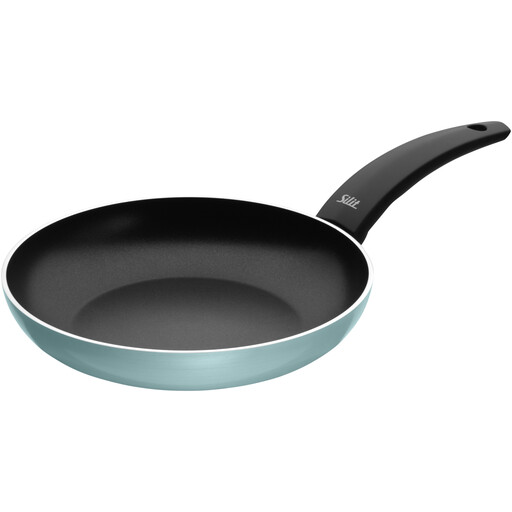
Why this product suits the profile: The 24 cm size is suitable for smaller households. Aluminium, a plastic handle and a coated surface keep the weight low and make everyday cleaning easier.
The product data specifies the hob types, temperature limits and suitable hob-zone diameter. This means its use is not limited to a vague marketing claim.
24 cm diameter, suitable for induction and other hob types, plus a stated 5-year manufacturer’s guarantee.
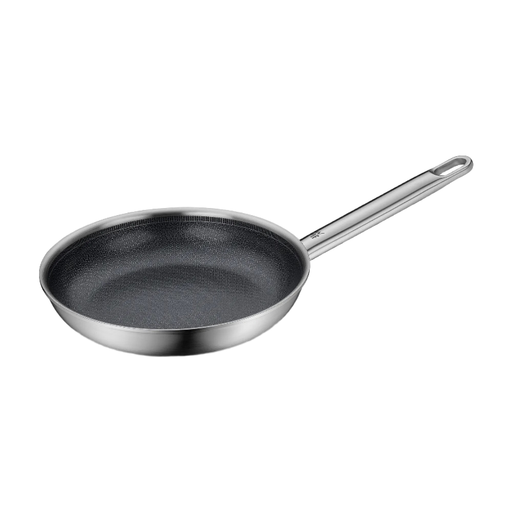
Why this product suits the profile: The combination of Cromargan stainless steel, an aluminium core and a PermaDur coating is aimed at households that value the construction of the materials and versatile use.
The protective grid and coating are described as specific design features. Hand washing and avoiding metal utensils are recommended for the coating.
Suitable for induction, dishwasher-safe according to the product description, with a stainless steel handle and multi-layer construction with an aluminium core.
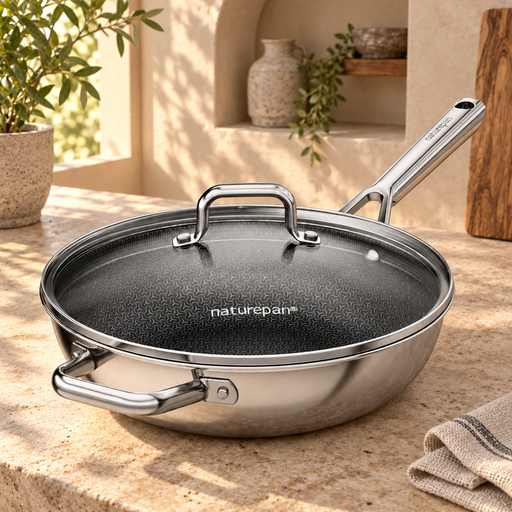
Why this product suits the profile: The deep 28 cm pan with lid is suitable for family-sized portions, braised dishes and one-pan recipes on induction, gas, electric or ceramic hobs.
The specifications state the diameter, body height, lid, hob types and oven limit of 230 °C without the lid. This makes it easier to assess the space required and the limits of use.
28 cm diameter, ceramic coating stated to be free from PFAS, PTFE and PFOA, glass lid and dishwasher suitability according to the product data.
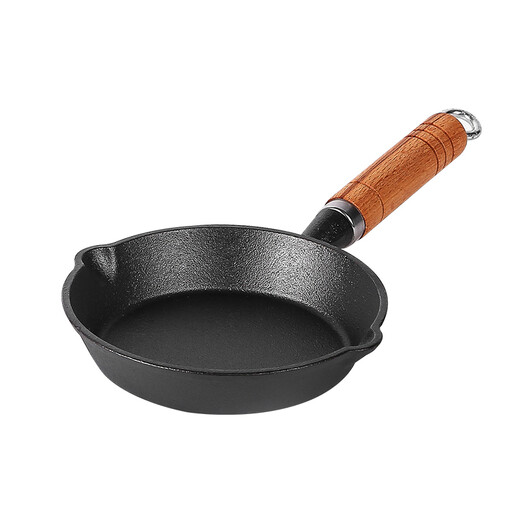
Why this product suits the profile: The small uncoated cast iron pan is designed for individual portions, sauces, butter, eggs or serving small side dishes.
The product description explicitly points out the lack of a non-stick coating, the need for oiling and hand washing. This makes the care required and possible sticking clear.
Uncoated cast iron, suitable for induction according to the product information and a compact 10 cm design.
We have put together a complete, regularly updated list of products that fully meet these strict selection criteria and the safety regulations applicable in the EU.
A pan’s service life depends greatly on its material and how it is used. Coated models should not be heated empty at a high setting. Wooden, silicone or plastic utensils reduce the risk of scratches. Sudden changes in temperature – such as placing a hot pan directly under cold water – can also put strain on the material and coating.
With cast iron, thorough drying and a thin layer of oil are important. Stainless steel can be cleaned in the dishwasher, but hand washing is often recommended for coated pans, even when the manufacturer permits dishwasher use. Always follow the specific care instructions for the individual model.
An induction-compatible pan needs a magnetic base. The product data must explicitly state that it is suitable for induction hobs. The base diameter should also match the cooking zone.
For one or two people, 20 to 24 cm is often sufficient. A 28 cm pan provides more cooking surface for family-sized portions and one-pan meals, but requires more storage space and a sufficiently large hob zone.
There is no standard service life. It depends on the type of coating, temperature, utensils, cleaning method and frequency of use. Reduced non-stick performance, visible damage or a warped base are signs that it is time to replace the pan.