
Lieferung heute & morgen

Qualitätsgarantie

Willkommens-Angebote freischalten: KOSTENLOSE Lieferung | Bis zu 80 % RABATT | Kostenlose 30-Tage-JoyPlus-Testphase
App herunterladen
A frying pan needs to do more in everyday cooking than simply heat food. It should suit your type of hob, be the right size and be easy to use without unnecessary maintenance. At the same time, many models are advertised with terms such as “non-stick”, “scratch-resistant” or “suitable for all hob types”, without clearly explaining important details.
The most common buying mistakes arise from three points:
The material affects heat retention, weight, care requirements and cooking results.
Terms such as “PFOA-free” or “without intentionally added PFOA” describe a specific aspect of the material. They are not general proof of a longer service life or a particular cooking performance.
For one or two-person households, a small frying pan measuring around 20 to 24 cm is often sufficient. It takes up less space and is suitable for individual portions, eggs or small side dishes. A large frying pan measuring 28 to 32 cm provides more room for vegetables, several schnitzels or larger quantities.
The combination of diameter and base surface is important. For example, the BALLARINI carbon steel pan measuring 24 cm has a stated base surface of 18 cm. This may be suitable for a small cooking zone; on a large induction zone, the heat may not be distributed across the entire pan.
An omelette pan with a rectangular shape is designed for rolled egg dishes. It does not replace a universal frying pan, but it can be much more practical for this specific purpose. If you prepare different quantities and dishes, you may wish to consider a pan set with two sizes.
Before buying, check whether the base is suitable for gas, electric, ceramic or induction hobs. A pan described as an induction pan requires a magnetic base. For glass lids, the temperature limits and handle materials should also form part of your purchasing decision.
A pan with a lid is useful if you want to reduce sauces, braise vegetables or finish cooking food over a low heat. For use in the oven, the entire construction must be approved for this purpose. If the handle is made of wood or plastic, pay particular attention to the manufacturer’s stated maximum temperature.
A “dishwasher-safe pan” is not automatically a sign that machine washing is equally gentle on every surface. With coated models, hand-washing can help extend the life of the surface. Uncoated iron and carbon steel pans should never be put in the dishwasher.
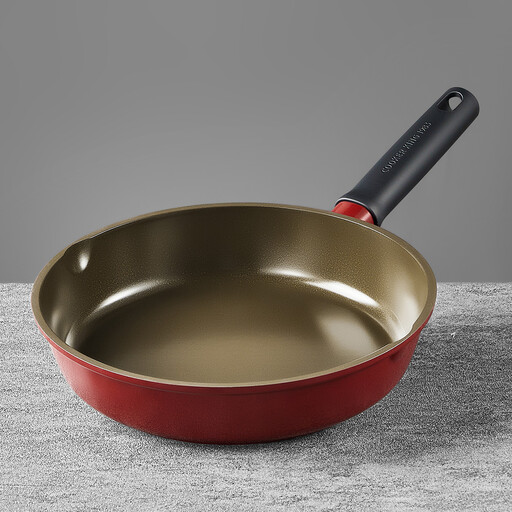
Why this product suits this profile: The 28 cm size is suitable for typical family portions. According to the product description, the pan is suitable for induction and has a coating without intentionally added PTFE and PFOA.
The product details explicitly state the hob compatibility. This makes it possible to check before buying whether the model is suitable for your induction hob.
28 cm diameter; according to the product description, suitable for induction and other common hob types.
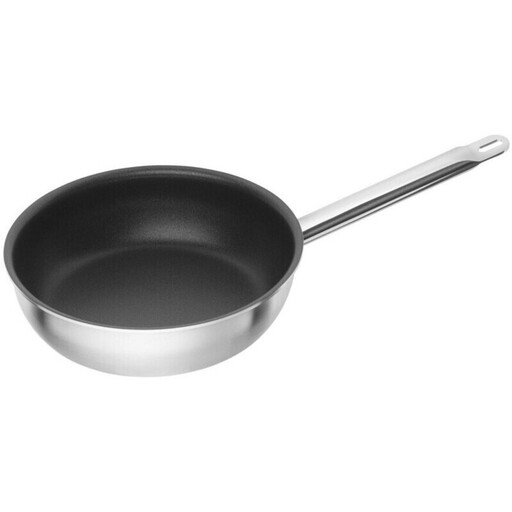
Why this product suits this profile: The model combines polished 18/10 stainless steel with a Duraslide Ultra coating and a multi-layer SIGMA-Clad base with an aluminium core.
The details clearly distinguish between the coating, stainless steel body and temperature limit. According to the product description, the pan is oven-safe up to 230 °C.
24 cm diameter; according to the product description, suitable for all hob types, including induction, and dishwasher-safe.
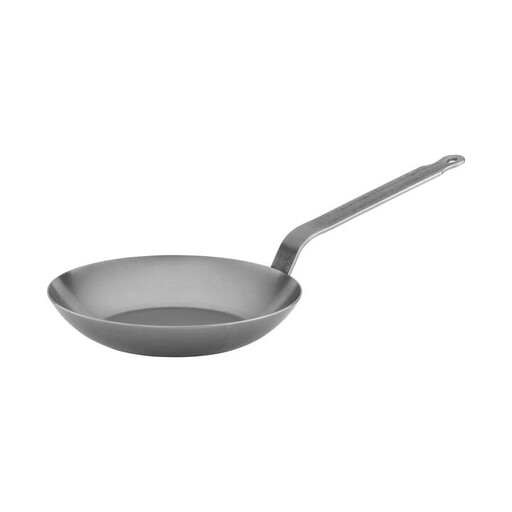
Why this product suits this profile: The carbon steel pan is designed for high temperatures, searing and use on various hob types, including induction.
The care requirements are clearly stated: season the pan before first use, dry it immediately, oil it and do not clean it in the dishwasher.
24 cm diameter; riveted steel handle and stated suitability for the hob, oven, open flame and induction.
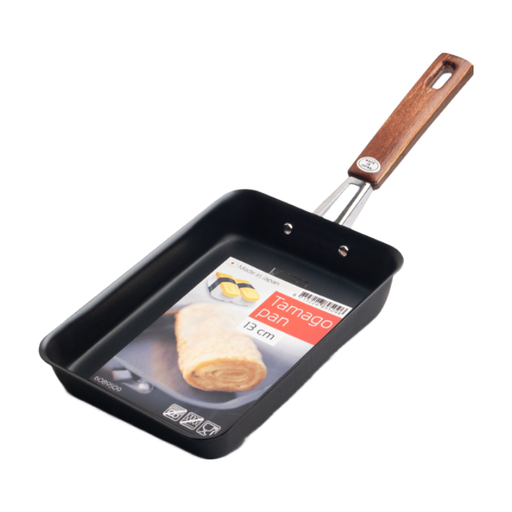
Why this product suits this profile: The rectangular shape is designed for tamagoyaki and rolled omelettes. Measuring 19 × 13 cm, the pan remains easy to handle for small portions.
The specialised shape means you do not have to use a universal round pan for rolled egg dishes. The pan should be seasoned before use.
Rectangular iron construction; dimensions of 19 × 13 cm and stated suitability for Japanese rolled omelettes.
We have put together a complete, regularly updated list of products that fully meet these strict selection criteria and the safety regulations applicable in the EU.
The service life depends not only on the material, but also on how you use the pan every day:
Models with a magnetic or explicitly induction-compatible base are suitable. In addition to mentioning “induction”, the manufacturer’s information should state any further restrictions, such as a minimum cooking-zone size or guidance on temperature control.
20 to 24 cm is generally suitable for individual portions and small households. 26 to 28 cm is versatile for everyday use. 30 to 32 cm provides more cooking surface, but requires a sufficiently large hob and more storage space.
Not necessarily. A dishwasher saves time, but it can put greater strain on coatings and certain surfaces. According to the relevant product information, carbon steel and uncoated cast iron should not be put in the dishwasher, as water and detergent can damage the patina and encourage rust.