
Lieferung heute & morgen

Qualitätsgarantie

Willkommens-Angebote freischalten: KOSTENLOSE Lieferung | Bis zu 80 % RABATT | Kostenlose 30-Tage-JoyPlus-Testphase
App herunterladen
A frying pan is a basic item in every kitchen. Even so, unclear product details, unsuitable hob types or a delicate coating often lead to disappointing purchases. If you want to buy a frying pan, you should therefore look beyond the price or claims such as “ultra-robust” and “extra non-stick”.
The key factors are the construction, hob compatibility, diameter and specific care instructions. The following selection helps home cooks, families and quality-conscious households assess suitable models for induction, gas and electric hobs.
An induction frying pan needs a magnetic or induction-compatible base. Many models state that they are suitable for induction, but do not specify whether the pan sits flat or which hob size it is designed for. An unsuitable diameter can reduce heat transfer and waste energy unnecessarily.
Before buying, check the following:
A coated frying pan makes it easier to fry eggs, fish or pancakes. However, this does not mean that every coating can safely withstand metal turners, high temperatures or scouring sponges. With a non-stick frying pan, the usage instructions are particularly important.
Look for information about:
Even a surface advertised as “scratch-resistant” should be treated in accordance with the manufacturer’s instructions.
A 20 to 24 cm frying pan is suitable for smaller portions, eggs or side dishes. For two to four people, 26 to 28 cm is often more practical. Models from 32 cm upwards offer plenty of cooking space, but require a suitably sized cooking zone and more storage space.
The stated size generally refers to the upper rim, not the actual usable frying surface. A high rim is useful for sauces and stews, while a low rim makes turning food easier.
A stainless steel frying pan is uncoated and can be used for a wide range of dishes when the temperature is controlled correctly. Food may initially stick more readily. Preheating, adding oil and using medium heat are therefore more important than with a coated pan.
Aluminium conducts heat quickly and is often combined with a coating or stainless steel base. A multi-layer construction with an aluminium core can help distribute heat more evenly. With cast iron or carbon steel, heat retention and high temperature stability are the main priorities. However, you also need to take the weight, seasoning and rust protection into account.
A non-stick frying pan is practical for delicate foods and low-fat cooking. PTFE, ceramic and hybrid surfaces differ in their construction and care requirements. Claims such as “healthy”, “non-toxic” or “chemical-free” should only be assessed in the context of the specific manufacturer’s information; they are no substitute for technical data.
For a long service life, the following generally applies:
An oven-safe frying pan is suitable for searing food on the hob and then finishing it in the oven. The handle is just as important as the pan itself. A plastic handle may have a significantly lower temperature limit than the pan body.
A pan with a lid is useful for stews, sauces and keeping food warm. Check the temperature limit of the glass lid separately. On many models, it is lower than the pan’s permitted temperature.
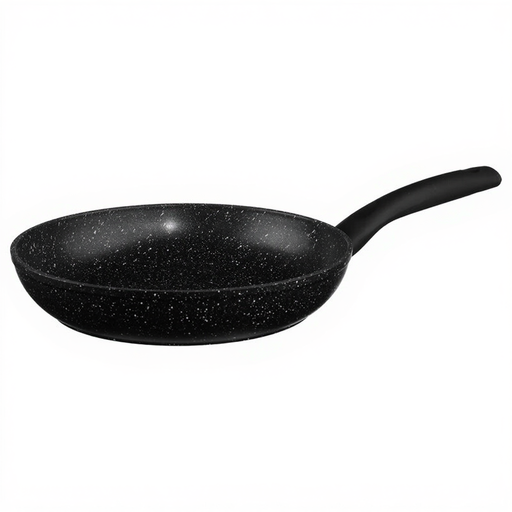
Why this product suits this profile: The 26 cm diameter is suitable for everyday portions. The aluminium body and stated weight of 0.75 kg make it easier to handle during regular cooking.
The specifications state that it has a three-layer coating and a 3 mm stainless steel base. Hand washing is recommended, making the care requirements clear.
26 cm diameter, aluminium construction, three-layer coating and ergonomic Bakelite handle.
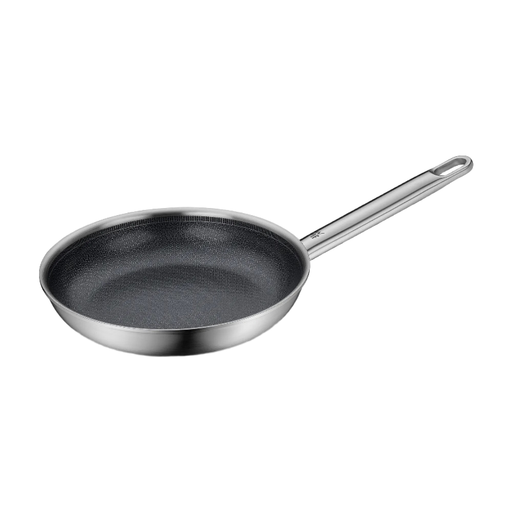
Why this product suits this profile: The combination of Cromargan stainless steel, an aluminium core and a PermaDur coating is aimed at households looking to combine coated cooking with a multi-layer construction.
The product data lists the suitable hob types, including induction, as well as specific guidance on avoiding overheating, abrasive sponges and unsuitable utensils.
24 cm diameter, stainless steel handle, PermaDur coating, aluminium core and suitability for gas, electric, ceramic and induction hobs.
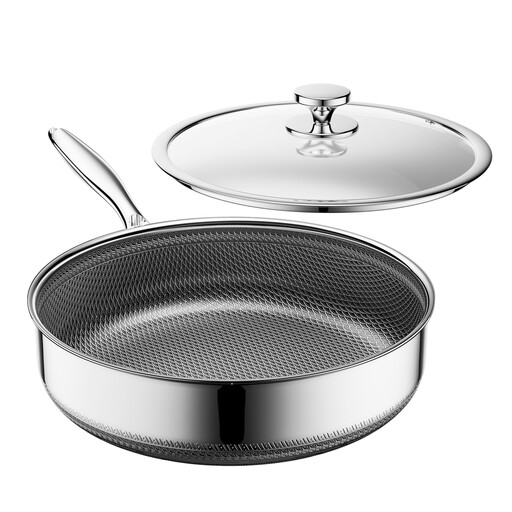
Why this product suits this profile: This deep hybrid pan with a glass lid is suitable for households that want to sear, braise and prepare dishes on several hob types.
The temperature limits are stated separately: up to 260 °C for the pan and up to 148 °C for the lid. This helps prevent incorrect use in the oven.
Hybrid construction, aluminium core, glass lid, suitability for all the hob types listed and dishwasher-safe according to the product information.
A dishwasher-safe pan can be placed in the dishwasher, but this is not always the gentlest way to clean it. Detergents, high temperatures and contact with other dishes can put extra strain on coatings and surfaces. For coated models, hand washing with a soft sponge is usually the gentler option.
With an uncoated stainless steel frying pan, temperature control is helpful: preheat the pan, add the oil afterwards and do not turn the food too soon. Carbon steel and cast iron require thorough drying after cleaning and, depending on the model, a thin layer of oil. A carbon steel wok pan should therefore not be treated as equivalent to a maintenance-free stainless steel pan.
When using the oven, always check the information for the pan body, handle and lid separately. Even with an induction frying pan, the handle does not automatically stay cool while cooking.
We have put together a complete, regularly updated list of products that fully meet these strict selection criteria and the safety regulations applicable in the EU.
A pan is suitable if the manufacturer explicitly states induction compatibility. The base should also sit flat and match the size of the cooking zone. Stainless steel pans with an aluminium core and coated models with an induction-compatible base are often available for several hob types.
That depends on the model. Even if the manufacturer approves dishwasher use, hand washing may be gentler on the coating and handle. Do not use scouring agents and allow the pan to cool before cleaning it.
Its service life depends on the material, temperature, cleaning method and utensils used. A coating can be affected by overheating, scratches or abrasive cleaning. Uncoated stainless steel, cast iron and carbon steel pans do not have a conventional non-stick coating, but they do require suitable temperature control and material-appropriate care.