
Lieferung heute & morgen

Qualitätsgarantie

Willkommens-Angebote freischalten: KOSTENLOSE Lieferung | Bis zu 80 % RABATT | Kostenlose 30-Tage-JoyPlus-Testphase
App herunterladen
A frying pan is part of the everyday kitchen kit in many UK homes. Yet unclear information about coatings, hob compatibility and oven safety often leads to the wrong purchase. A pan may work on a gas hob but be unsuitable for induction. And a surface advertised as easy to care for can quickly lose its non-stick properties if cleaned incorrectly.
This buying guide explains which details really matter when choosing a frying pan, and which models suit different cooking habits.
A frying pan for induction needs a magnetic base. Aluminium alone isn’t enough. Look for specific information such as “induction-compatible” or “suitable for induction”. Some models also state that they work with gas, electric, ceramic and halogen hobs.
If the product description is unclear, check the technical specifications for the specific model. The diameter alone tells you nothing about hob compatibility.
Terms such as “granite”, “stone effect” or “titanium” don’t automatically describe the chemical composition of the surface. A coated frying pan may have a PTFE or ceramic coating. If you’re looking for a PFAS-free frying pan, check for a clear statement from the manufacturer and note whether it says “free from intentionally added substances” or makes a broader claim about the product.
A ceramic frying pan is still vulnerable to overheating, metal utensils and abrasive cleaners. “Non-stick” doesn’t mean that every kind of treatment is harmless.
For a frying pan with a lid, the stated maximum temperature doesn’t automatically apply to both parts. A glass lid may have a lower temperature limit than the pan itself. Plastic or Bakelite handles may also be unsuitable for oven use. Always check the stated limits for the pan, handle and lid separately.
An uncoated stainless steel frying pan is hard-wearing and can be used with metal turners, but it requires careful control of temperature and fat. With uncoated stainless steel, the so-called hot-pan, cold-oil method can help reduce sticking. That doesn’t make it a non-stick frying pan.
Multi-layer designs often combine stainless steel with an aluminium core. According to product information, this construction can help distribute heat across the surface. A sturdy base is important, particularly on a 24 cm or 28 cm frying pan, to help prevent uneven heating on the hob.
A non-stick frying pan is particularly well suited to eggs, fish, pancakes or vegetables cooked with little fat. Use wooden, plastic or silicone turners, unless the manufacturer advises otherwise. Don’t leave an empty pan on a high heat for an extended period.
Ceramic coatings are often advertised as PFAS-, PFOA- or PTFE-free. Treat these as claims made by the manufacturer. Product information from individual brands may give different details about composition and care. Hand-washing with a soft sponge can help preserve the surface for longer than using harsh cleaners or putting the pan in the dishwasher frequently.
The usable cooking surface matters too: a large rim diameter doesn’t necessarily mean an equally large heated area.
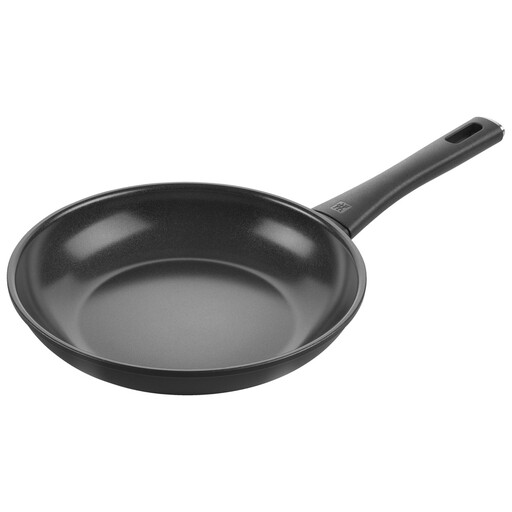
Why this product suits this profile: The 24 cm size is ideal for smaller households and everyday portions. According to the product information, this model has a forged aluminium body and is designed for use on induction, gas, electric and ceramic hobs.
The product information specifically identifies the CeraForce ceramic coating as PTFE- and PFOA-free, and states that the pan is oven-safe up to 250 °C.
24 cm diameter, aluminium body, stainless steel handle and, according to the product information, compatibility with several hob types.
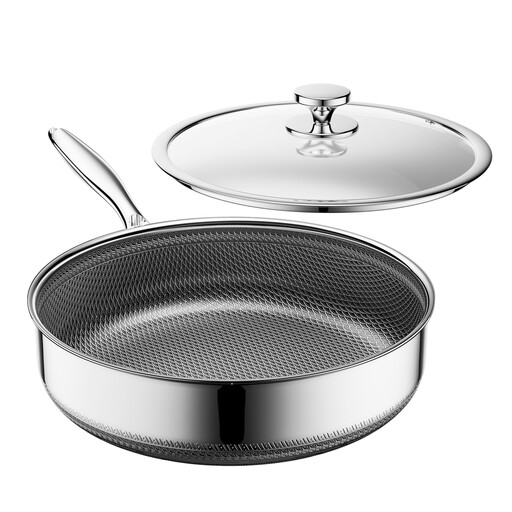
Why this product suits this profile: This model combines a multi-layer stainless steel construction with an aluminium core, ceramic surface and glass lid. It’s designed for households that want to fry food and then continue cooking it with the lid on.
According to the product information, the pan and coating are PFAS-, PTFE- and PFOA-free. Separate temperature limits are also given for the pan and lid.
Suitable for all the hob types listed and oven-safe up to 260 °C; according to the product information, the lid is designed for temperatures up to 148 °C.
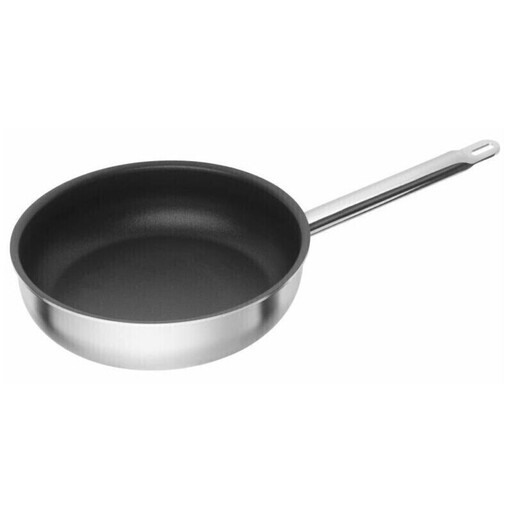
Why this product suits this profile: The 28 cm frying pan offers more room for cooking several portions. According to the product information, it features a three-layer SIGMA-Clad construction with an aluminium core and a Duraslide Ultra PTFE coating.
The product description states the maximum oven temperature of 230 °C and recommends avoiding metal utensils and abrasive cleaners.
28 cm diameter, induction-compatible, stainless steel body and, according to the product information, dishwasher-safe.
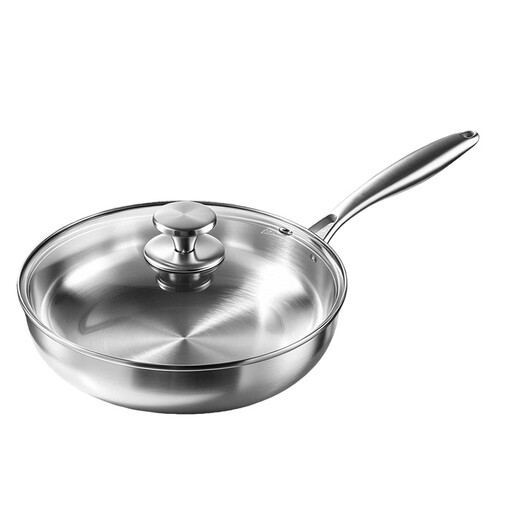
Why this product suits this profile: The uncoated interior is for cooks who prefer a stainless steel frying pan without a non-stick layer and want to control the temperature themselves.
The product description explicitly states that there is no chemical non-stick coating. This avoids the usual wear associated with coatings, although the right cooking technique is essential.
Tri-ply construction with 304 stainless steel and an aluminium core, 22 cm diameter, glass lid and, according to the product information, suitable for induction.
We’ve put together a complete, regularly updated list of products that meet these strict selection criteria and the safety regulations in force in the EU.
A 24 cm frying pan is suitable for smaller portions and many everyday dishes. If you regularly fry several ingredients at once, a 28 cm frying pan offers more room. The key is to make sure the pan’s base is the right size for your hob.
No. The term “ceramic” alone doesn’t necessarily describe the full composition. Check the manufacturer’s specific information about the coating. For the products mentioned here, any PFAS, PFOA or PTFE claims are stated explicitly in the brand’s product information.
There’s no reliable way to guarantee a set lifespan. It depends on factors including temperature, utensils, cleaning and storage. With proper care, an uncoated stainless steel pan may age differently from a ceramic- or PTFE-coated frying pan. The key is to follow the care instructions for the specific model.