
Lieferung heute & morgen

Qualitätsgarantie

Willkommens-Angebote freischalten: KOSTENLOSE Lieferung | Bis zu 80 % RABATT | Kostenlose 30-Tage-JoyPlus-Testphase
App herunterladen
A frying pan needs to do more than withstand high temperatures in everyday use. It should suit your hob, household size and favourite dishes. Unclear information about coatings, oven suitability or cleaning can also easily lead to the wrong purchase.
Three common pitfalls are particularly worth watching out for:
A coated aluminium frying pan usually heats up quickly and is well suited to delicate foods such as eggs, fish and pancakes. Ceramic surfaces, as found on a ceramic pan, are often marketed for low-fat cooking. What matters most, though, is the specific care advice and maximum temperature.
An uncoated stainless steel pan is resistant to scratches from suitable metal utensils and can handle high temperatures. However, food may be more likely to stick. The Maxcook Tri-Ply pan is made from 304 stainless steel with an aluminium core, and is listed as suitable for induction, gas, electric, ceramic and halogen hobs. For best results, use the right preheating and oiling technique.
A cast iron pan retains heat for a long time, making it suitable for slow cooking or searing. However, it is heavier and needs more care. Dry uncoated cast iron immediately after washing and, if needed, apply a thin layer of oil to help prevent rust.
The size affects both portion sizes and heat distribution:
A deep frying pan or lidded sauté pan gives you extra room for sauces, vegetables, stews and braised dishes. High sides help reduce splashes and make it easier to stir larger quantities. A wok is especially suited to frequent stirring thanks to its shape, but it needs enough space on the hob.
For an induction pan, the product description must explicitly state that it is suitable for induction. Oven suitability is not a given either. Some pans can go in the oven only up to a certain temperature, while others are not oven-safe at all. Removable handles can make oven use easier, but must be removed and reattached correctly.
When it comes to cleaning, look out for these three different descriptions:
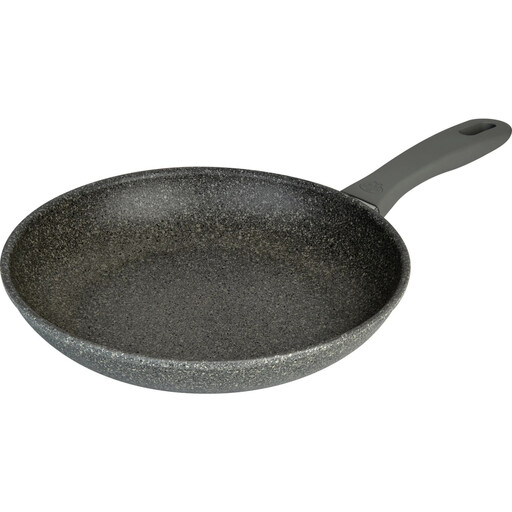
Why this product suits this profile: This compact aluminium pan is ideal for smaller portions and, according to the product information, has a five-layer GRANITIUM Extreme non-stick coating.
The product information confirms that it is suitable for induction and the dishwasher, and gives a maximum oven temperature of 150 °C. This makes it easy to check the key compatibility details before you buy.
20 cm diameter, Thermopoint temperature indicator and soft-touch handle. Hand-washing is recommended to protect the coating.
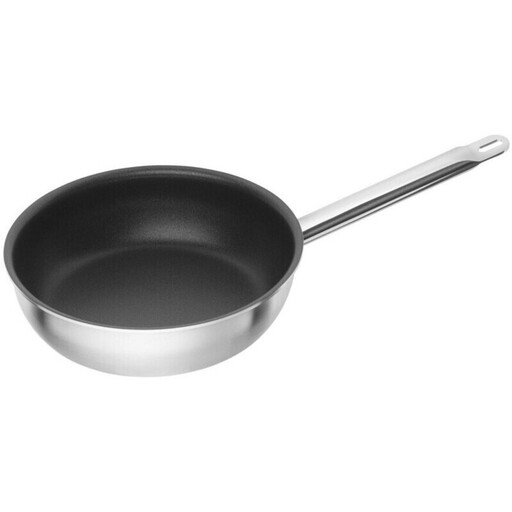
Why this product suits this profile: The combination of polished 18/10 stainless steel, Duraslide Ultra coating and SIGMA Clad base is designed for versatile use.
The product information explicitly lists compatibility with all hob types, including induction, as well as oven suitability up to 230 °C. However, avoid using metal utensils with the coating.
24 cm diameter, wide pouring rim and multi-layer base with an aluminium core. The description says it is dishwasher-safe, though hand-washing is recommended.
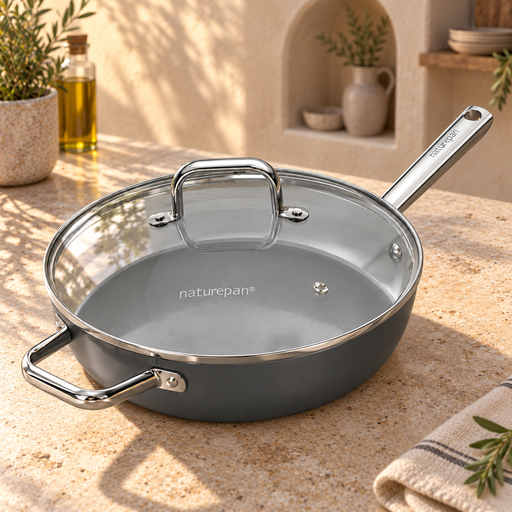
Why this product suits this profile: The high sides and included lid make this pan a good choice for sauces, braised dishes, vegetables and larger one-pan meals.
The description lists compatible hob types, dishwasher suitability and a maximum oven temperature of 260 °C. Checking these details helps prevent unsuitable use based on assumptions.
28 cm diameter, ceramic coating, glass lid and high sides. For a longer lifespan, low to medium heat and soft kitchen utensils are recommended.
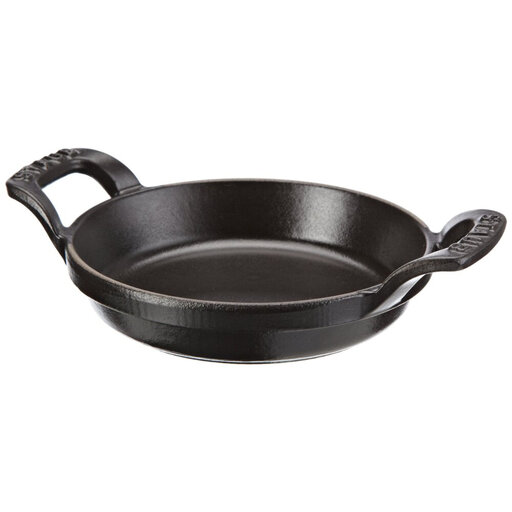
Why this product suits this profile: The enameled cast iron is designed for single portions and side dishes, and for serving straight at the table.
The product information confirms that it is suitable for induction and the oven up to 230 °C, as well as being dishwasher-safe. Hand-washing is recommended to protect the enamel.
16 cm diameter, 0.4-litre capacity, enamelled surface and compatibility with all hob types, including induction.
We’ve put together a complete, regularly updated list of products that meet these strict selection criteria and fully comply with the safety regulations in force in the EU.
A pan is suitable for induction only if this is explicitly stated in the product information. Stainless steel, cast iron and many aluminium pans with a magnetic base work on induction hobs. For coated models, you should also check the maximum permitted temperature.
For many households, 26 to 28 cm is a practical size range. This gives you enough space to cook several portions, while usually being easier to handle than a 30 cm pan. If you often cook large quantities or use a wok, a 30 cm wok may be a better choice.
Its lifespan depends on the heat, utensils, cleaning and storage. Low to medium heat, soft kitchen utensils and hand-washing can help protect the coating. Replace the pan if the surface starts to peel visibly, becomes badly scratched or food keeps sticking to it.