
Lieferung heute & morgen

Qualitätsgarantie

Willkommens-Angebote freischalten: KOSTENLOSE Lieferung | Bis zu 80 % RABATT | Kostenlose 30-Tage-JoyPlus-Testphase
App herunterladen
A frying pan has to do more in daily life than simply heat up food. It should suit your hob, household size, cooking style and the level of care you're willing to give it. Many poor purchases happen not because of the price, but because of unclear information about the coating, base construction or dishwasher suitability.
A non-stick frying pan can make turning delicate foods easier. However, its coating usually needs careful handling. Metal utensils, scouring pads, prolonged dry-heating and sudden temperature changes can damage the surface. With many models, hand washing is advisable if you want the coating to last as long as possible, even if the advertising suggests otherwise.
With a ceramic frying pan too, buyers should check the specific care instructions. Ceramic coatings are not automatically suitable for every temperature, every cleaning product or every cooking utensil.
For an induction hob, the base must be magnetically suitable and sufficiently flat. An induction frying pan should therefore be explicitly approved for induction use. If you move house or change your hob later, models that work on gas, electric, ceramic and induction offer more flexibility.
The base diameter is also crucial. A 28 cm pan, for example, can have a significantly smaller contact area with the hob. This affects heat transfer and the choice of the right cooking zone.
The size given usually describes the upper outer diameter, not necessarily the usable frying surface. A 24 cm frying pan is often suitable for smaller portions, eggs or one to two people. A 26 cm frying pan is a balanced everyday size for many households. A 28 cm frying pan offers more surface area for several portions, but needs a suitable cooking zone.
A 32 cm frying pan or wok pan is interesting for larger quantities, vegetable dishes and cooking that involves a lot of movement. On small hobs, however, it can heat unevenly.
A stainless steel frying pan is usually uncoated and resistant to scratches. Multi-layer constructions with an aluminium core can improve heat distribution. However, cooking with stainless steel takes a bit of practice: the pan needs to be preheated properly, and delicate foods can stick without enough fat or temperature control.
An aluminium frying pan is generally lighter and responds quickly to temperature changes. Aluminium is often combined with a non-stick or ceramic coating. In this case, the care instructions for the coating are what matter.
A cast iron frying pan stores heat for a long time and is suitable for searing or slow cooking. Uncoated cast iron must be dried thoroughly after cleaning and oiled regularly. Acidic or very salty foods can affect the seasoned protective layer.
With a coated frying pan, the product description should clearly state which coating is used and whether it is, for example, PFOA-, PTFE- or PFAS-free. Such information refers to the specific product specification and should not be equated with general health claims.
For coated models, kitchen tools made of wood, silicone or plastic are recommended. An uncoated stainless steel or cast iron frying pan is usually less sensitive when it comes to choosing utensils.
A dishwasher-safe frying pan can make cleaning easier. However, removable handles, lids and accessories are often excluded from this claim. So check which parts can actually go in the dishwasher.
A frying pan with a lid is practical for braising, sauces and dishes that need to cook further at a low temperature after searing. When using the oven, you must pay attention to the maximum temperature and the handle material. A glass lid can allow you to see the food, but it also gets hot and should be handled with care.

Why this product fits the profile: The 26 cm size is suitable for typical everyday dishes such as eggs, vegetables or small portions of meat. The aluminium body is reportedly lightweight and suitable for induction, gas and ceramic hobs.
The product information explicitly recommends hand washing and avoiding abrasive cleaners. This makes the care limitations of the coating clearer.
26 cm diameter, lightweight and stated compatibility with multiple hob types.
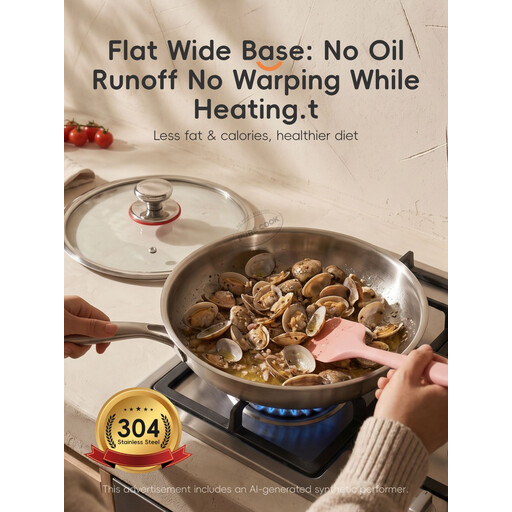
Why this product fits the profile: The three-layer construction of 304 stainless steel and an aluminium core is interesting for users who want to combine an uncoated surface, a lid and compatibility with several hob types.
The information specifies the material construction, hob compatibility and dishwasher suitability. The surface is reportedly designed for metal utensils.
28 cm diameter, 304 stainless steel, aluminium core, glass lid and use on gas, induction, ceramic and halogen hobs.
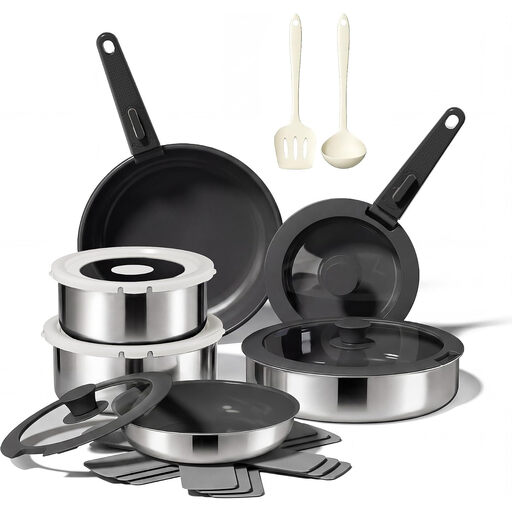
Why this product fits the profile: The stackable pan set with removable handles is aimed at small kitchens, households with limited storage space, and users of induction, gas, electric, ceramic or halogen hobs.
The product description limits dishwasher use: the cookware itself is suitable, but the removable handles are not.
16-piece set, stackable design, removable handles and oven use up to 260 °C without handles.
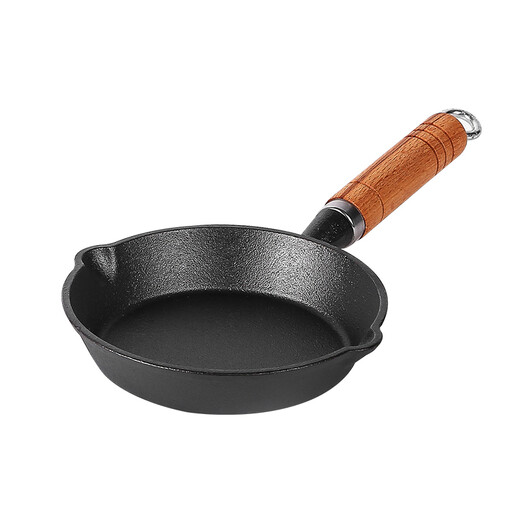
Why this product fits the profile: The small size is suitable for single portions, sauces, butter, side dishes or camping use. The uncoated surface appeals to users who consciously want to avoid a synthetic non-stick coating.
The care requirements are clear: hand washing, immediate drying and light oiling help prevent rust. A seasoning phase is required before first use.
Uncoated cast iron, induction and oven suitability according to product information, and a compact 10 cm size.
We have put together a complete, regularly updated list of products that fully meet these strict selection criteria and the safety regulations in force in the EU.
A 26 cm frying pan is sufficient for many everyday portions. If you regularly cook for several people, you can choose a 28 cm or 32 cm pan. It is important that the pan base fits the cooking zone and that there is enough space for safe handling.
Models that are explicitly stated as suitable for induction are appropriate. Stainless steel pans with a magnetic multi-layer base, coated aluminium pans with an induction base and many cast iron pans are all possibilities. The manufacturer's information should be checked against your own hob before buying.
The lifespan depends on the type of coating, temperature, cooking utensils and cleaning. Avoid prolonged dry-heating, metal tools and sudden temperature changes. If you see visible chipping, significant peeling or a clear decline in performance, the pan should be replaced regardless of its age.