
Lieferung heute & morgen

Qualitätsgarantie

Willkommens-Angebote freischalten: KOSTENLOSE Lieferung | Bis zu 80 % RABATT | Kostenlose 30-Tage-JoyPlus-Testphase
App herunterladen
A frying pan is part of the everyday cookware in many homes. But it’s often only after you buy one that you find out whether it suits your hob, household size and cooking style. Uneven heating, a wobbly handle or a delicate coating can make a pan much harder to use.
Don’t take the claim suitable for all hob types at face value. For induction, a frying pan needs a magnetic base that sits flat on the hob. With gas, ceramic and electric hobs, the shape of the base and even heat distribution are the main considerations. Look for specific information on induction, gas, electric and ceramic hobs.
A coated frying pan makes it easier to fry with less fat and clean up afterwards. But that doesn’t mean every coating can withstand metal utensils, high temperatures or abrasive sponges over time. Claims such as “scratch-resistant” refer to the construction described by the manufacturer; they’re not a licence to use any kitchen utensil.
When choosing a non-stick frying pan, check the following too:
The stated diameter usually refers to the top rim, not the usable cooking surface. A 20 cm frying pan is suitable for individual portions, fried eggs or small side dishes. A 24 cm frying pan is a versatile choice for smaller households. For family meals, a 26 cm frying pan, 28 cm frying pan or 30 cm frying pan is often a better fit. With larger models, remember to consider the space on your hob and the pan’s weight.
A stainless steel frying pan is robust and generally more resistant to scratches than a bare non-stick surface. However, uncoated stainless steel requires careful temperature control: preheat the pan, add a little oil and don’t move the food too soon. Otherwise, it may stick more.
Multi-layer designs often combine stainless steel with an aluminium core. This construction can distribute heat more evenly across the cooking surface. When choosing a pan, look for specific details such as Tri-Ply, an aluminium core or an induction-compatible base. Marketing terms alone aren’t a substitute for a technical description.
The surface of a coated frying pan can make it easier to release delicate foods such as fish, eggs and pancakes. Different pans use coatings including PTFE and ceramic. If you’re looking for a PFAS-free frying pan, make sure this is stated explicitly in the product description. According to the product information, ZEROPAN models have a ceramic coating that is free from PFAS, PFOA and PTFE.
Care instructions still apply to these surfaces: don’t leave the pan empty over high heat for long periods, avoid sudden changes in temperature and don’t use sharp-edged utensils unless the manufacturer says they’re suitable.
A frying pan with a lid is also useful for braising, reducing sauces and keeping food warm. A deep frying pan offers more capacity and helps contain splashes. If you’re using the pan in the oven, check the temperature limits for the pan, handle and lid separately. According to the product information, the ZEROPAN Hybrid pan is oven-safe up to 260 °C, while its glass lid is safe up to 148 °C.
A dishwasher-safe pan can make cleaning easier. However, several manufacturers still recommend hand washing coated surfaces, as mild washing-up liquid and a soft sponge can help protect the coating. Stainless steel may also be dishwasher-safe; dry the pan thoroughly after washing.
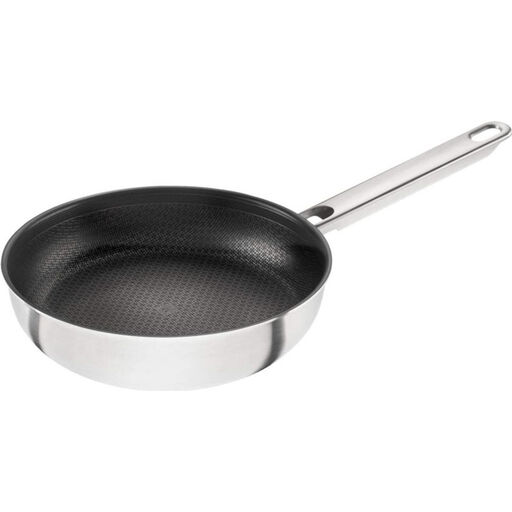
Why this product suits you: The compact 20 cm size takes up little storage space and, according to the product information, is suitable for all hob types, including induction.
The product details specify a 3-layer construction, a PTFE coating with a protective mesh, and oven suitability up to 200 °C.
20 cm diameter, stainless steel with an aluminium core, dishwasher-safe and designed for smaller portions.
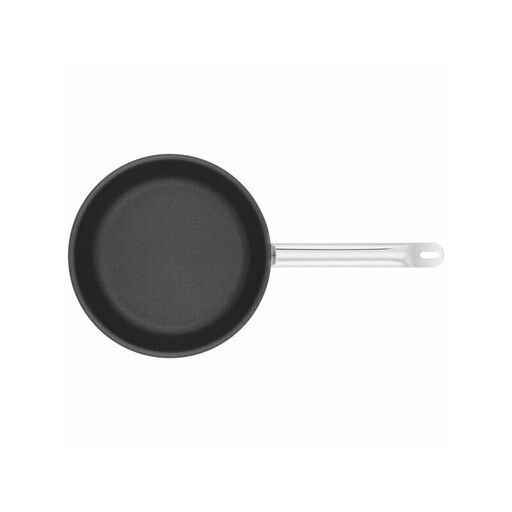
Why this product suits you: The 26 cm pan combines a multi-layer stainless steel construction with a Duraslide Ultra coating. It’s a good fit for households that cook regularly.
The product information sets out clear limits: oven-safe up to 230 °C, with a recommendation to avoid metal utensils to protect the surface.
SIGMA-Clad construction with an aluminium core, suitable for all hob types and, according to the product description, dishwasher-safe.
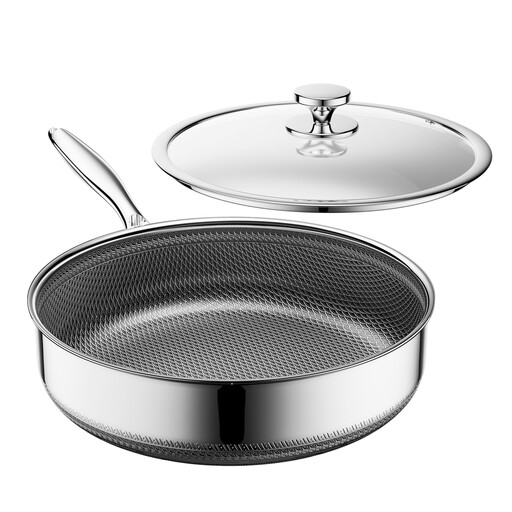
Why this product suits you: Its deep shape, glass lid and ceramic coating, which is free from PFAS, PFOA and PTFE according to the product information, make it a good choice for braised dishes and family-sized portions.
The product information clearly distinguishes the temperature limits: the pan is safe up to 260 °C and the glass lid up to 148 °C.
Tri-Ply construction with an aluminium core, compatibility with all common hob types, a glass lid and, according to the product description, dishwasher-safe.
We’ve put together a comprehensive, regularly updated list of products that meet these strict selection criteria and fully comply with the safety regulations in force in the EU.
An induction frying pan needs a magnetic base and should be explicitly labelled as induction-compatible. Models with a multi-layer stainless steel and aluminium construction may be suitable, provided they have a magnetic base layer. If in doubt, check the manufacturer’s product information rather than relying on the pan body’s material alone.
Pans measuring 20 to 24 cm are handy for individual portions. A 26 cm or 28 cm frying pan offers more space for vegetables, meat or side dishes. For particularly large quantities, a 30 cm frying pan may be a good choice. Check that the base fits fully on your hob and that the pan’s weight will be manageable for everyday use.
Use low to medium heat, don’t leave the pan empty over the heat for long, and let it cool before washing. Wooden, silicone or plastic utensils reduce the risk of scratches. Even if a pan is labelled dishwasher-safe, hand washing with a soft sponge can help protect the coating in everyday use. If the surface is visibly damaged, stop using the pan.