
Lieferung heute & morgen

Qualitätsgarantie

Willkommens-Angebote freischalten: KOSTENLOSE Lieferung | Bis zu 80 % RABATT | Kostenlose 30-Tage-JoyPlus-Testphase
App herunterladen
A frying pan with a lid can bring frying, sautéing, braising and gentle cooking together in one piece of cookware. But glossy marketing claims don’t automatically mean you’ve found the right pan. The key factors are material, coating, hob compatibility, size and care instructions.
As Joybuy’s Product Recommendation Officer, I’ll take a clear-eyed look at the most important things to consider and show you which models suit different households and cooking habits.
A pan is only suitable for induction if its base is magnetically conductive. So, if you’re choosing an induction frying pan, look for an explicit statement that it’s induction-compatible. Gas, electric and ceramic hobs have different heat-transfer requirements, although many models work on these too.
A non-stick frying pan can make cleaning easier and help you cook with less oil. However, coatings can be damaged by overheating, sharp-edged metal utensils and abrasive cleaners. A ceramic frying pan isn’t automatically dishwasher-safe or approved for high oven temperatures either.
A 28 cm frying pan gives you enough cooking space for several portions, but you’ll need a suitably sized hob and enough storage space. A deep frying pan with a lid is handy for braised dishes, sauces and larger quantities. A 20–24 cm pan may be easier to handle if you’re cooking for one or two people.
Aluminium heats up quickly and can be particularly easy to clean when coated. Multi-layer stainless steel and aluminium constructions combine a durable surface with a heat-conducting core. An uncoated stainless steel frying pan, on the other hand, is long-lasting and resistant to damage from many kitchen utensils. However, you’ll need to control the temperature and use the right amount of fat when searing food.
For three-ply pans, the product description should clearly explain the construction, for example stainless steel–aluminium–stainless steel. This can help distribute heat more evenly, although performance also depends on the hob’s power, the base thickness and your cooking technique.
For coated models, statements such as PFAS-, PTFE- or PFOA-free should be distinguished from general claims such as “healthy” or “non-toxic”. According to the product information, certain substances are not intentionally used in several of the models featured here. This isn’t a general statement about every coating and doesn’t replace the need to follow the care instructions.
Use wooden, silicone or plastic utensils with coated pans. Don’t leave empty pans on high heat for long periods. If you notice any damage, flaking or warping, stop using the cookware.
A glass lid lets you keep an eye on your food without letting heat and moisture escape by lifting it repeatedly. Also check each of the following separately:
An oven-safe frying pan can be particularly versatile. However, some products have a lower maximum oven temperature for the lid. Be sure to read the manufacturer’s information and product details in full.
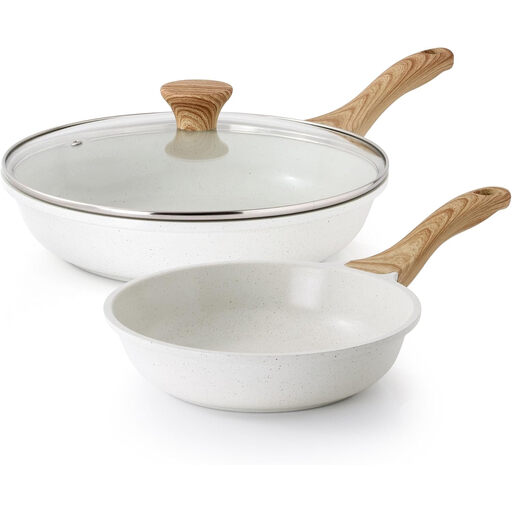
Why this product suits this profile: The set includes a small egg pan and a larger pan with a glass lid. According to the product information, both are suitable for induction, gas and electric hobs, and oven-safe up to 550 °F.
The hob compatibility and maximum oven temperature are clearly specified. According to the product description, the pans are not dishwasher-safe.
Two sizes, a glass lid and a ceramic coating made without intentionally added PFAS, PTFE, PFOA or PFOS, according to the product information.
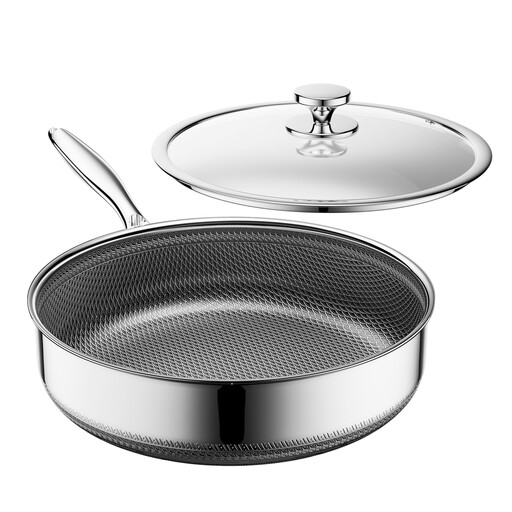
Why this product suits this profile: Its deep shape is ideal for sautéing, braising and cooking larger portions. According to the product information, the pan has an aluminium-core construction and a glass lid, and is suitable for gas, electric, ceramic, halogen and induction hobs.
The maximum oven temperature is listed separately: 260 °C for the pan and 148 °C for the lid. The coating still requires gentle utensils.
Deep shape, ceramic coating and, according to the product information, PFAS-, PTFE- and PFOA-free; it’s also dishwasher-safe.
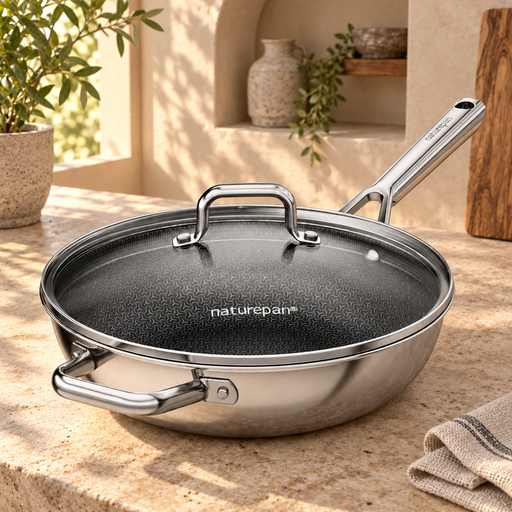
Why this product suits this profile: The 28 cm pan has a generous cooking surface and high sides. According to the product information, it’s suitable for induction, gas, electric and ceramic hobs, and oven-safe up to 230 °C with the lid removed.
The instructions specify oven use with the lid removed, compatible hob types and recommended hand-washing.
Generous 28 cm cooking surface, deep body, glass lid and a hybrid surface combining stainless steel ridges with coated sections.
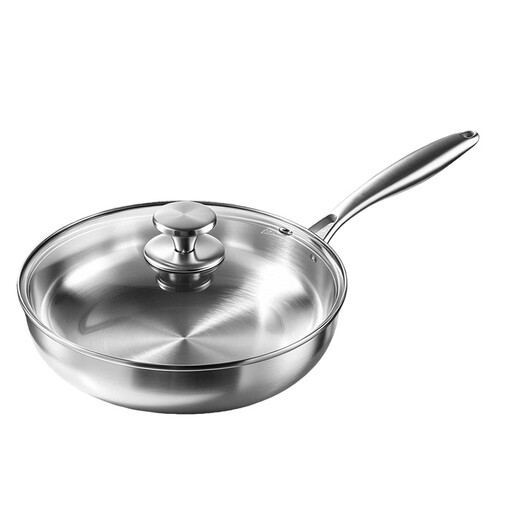
Why this product suits this profile: This uncoated stainless steel pan is for anyone who prefers not to use a non-stick coating. According to the product information, it works on induction, gas, electric, ceramic and halogen hobs.
The product description confirms that the surface is uncoated. This means there’s no non-stick coating to wear down, but searing food still calls for the right preheating and oiling technique.
Three-ply construction with an aluminium core and 304 stainless steel surface; the product information also states that it’s dishwasher-safe.
We’ve put together a complete, regularly updated list of products that meet these strict selection criteria and fully comply with the safety regulations applicable in the EU.
For smaller portions, 20 to 24 cm is often enough. A 28 cm pan gives you more room for vegetables, meat or several portions, but you’ll need a hob that’s large enough.
No. The pan needs a magnetically conductive base. Look for the explicit “induction-compatible” label and also check that the base sits flat on the hob.
There’s no set lifespan that applies to every pan. It depends on the heat, utensils, cleaning and how often you use it. Choosing moderate temperatures, hand-washing and using suitable utensils can help keep the coating in good condition for longer. Replace the pan if you notice any visible damage.