
Lieferung heute & morgen

Qualitätsgarantie

Willkommens-Angebote freischalten: KOSTENLOSE Lieferung | Bis zu 80 % RABATT | Kostenlose 30-Tage-JoyPlus-Testphase
App herunterladen
A frying pan with a lid can combine frying, sautéing, braising and pan dishes all in one piece of cookware. In practice, however, poor purchases are often not down to the price, but to unclear information about the coating, hob compatibility or cleaning. That is why the Joybuy Product Recommendation Officer focuses on verifiable product data and typical usage scenarios.
A pan that claims to work on all hob types must not only be labelled as suitable for induction. What really matters is a magnetic base that sits flat on the hob. For gas and ceramic hobs, stability and base diameter are also important. If you cook on induction, you should find the compatibility explicitly stated in the technical details, not just inferred from the picture.
A non-stick pan can make cleaning easier, but that does not automatically mean it is suitable for metal utensils, high temperatures or the dishwasher. Ceramic coatings, classic non-stick surfaces and hybrid structures all differ in heat tolerance and care requirements. Manufacturer claims such as “PFOA-free” or “PFAS-free” should be matched precisely to the specific product model. They do not constitute a medical statement.
A 28 cm pan does not necessarily offer a usable frying surface of 28 cm. High sides, pouring lips or a strongly curved base can reduce the available space. For one to two portions, a small non-stick pan may be sufficient, while family meals tend to need a deep pan or sauté pan of around 26 to 28 cm.
Aluminium heats up relatively quickly and keeps the weight low. A coating is often applied to help food slide out of the pan more easily. The PURECOOK pan with Maifan stone coating is made from an aluminium alloy according to the product details, and features a wooden handle and a tempered glass lid.
A stainless steel pan is uncoated and, with the right construction, can be durable and resistant to corrosion. Multi-layer models combine stainless steel with an aluminium core. The PURECOOK Tri-Ply 304, 28 cm, is described as having three layers of stainless steel and aluminium. According to the manufacturer, this product is suitable for induction, gas, ceramic and other hob types.
A ceramic pan can be an alternative for buyers who prefer a ceramic interior surface. Care instructions remain important: low to medium heat, gentle cleaning and kitchen utensils made of wood, silicone or nylon can help protect the surface.
For pancakes, eggs or small breakfast portions, a frying surface of around 20 cm is often enough. For vegetable stir-fries, pieces of meat and dishes with sauce, higher sides are more practical. A deep pan with a lid reduces splashes and offers more volume for braising.
Also pay attention to the weight. Cast iron or multi-layer stainless steel can be stable, but is heavier. A lightweight aluminium body is easier to handle with one hand. This matters if the pan is regularly carried from the hob to the table or the sink.
A glass lid allows you to keep an eye on the food without having to lift the lid constantly. Check whether the lid is included in the delivery and whether the handle remains heat-resistant. When using the oven, there are often separate limits for the pan, handle and lid.
When it comes to cleaning, there are clear differences: some models are dishwasher-safe, while others are intended for hand washing only. Coated surfaces should generally not be treated with steel wool or harsh abrasive cleaners. Even with stainless steel, a gentle sponge can keep the surface looking good for longer.
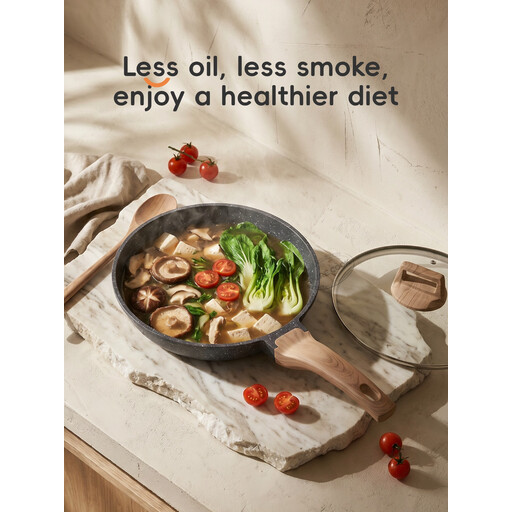
Why this product fits the profile: This compact pan is ideal for smaller households, breakfast dishes, pancakes and single portions. The aluminium body is lightweight according to the product details and is designed for induction, gas and ceramic hobs.
The product details explicitly state hob compatibility, hand washing and the need to avoid abrasive cleaners. This makes the important care limits clear before purchase.
Aluminium construction, glass lid and low weight; suitable for various hob types according to the supplier.
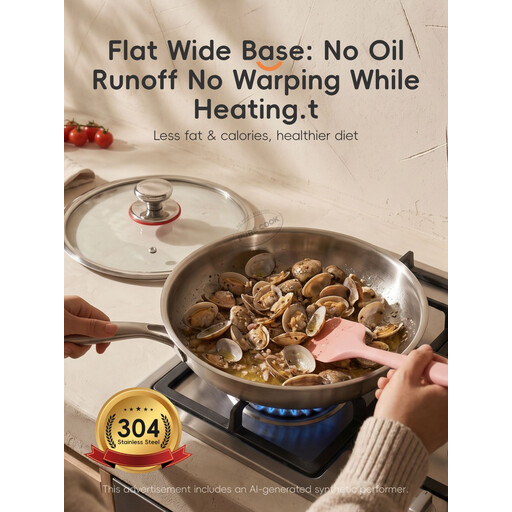
Why this product fits the profile: The uncoated stainless steel construction with an aluminium core is aimed at households that value multi-layer build quality and versatile hob compatibility.
Since no non-stick coating is specified, the typical wear and tear of a coating is eliminated. However, good results do require appropriate temperature control and a little cooking fat.
304 stainless steel, aluminium core, glass lid and dishwasher-safe according to the product details.
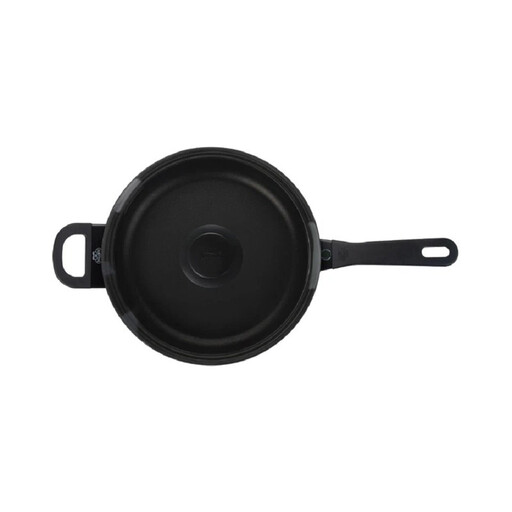
Why this product fits the profile: The high sides support sautéing, braising and sauce preparation. Two handles can provide extra grip when moving a full pan.
The 4-layer KERAVIS-Extreme coating, the glass lid and the dishwasher suitability are all specifically stated in the product data. Metal utensils should still be avoided.
28 cm diameter, high side wall, Thermopoint indicator on the handle and suitable for all hob types according to the supplier.
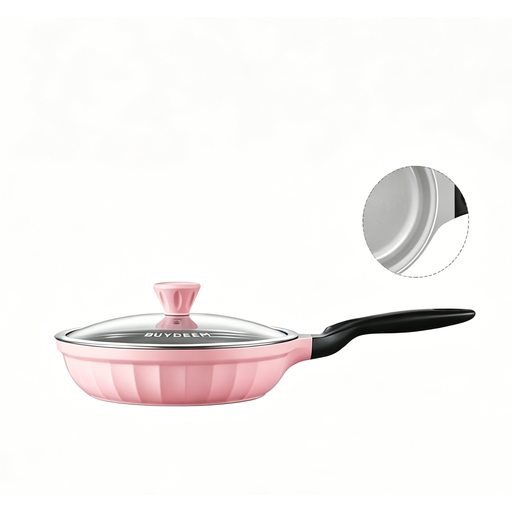
Why this product fits the profile: This model combines a 2.4 litre capacity with a glass lid and is suitable for gas, electric, ceramic and induction hobs according to the details.
The care instructions mention hand washing, soft sponges and avoiding metal utensils. This clearly outlines the limits of the ceramic surface.
26 cm diameter, 2.4 litre capacity, ceramic coating and a cool-touch handle according to the product description.
We have put together a complete, regularly updated list of products that fully meet these strict selection criteria and the safety regulations in force in the EU.
For smaller portions, around 20 to 24 cm is often sufficient. If you regularly prepare vegetables, meat and sauces together, 26 to 28 cm gives you more flexibility. The actual usable surface area depends on the shape and height of the pan body.
That depends on the base construction. An induction pan needs a magnetic base that sits flat. Look for an explicit manufacturer statement about induction compatibility. With sets containing multiple pans, the suitability may differ for each piece.
Use low to medium heat, do not heat the pan when empty, and use wooden, nylon or silicone utensils. Allow the pan to cool down before cleaning and follow the dishwasher instructions. If the coating becomes visibly damaged, the cookware should no longer be used.