
Lieferung heute & morgen

Qualitätsgarantie

Willkommens-Angebote freischalten: KOSTENLOSE Lieferung | Bis zu 80 % RABATT | Kostenlose 30-Tage-JoyPlus-Testphase
App herunterladen
A frying pan with a lid is ideal for searing, braising, steaming and keeping food warm. However, not every model is right for every household. Vague information about the coating, an unsuitable hob type or a pan base that is too small often lead to disappointing purchases. By checking a few technical details before you buy, you can narrow down your options considerably.
A pan for induction needs a magnetic base. This requirement does not apply to gas, electric or ceramic hobs. The claim “suitable for all hob types” should therefore explicitly mention induction, gas, electric and ceramic. Additional restrictions may apply for halogen or specialist hobs.
The diameter of the pan base also matters: a 28 cm frying pan can have a significantly smaller contact surface. On an induction hob, this can affect the automatic pan detection or heat distribution.
Terms like “ceramic”, “granite” or “Teflon-free” do not automatically describe the full product characteristics. What matters is whether the product information specifically states which substances have not been intentionally added and how the coating needs to be cared for.
With a coated frying pan, consumers should also note: overheating when empty, metal utensils and abrasive scouring pads can damage the surface. Statements such as “PFAS-free” or “PFOA-free” should be understood as manufacturer or product claims and are not equivalent to a general medical or health efficacy statement.
A lid should fit securely, have a heat-resistant handle and restrict your view as little as possible. Information about the oven suitability of the pan and lid can differ. With the ZEROPAN model, the pan can go in the oven up to 260 °C according to the product description, but the glass lid only up to 148 °C.
Cast iron retains heat for a long time but is heavy. Aluminium responds quickly to temperature changes and is generally lighter. A deep frying pan made from aluminium is well suited for sauces, vegetable stir-fries and braised dishes.
Multi-layer stainless steel pans combine stainless steel with an aluminium core. With the PURECOOK Tri-Ply 304 stainless steel pan, the construction consists of stainless steel, aluminium and stainless steel according to the product description. This is designed to distribute heat more evenly across the base. Stainless steel is usually uncoated and requires careful temperature control when searing to prevent food from sticking.
A non-stick pan or ceramic pan makes it easier to release delicate foods. With such models, low to medium heat and suitable kitchen tools made from wood, silicone or plastic are advisable.
Size alone doesn't tell you much about the usable volume. A high side wall turns a shallow pan into a more versatile sauté pan. For three to four portions, the BUYDEEM Cheflite PL41 has a stated capacity of 2.4 litres.
A coated pan should not be heated strongly when empty and should not be quenched with cold water immediately after cooking. With ceramic or non-stick surfaces, hand washing, a soft sponge and mild cleaning products often extend the lifespan. “Dishwasher-safe” does not mean the surface will remain unchanged after many cycles.
With stainless steel, metal utensils may be possible depending on the product information. Nevertheless, aggressive cleaners, rough scouring pads and extreme temperature changes can lead to discolouration or warping. Before buying, you should also check the handle material, lid temperature and possible oven use.
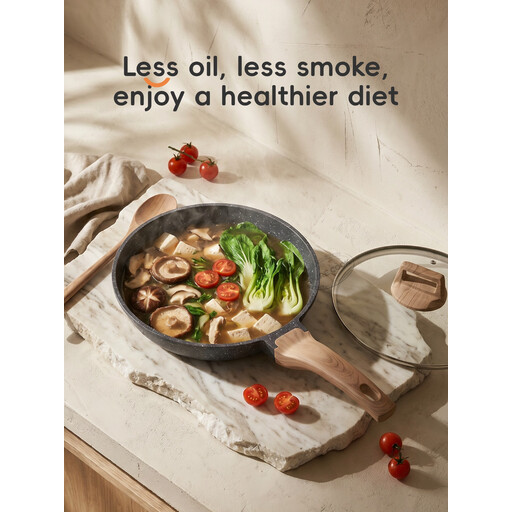
Why this product fits the profile: The roughly 20 cm, lightweight pan is designed for smaller portions, breakfast and simple everyday dishes. According to the product information, it is suitable for induction, gas and ceramic hobs.
The product description explicitly states the hob types, hand washing requirement and the need to avoid metal utensils.
Aluminium body, glass lid, heat-insulating wooden handle and coated surface for easy food release.
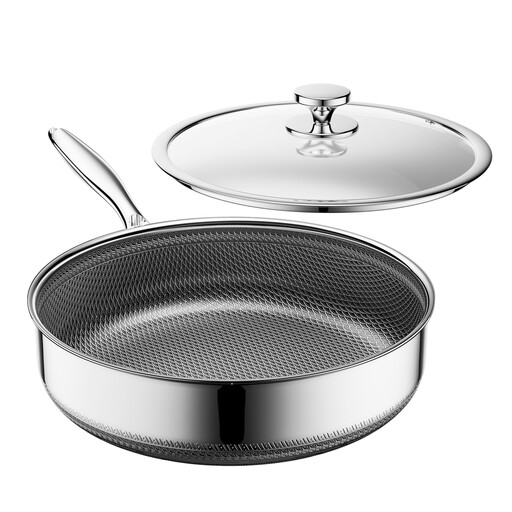
Why this product fits the profile: The 28 cm model combines a stainless steel body with an aluminium core and ceramic coating, according to the product description. It is designed for multiple hob types and the oven.
The temperature limits for the pan and lid are stated separately. This makes it easier to plan oven use.
PFAS-, PTFE- and PFOA-free product claim, glass lid and suitability for induction, gas, electric, ceramic and halogen hobs.
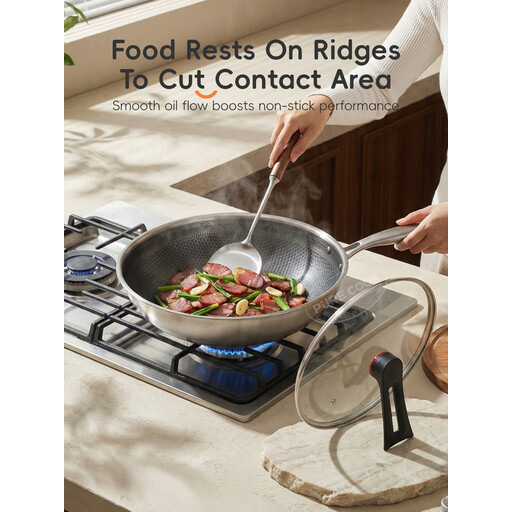
Why this product fits the profile: The 32 cm wok pan with lid is designed for larger quantities, stir-fries, braising and sautéing. The three-layer construction is suitable for gas, induction and electric-ceramic hobs according to the product information.
The product data states the diameter, material construction, hob types and care instructions instead of vague coating advertising.
304 stainless steel, aluminium core, glass lid and honeycomb structure; gentle dishwasher cleaning is possible according to the product information.
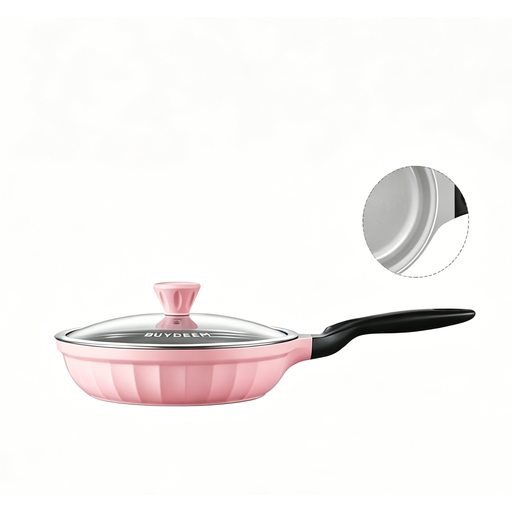
Why this product fits the profile: The cast aluminium body is designed for fast, even heat distribution according to the product description. With 2.4 litres, the pan is suitable for around three to four portions.
The product information states the Swiss ceramic coating is free from PFAS, PFOS and PFOA, along with specific care instructions.
26 cm format, glass lid, heat-insulating handle and suitability for gas, electric, ceramic and induction hobs according to the product information.
We have put together a complete, regularly updated list of products that fully meet these strict selection criteria and the safety regulations in force in the EU.
For one to two people, 20 to 24 cm is often sufficient. 26 to 28 cm offers more surface area for vegetables, meat or sauces and is usually suitable for three to four portions. 32 cm is practical for larger households but needs more space on the hob and in the kitchen cupboard.
An induction-compatible pan needs a magnetic base. Suitable product information should explicitly mention induction. Additionally, the pan base should sit as flat as possible and match the size of the induction zone.
It is not possible to give a reliable general lifespan. It depends on the type of coating, temperature, cleaning and the kitchen tools used. Low to medium heat, not heating when empty, hand washing and soft utensils can help protect the surface. If the coating chips, the pan warps or the handle becomes damaged, the pan should no longer be used.