
Lieferung heute & morgen

Qualitätsgarantie

Willkommens-Angebote freischalten: KOSTENLOSE Lieferung | Bis zu 80 % RABATT | Kostenlose 30-Tage-JoyPlus-Testphase
App herunterladen
A frying pan with a lid is ideal for searing, sautéing and then braising. Yet bold product claims don't automatically lead to the right purchase decision. What really matters are the technical specifications that suit your hob, cooking style and cleaning preferences.
A pan can be suitable for gas, electric and ceramic hobs, but not necessarily for induction. For an induction hob, it needs a magnetic base. So look for an explicit mention of induction compatibility and a base that sits as flat as possible.
The size of the pan base also matters: a large 28 cm frying pan can be less efficient on a small cooking zone if the base is noticeably smaller.
A coated frying pan makes it easier to flip delicate foods. However, it should generally not be heated empty on a high setting. Metal utensils, steel wool and harsh abrasives can damage the surface.
With a ceramic-coated pan or any other non-stick frying pan, you should check the specific details on temperature, oven use and cleaning. "Dishwasher-safe" does not automatically mean the coating will last as long with frequent dishwasher cycles as it would with gentle hand washing.
A glass lid should fit securely, have a safe grip and be removed carefully after cooking. Condensation and hot steam can escape when you open it. Equally important: a handle that stays cool on the hob can still become warm during prolonged or high-heat cooking.
Aluminium generally heats up quickly and is relatively lightweight. A stainless steel pan is particularly robust when uncoated, but requires the right temperature control when frying. Multi-layer constructions often have an aluminium core between layers of stainless steel. This allows the heat to spread more evenly across the base.
An uncoated stainless steel surface is not automatically non-stick. Preheating, using enough oil and a medium temperature help to reduce sticking. If you want to cook eggs, pancakes or fish with minimal fuss, you might consider a non-stick frying pan.
Check the following before you buy:
Even with a dishwasher-safe pan, you should still follow the manufacturer's instructions. Coated models often benefit from cleaning with warm water, mild washing-up liquid and a soft sponge. For stainless steel, non-abrasive cleaning products are a material-friendly choice.
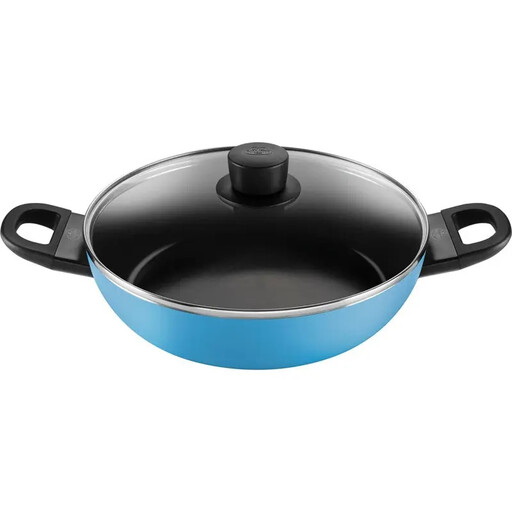
Why this product fits the profile: The 28 cm version offers a large frying surface for everyday family meals. The glass lid supports braising and allows you to keep an eye on the food.
The product details explicitly state suitability for induction, gas, electric and ceramic hobs. They also outline the limits of the coating and that it is not intended for oven use.
28 cm diameter, KERA-GLOSS ceramic coating, glass lid and Radiant-Induction technology according to the product description.
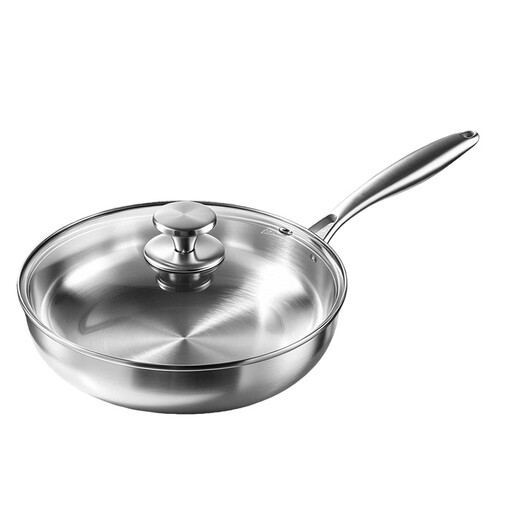
Why this product fits the profile: The uncoated 304 stainless steel construction is aimed at households that want to do without an additional non-stick layer and need a compact pan for daily use.
The surface is uncoated according to the product details. This eliminates the need to check the coating; however, preheating, oil and a moderate temperature are important when frying.
Three-layer construction of stainless steel, aluminium core and stainless steel, 22 cm diameter and suitability for induction, gas, electric, ceramic and halogen hobs.
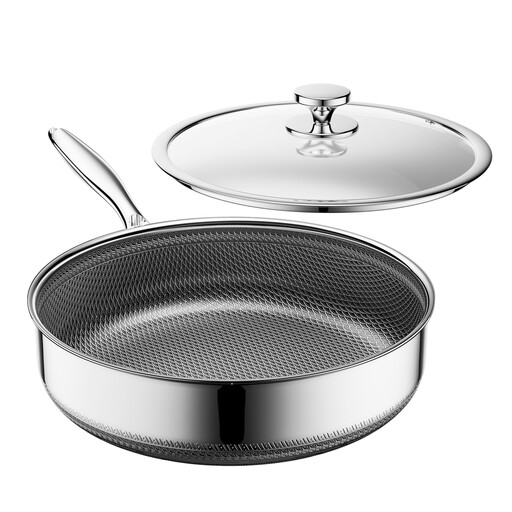
Why this product fits the profile: The deep design is ideal for braised dishes, sauces and larger quantities of ingredients. The stated temperature limits are particularly relevant if you plan to use the pan in the oven.
The details distinguish between pan and lid: the pan is oven-safe up to 260 °C, the glass lid up to 148 °C. This prevents a blanket misinterpretation.
Hybrid construction with stainless steel, ceramic coating and aluminium core; according to the supplier, free from intentionally added PFAS, PTFE and PFOA, and suitable for all common hob types.
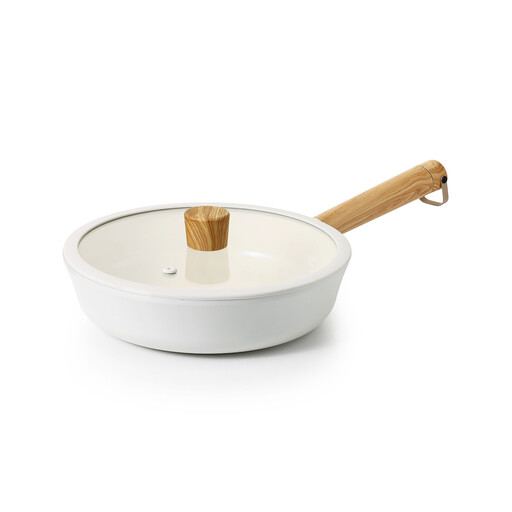
Why this product fits the profile: The 24 cm deep pan combines a compact size with a ceramic surface and is suitable for sautéing, stir-fries and everyday braising tasks.
The product description states suitability for gas, induction, ceramic, electric and halogen hobs. At the same time, it recommends hand washing, suitable kitchen utensils and avoiding dry overheating.
24 cm diameter, glass lid, magnetic stainless steel base and, according to the supplier, a PTFE-, PFAS-, cadmium-, lead- and PFOA-free coating.
We have put together a complete, regularly updated list of products that fully meet these strict selection criteria and the safety regulations in force in the EU.
Regardless of the material, a few routines will help keep your pan in good condition:
For one or two people, 22 or 24 cm is often sufficient. A 28 cm frying pan offers more surface area for family portions, but needs a correspondingly large hob and more storage space. Depth is particularly useful if you regularly braise or make sauces.
An uncoated stainless steel pan is designed for a long service life and high durability, but requires more skill when frying. A coated frying pan makes it easier to prepare delicate foods and to clean. Which option is more suitable depends on your temperature control, menu and willingness to care for it.
That depends on the model. Check the maximum temperature for the pan, handle and lid separately. With the ZEROPAN model, for example, different limits are given for the pan and the glass lid. If there is no clear manufacturer instruction, the lid should not be used in the oven.