
Lieferung heute & morgen

Qualitätsgarantie

Willkommens-Angebote freischalten: KOSTENLOSE Lieferung | Bis zu 80 % RABATT | Kostenlose 30-Tage-JoyPlus-Testphase
App herunterladen
A frying pan is part of the basic equipment in many British households. Even so, choosing the right one often leads to disappointing purchases: a pan may not be compatible with your hob, its coating may lose its properties too soon, or the handle may restrict use in the oven. If you are comparing stainless steel frying pans, non-stick frying pans, ceramic, cast iron and carbon steel pans, you should therefore look beyond the price or eye-catching advertising claims.
As a Joybuy Product Recommendation Officer, I filter product information according to practical buying criteria. The key details are clear information about the material, diameter, hob compatibility, cleaning requirements and temperature limits.
An induction-compatible pan needs a magnetic base. With gas, ceramic and electric hobs, the shape of the contact surface is also important: an uneven or overly small base may not distribute heat evenly. Check whether the manufacturer explicitly lists induction, gas, electric, ceramic and halogen compatibility.
The pan’s diameter does not automatically correspond to the diameter of the effectively heated area. A 20 cm pan, for example, may be intended for a smaller cooking zone, while a 24 or 28 cm pan requires a larger contact surface.
A coated frying pan makes it easier to release delicate foods. However, coatings react differently to high temperatures, metal utensils and abrasive cleaning products. The Silit Belluna 20 cm, for example, is listed with a PTFE-based Silitan coating; its stated oven use is possible up to 70 °C. This is clearly different from the pan’s maximum temperature on the hob.
According to the product information, a ceramic pan such as the Ballarini CeraForce contains no PTFE or PFOA. Low to medium heat, gentle cleaning and wooden or silicone kitchen utensils are recommended for the coating. This type of pan is therefore not automatically suitable for every cooking method.
An uncoated stainless steel frying pan is robust and resistant to many types of kitchen utensils. However, stainless steel may stick more readily if the temperature is not controlled correctly. Cast iron and carbon steel pans also require care of the seasoned patina. These materials are not a “use straight out of the box and forget about it” solution: drying, oiling and, where necessary, seasoning are all part of using them.
The terms “PFAS-free” and “PTFE-free” should always be checked directly in the product information. They do not automatically apply to every pan made by a manufacturer.
A 20 cm pan is suitable for individual portions, eggs or small side dishes. A 24 cm pan is a good compromise for one or two people. A 26 cm pan is flexible enough for several portions and many households. A 28 cm pan provides a larger frying surface, but requires sufficient space on the hob and in the cupboard.
A deep shape is practical for sautéing, sauces and braising. A glass lid, on the other hand, is not automatically included in the delivery. The product description should therefore explicitly state “with lid” or “including lid”.
A dishwasher-safe pan is convenient for everyday use, although washing by hand may help protect the surface and coating for longer. For cast iron and carbon steel, the dishwasher is generally unsuitable. An ovenproof frying pan also needs a handle approved for the stated temperature. Plastic or Bakelite handles may limit oven use.

Why this product suits this profile: This 24 cm aluminium pan is designed for gas, electric, ceramic and induction hobs, making it suitable for everyday portions.
The information lists the compatible hob types, as well as specific limits for the coating and oven use. This makes the product specifications easy to assess.
Lightweight aluminium, Silitan PTFE coating and confirmed induction compatibility.
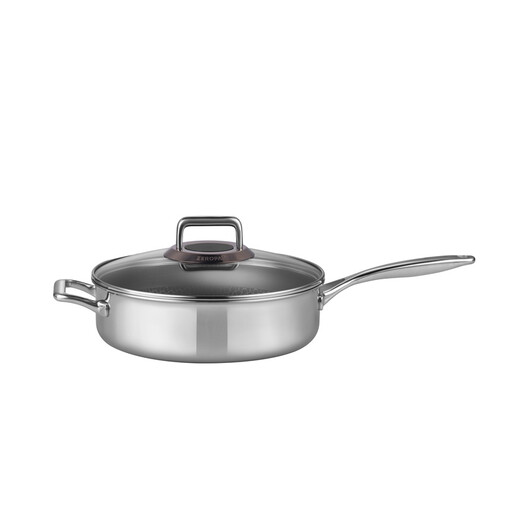
Why this product suits this profile: This deep 26 cm pan combines a stainless steel construction with a honeycomb hybrid structure for versatile cooking.
According to the product information, the surface is free from PFAS, PTFE and PFOA. The oven temperature limit is stated as 260 °C.
Three-layer base with an aluminium core, suitable for gas, electric, ceramic, halogen and induction hobs.
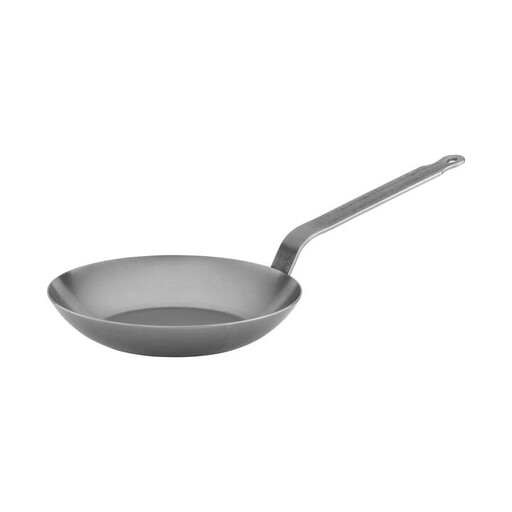
Why this product suits this profile: Carbon steel is suitable for people who frequently sear food at high heat and are prepared to care for the patina regularly.
The product description explicitly highlights seasoning, drying, oiling and avoiding the dishwasher.
No chemical non-stick coating; approved for induction, gas, ceramic hobs, oven use and open flames.
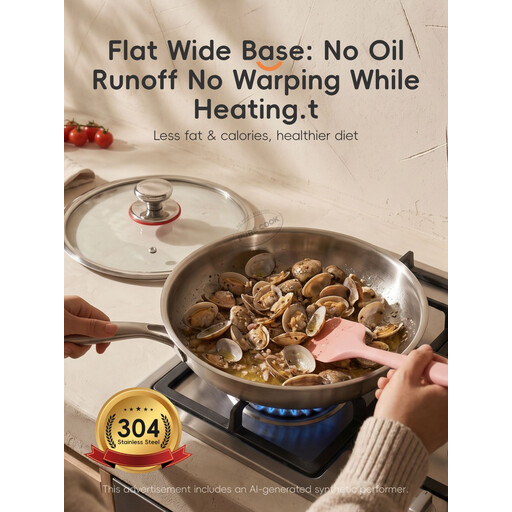
Why this product suits this profile: This large stainless steel pan with a glass lid supports frying, sautéing and subsequent braising in one dish.
The contents explicitly include a glass lid. The hob types and dishwasher suitability are also clearly described.
Three-layer construction made from stainless steel with an aluminium core, plus a transparent lid.
We have put together a complete, regularly updated list of products that fully meet these strict selection criteria and the safety regulations applicable in the EU.
For smaller portions and side dishes, a 20 or 24 cm pan is often sufficient. For several ingredients or two to three portions, a 26 cm pan provides more cooking space. A 28 cm pan is useful if you regularly fry or braise larger quantities.
Yes, provided the temperature and amount of fat are chosen correctly. The pan should be preheated first, after which oil can be added. Delicate foods usually require more attention than they would in a coated frying pan. The advantage is the robust, uncoated surface.
Models whose product information explicitly lists induction compatibility are suitable. Stainless steel pans with a magnetic multi-layer base, many cast iron and carbon steel pans, and aluminium pans specifically designed with an induction base can be used. Checking the manufacturer’s information helps prevent disappointing purchases.