Gamers with limited desk space
You need to fit your monitor, input devices and a comfortable viewing distance onto a small desk. That makes the dimensions with the stand more important than screen size alone.


If desk space or viewing distance is limited, a compact Full HD monitor is likely to be the better fit. A larger WQHD monitor is an option if your desk and hardware can accommodate its size and resolution. Before choosing, compare the dimensions, including the stand, and check the connections and adjustment options for the specific model. Manufacturer specifications describe the features, not how the monitor will look with the particular city-building game you play.
You need to fit your monitor, input devices and a comfortable viewing distance onto a small desk. That makes the dimensions with the stand more important than screen size alone.
If you want to keep an eye on the game world, maps and controls, compare the resolution and screen size, and check how easy everything is to read in the games you play.
If you play faster-paced games as well as city-building games, or use your screen for long periods, check the refresh rate, suitable connections and positioning separately.
First check how much desk space the monitor and stand will take up. Then consider the level of detail you want and what your gaming hardware can handle.
A good fit if: desk space limits the screen width and stand depth, and Full HD is enough for your games.
The trade-off: Full HD has fewer pixels than WQHD; check the dimensions of the specific model, including its stand.
A good fit if: you have enough desk space and viewing distance, and want the extra pixels for the game view and on-screen controls.
The trade-off: a larger model takes up more space, and your hardware needs to be up to the task of running games at native WQHD resolution.
| What matters | What to check before buying | Who should consider it? |
|---|---|---|
| Space needed | Compare the width and depth with the stand, and leave room for your keyboard and mouse. | If my desk is short on space, the monitor and stand need to fit alongside my input devices. Around 36% of consumers in this buying situation would make desk space their top priority. |
| Visibility and readability | Consider the resolution and screen size together; check text size in the game you play and at your viewing distance. | If I want to keep an eye on maps and lots of controls, I compare the resolution and in-game scaling at my usual viewing distance. Around 29% of consumers would put visibility and readability first. |
| Hardware compatibility | Match your video outputs to the monitor’s inputs, and check the resolution and refresh rate supported by the connection. | If I play faster-paced games as well as city-building games, I want to know whether my hardware can output the resolution and refresh rate I want. Around 21% of consumers would prioritise a smooth picture and device compatibility. |
| Positioning and power use | Check whether the model has height adjustment and, if needed, its VESA mounting pattern; compare its energy label and stated power consumption. | If I want to position my screen comfortably and understand its energy use, I check its adjustment options and product data separately. Around 14% of consumers would make positioning and running costs their main concern. |
A screen that seems to be the right size can still take up too much usable desk space once you add the stand.
Before buying, compare the footprint of the exact model with your desk, before assuming a monitor arm will solve the problem.
You may need to buy a monitor arm separately; check that it is compatible with both the monitor and your desk.
A monitor’s maximum refresh rate doesn’t tell you what frame rate your computer will achieve in a game, and it won’t solve space or resolution issues.
First work out how much desk space you have, what kind of picture you want and what your hardware can handle. Then consider the refresh rate and synchronisation, including how they’ll suit the other games you play.
The stated resolutions differ, but how easy text and controls are to use also depends on the game interface, scaling and monitor positioning.
Check how your specific games look at the screen size and viewing distance you have in mind.
The 24G4X is a documented example of a compact Full HD gaming monitor, not a reflection of the entire AOC range.
The MAG 274QRF QD E2 is an example of a larger WQHD monitor with an adjustable stand.
The G2422HS is an example of a compact monitor with height adjustment and VESA mounting.
The specifications for the TUF Gaming VG249Q3A-W show another compact Full HD design.
The Joybuy models below include compact Full HD gaming monitors. Before choosing, compare the dimensions and connections of each model with your setup.
 No image available
For a compact Full HD desk setup; check the exact dimensions of the monitor before buying.
24 inches, FHD, IPS and 120 Hz; 5 ms response time; HDMI and VGA; VESA 100 × 100 mm; tilt-adjustable.
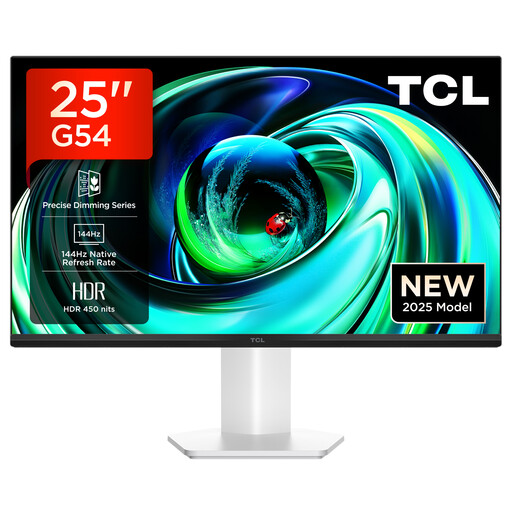 No image available
A 25-inch option for Full HD gaming; check that the screen size fits your available space.
Mini-LED, IPS and 144 Hz; 450 nits; VESA Display HDR 400; 93% DCI-P3.
 No image available
For a compact Full HD setup; check that the positioning and connections suit your desk and device.
IPS, 144 Hz and Adaptive Sync; HDMI and DisplayPort; tilt-adjustable and VESA-compatible.
 No image available
This portable 18.5-inch option may suit you if a smaller screen fits your setup.
1920 × 1080 pixels, matt IPS display and up to 120 Hz; USB-C and Mini-HDMI. According to the product description, the refresh rate you can achieve depends on the connected device and cable.
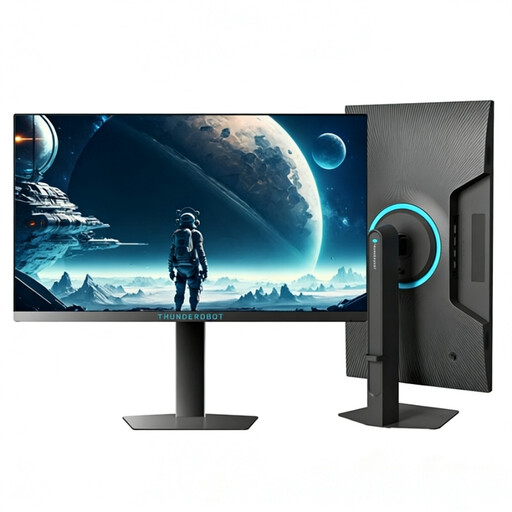 No image available
A 24.5-inch Full HD model with an adjustable stand; check how much desk space it needs before buying.
320 Hz, 1 ms and 450 nits; the stand can be tilted and swivelled.
Measure the available width and depth where you plan to put it, then compare both measurements with the manufacturer’s dimensions, including the stand. Allow space for your input devices and the screen’s intended position too; the screen size in inches alone won’t tell you how much desk space you need.
Only if the monitor and arm are mechanically compatible and the arm can be attached to your desk. MSI lists VESA 75 × 75 mm for the MAG 274QRF QD E2; Dell lists VESA 100 × 100 mm for the G2422HS. These specifications apply to the models in question and don’t confirm that an arm is included or will fit your desk.
Check the EU energy label and the stated power consumption for the specific model. The European Commission describes an A to G efficiency scale for covered monitors, with additional information about HDR efficiency. Actual costs also depend on how you use the monitor and your electricity tariff.
If you buy a new faulty device, you can generally assert your statutory warranty rights against the seller within two years of receiving it; this is separate from a manufacturer’s guarantee. According to the consumer advice centre, online purchases generally come with a 14-day right to cancel, starting when you receive the goods, and you must notify the seller that you wish to cancel. The requirements depend on the circumstances of each case.
No. The Federal Institute for Occupational Safety and Health expressly excludes the use of screen equipment in private settings from the scope of ASR A6. Its workplace requirements are therefore not legal minimum standards for a private gaming desk.