
Lieferung heute & morgen

Qualitätsgarantie

Willkommens-Angebote freischalten: KOSTENLOSE Lieferung | Bis zu 80 % RABATT | Kostenlose 30-Tage-JoyPlus-Testphase
App herunterladen
A fully automatic coffee machine is designed to prepare freshly ground beans, espresso and milk drinks with minimal effort. In practice, however, machines vary considerably in terms of space requirements, cleaning, drink selection and ease of use. Focusing solely on the number of recipes or a high pump pressure means overlooking important aspects of everyday use.
Three marketing traps in particular often lead to disappointing purchases:
A coffee machine with a grinder processes the beans immediately before brewing. Pay attention to the type and number of grind settings. Multiple levels make it easier to adjust the machine to different beans and drinks.
A bean-to-cup coffee machine should also have a sufficiently large hopper. For a small household, 200 to 250 grams may be enough. In a family, shared flat or office, a larger hopper reduces how often it needs to be refilled. Two separate bean chambers are useful if you want to switch between two varieties without having to empty the hopper completely.
Important: Oily or flavoured beans can put greater strain on the grinder. Always follow the instructions provided by the relevant manufacturer.
A bean-to-cup coffee machine with a milk system or bean-to-cup coffee machine with a milk frother is suitable for cappuccino, latte macchiato and similar drinks. There are several different solutions:
Before buying, check whether the system has an automatic rinsing programme and which parts can be removed or cleaned in the dishwasher. After every milk drink, it is advisable to clean the components that come into contact with milk. A complex system can be impractical in everyday use if the cleaning steps are not clearly displayed.
A compact bean-to-cup coffee machine does not have to compromise on important functions, but it does require a suitable amount of space. Measure not only the width, but also the depth, height and the space needed to open the water tank or remove the brewing unit.
For home use, water tanks with a capacity of between 1.2 and 1.9 litres are common. A larger capacity reduces the need for refilling, but often increases the machine’s dimensions. In an office or larger shared flat, a bean hopper of around 250 grams or more, a two-cup function and an easily accessible coffee-grounds container may also be useful.
When it comes to operation, user profiles, a clear display and app control are practical additional features. However, a bean-to-cup coffee machine with app control is only worthwhile if you genuinely want to manage or personalise recipes remotely.
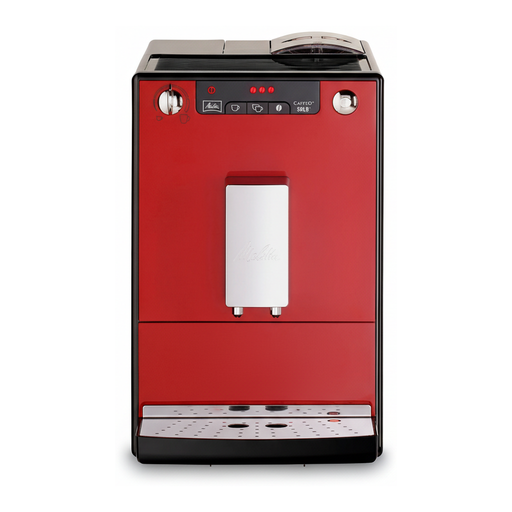
Why this product suits this profile: Measuring 20 cm wide, this model is ideal for smaller kitchens, couples or single-person households. It focuses on espresso and café crème rather than offering a long list of milk-based recipes.
The straightforward specification makes the machine easier to use. A removable water tank, removable brewing unit and automatic cleaning and descaling programmes support regular maintenance.
Three coffee-strength settings, infinitely adjustable water volume, height-adjustable outlet and two-cup function.
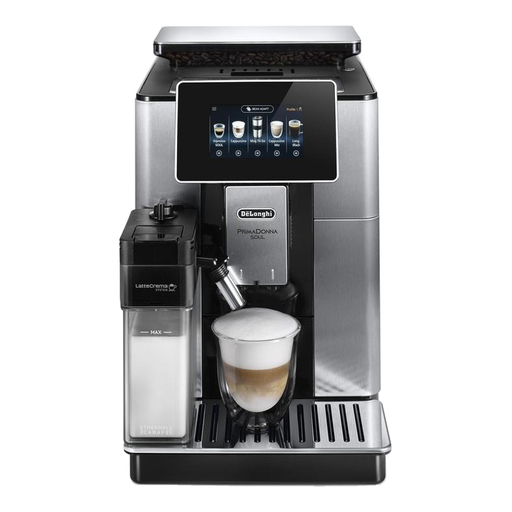
Why this product suits this profile: If you are looking for a wide range of drinks, multiple user profiles and digital operation, this fully equipped solution is suitable for home use or a busy office.
The specification is not limited to a high number of recipes: the removable brewing unit, automatic cleaning programmes and detachable milk carafe make maintenance easier to understand.
21 pre-installed recipes, 5 user profiles, 2.2-litre water tank, 500-gram bean hopper and Coffee-Link app.
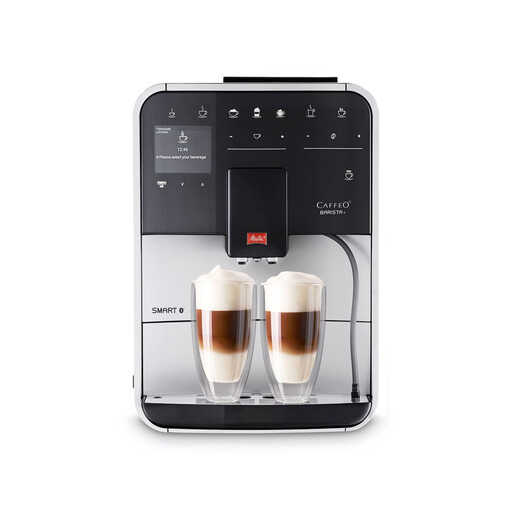
Why this product suits this profile: Families, shared flats and small offices benefit from two bean chambers, multiple profiles and a wide selection of drinks.
Two separate bean hoppers eliminate the need for frequent transfers. Automatic rinsing, cleaning and descaling address the maintenance requirements, although the milk system still needs regular care.
Up to 18 drinks, two milk drinks prepared simultaneously, four user profiles, 1.8-litre water tank and app control.
If you mainly drink espresso and black coffee, you could also consider a bean-to-cup coffee machine without a milk system. These machines have fewer milk-carrying components and may therefore be easier to maintain as part of your daily routine.
We have put together a complete, regularly updated list of products that fully meet these strict selection criteria and the safety regulations applicable in the EU.
The drip tray and coffee-grounds container should be emptied regularly, depending on how often the machine is used. The milk system must be rinsed after preparing milk drinks. The brewing unit, outlets and bean area also require cleaning according to the instructions in the user manual. Descaling intervals depend on water hardness, filter use and frequency of operation.
It is not possible to give a reliable fixed lifespan for every model. Longevity depends on factors including the number of cups prepared each day, water quality, the beans used, cleaning and maintenance. A removable brewing unit, available replacement parts and clear care programmes can make long-term use easier.
In addition to electricity consumption, you will need to budget for beans, water filters, descaler and, where applicable, cleaning tablets. Milk systems may require additional maintenance. For a realistic assessment, compare the cost per cup with capsule or pod systems and include the recommended maintenance products.