
Lieferung heute & morgen

Qualitätsgarantie

Willkommens-Angebote freischalten: KOSTENLOSE Lieferung | Bis zu 80 % RABATT | Kostenlose 30-Tage-JoyPlus-Testphase
App herunterladen
A fully automatic coffee machine promises café-quality coffee, all at the touch of a button. But the market is overwhelming, and many models quickly turn out to be a poor investment. As your Joybuy Product Recommendation Officer, I'll help you navigate the common marketing traps and find a model that truly fits your needs—one that's durable, functional, and free of hidden defects.
Many marketing promises sound tempting, but the devil is in the details. Pay close attention to these three points to avoid disappointment:
Don't be dazzled by a long list of coffee specialities. The quality and longevity of your machine depend on fundamental technical features.
The grinder determines the aroma in your cup. There are two main types:
Regardless of the material, an adjustable grind size is essential. A fine grind is ideal for a strong espresso, while a coarser setting is better for a café crème.
The brew group is where water and ground coffee meet. A removable brew group is a crucial quality feature. It allows you to easily clean the machine's central component under running water. This effectively prevents mould growth and ensures a pure coffee taste in the long run. Automatic cleaning programs are a useful addition but do not replace a manual deep clean.
For lovers of cappuccino and latte macchiato, the milk system is critical.
Here are a few recommendations based on objective features that avoid the typical pitfalls.
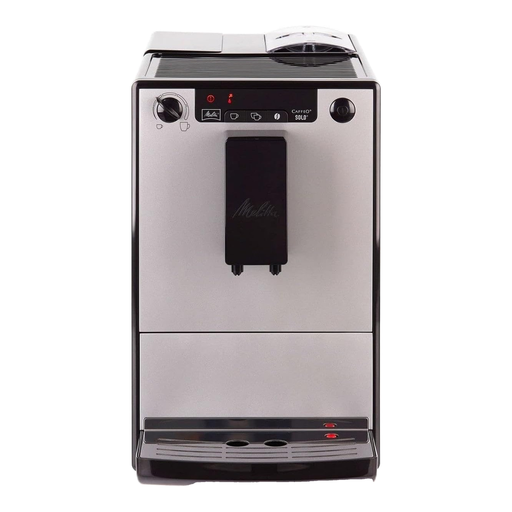
Why This Fits Their Persona: Ideal for households where espresso and black coffee are the main drinks. The compact design also fits into small kitchens, and its operation is streamlined to the essentials, making it straightforward to use.
The brew group is removable for easy cleaning, which bypasses the hygiene trap. Since there is no integrated milk system, a complex source of error and cleaning routine is eliminated.
Very small footprint (only 20 cm wide). Features a pre-brewing function (Aroma-Extraction-System) for intense flavour development.
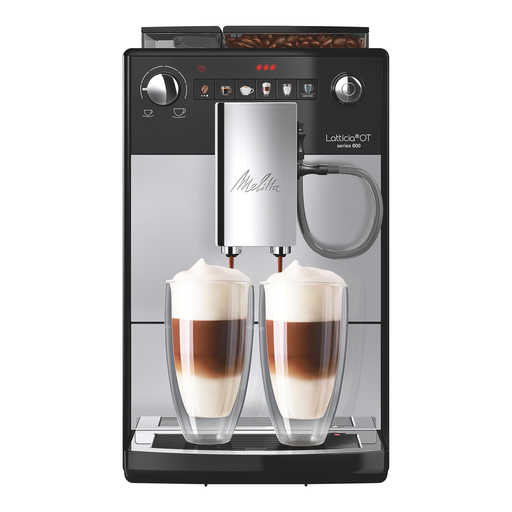
Why This Fits Their Persona: Perfect for users who regularly enjoy cappuccino and latte macchiato and value maximum convenience. The one-touch function and large water tank are ideal for families or a home office.
According to the manufacturer, the machine has a whisper-quiet grinder, thus avoiding the noise factor. The milk system is easy to clean, and the brew group is also removable.
One-touch function for milk-based drinks. XL water tank (1.5 L) and bean container (250 g) for less frequent refilling.

Why This Fits Their Persona: For coffee enthusiasts who want to combine barista-quality results with the convenience of an automated machine. Ideal for anyone who enjoys experimenting with coffee strength, milk texture, and temperature, and wants to save their own creations.
The ThermoJet heating system reaches the optimal temperature in 3 seconds and allows for precise temperature control. The automatic steam wand cleans itself, minimising the maintenance of the milk system.
Intuitive touchscreen operation with saveable profiles. Automatic creation of microfoam for latte art.
We have compiled a complete, up-to-date list of products that fully meet these strict selection criteria and safety standards.
The frequency depends on the water hardness in your area and your usage. Most modern machines indicate when descaling is necessary. As a rule of thumb: with average use and medium water hardness, about every two to three months. Some models, like the Melitta Latte Select, can go up to a year without descaling when using special water filters, according to the manufacturer.
Both materials have their merits. Stainless steel conical burr grinders are very robust and the industry standard for durability. Ceramic grinders are often a bit quieter in operation and completely corrosion-free. For normal home use, both types deliver excellent results. The decision is often a matter of personal preference regarding noise level and brand philosophy.
The lifespan of a fully automatic espresso machine heavily depends on the quality of its components and the regularity of maintenance. With proper care (regular cleaning of the brew group, descaling), a high-quality machine can easily last five to ten years or more. Cheaper models with fixed internal parts often show signs of wear and tear after just two to three years.