
Lieferung heute & morgen

Qualitätsgarantie

Willkommens-Angebote freischalten: KOSTENLOSE Lieferung | Bis zu 80 % RABATT | Kostenlose 30-Tage-JoyPlus-Testphase
App herunterladen
The idea is tempting: enjoying a fresh espresso, creamy cappuccino, or a perfect latte macchiato at the touch of a button, without ever leaving your home. A fully automatic coffee machine promises exactly that. But the market is crowded and full of marketing promises that often obscure more than they clarify. Before you make an investment, it's crucial to understand the typical pitfalls that can lead to disappointment and unnecessary expense.
As your Joybuy Product Recommendation Officer, I'm here to help you separate the wheat from the chaff. We'll focus on the facts that truly matter and ignore the hype.
Many machines advertise features that are rarely used in practice or come with significant downsides. Pay special attention to these three points:
To avoid a bad purchase, you should focus on three technical features that fundamentally determine the longevity, taste, and user-friendliness of your machine.
The heart of any bean-to-cup coffee machine is the grinder. It determines how much flavour is extracted from the bean.
For lovers of cappuccino and latte macchiato, the milk system is a central criterion. There are two basic types:
The brew group is the unit where the ground coffee powder is compressed with hot water. Coffee grounds and moisture inevitably accumulate here—an ideal breeding ground for mould. A removable brew group is therefore an absolute must. This is the only way you can thoroughly clean this central component under running water regularly (about once a week) and ensure the long-term hygiene and functionality of your machine.
Based on these objective criteria, we have identified a few models that represent a suitable solution for different user profiles.
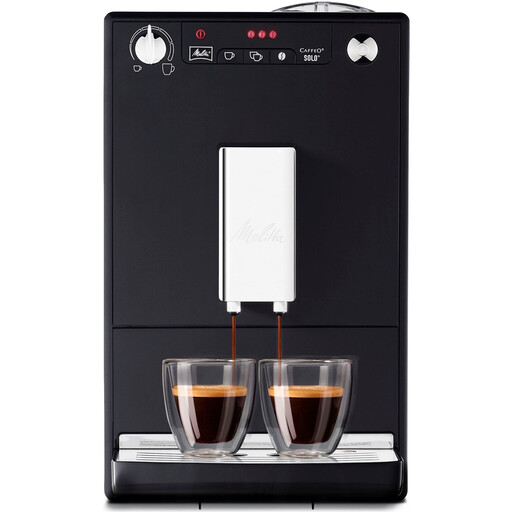
Why this model is a great fit: Perfect for those who value excellent espresso and café crème and have no need for a milk system. This machine is a prime example of a compact, bean-to-cup coffee machine reduced to the essentials.
Avoids the "feature overload" trap by consistently focusing on two beverage types. Its extremely slim design (only 20 cm wide) makes it an ideal compact coffee machine for kitchens with limited space.
Features a pre-brewing function (Aroma-Extraction-System) for maximum flavour development and a removable brew group for easy, hygienic cleaning.

Why this model is a great fit: This machine is an all-rounder that strikes a good balance between beverage variety and ease of use. It's suitable for households where different coffee preferences, especially those involving milk, need to be met.
Sidesteps the "hidden cleaning effort" trap with its LatteCrema system. The removable parts are dishwasher-safe, which significantly simplifies daily maintenance.
Offers 7 one-touch recipes for the most common drinks. The "MyLatte" function uses the exact amount of milk poured into the carafe, which prevents waste.
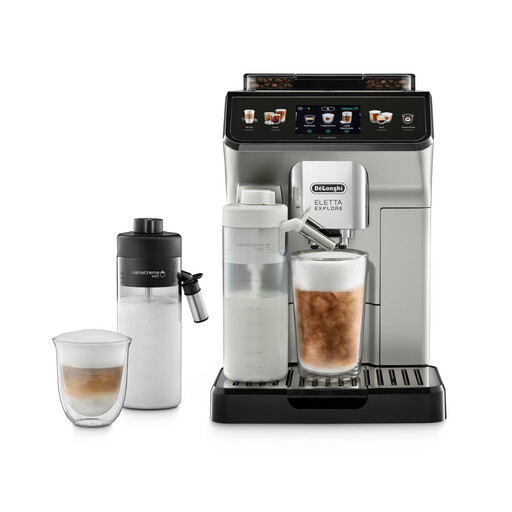
Why this model is a great fit: For coffee lovers who enjoy experimenting and want to prepare both hot and cold coffee specialities at a high level. This machine justifies its wide range of functions with intuitive operation and genuine innovation.
The wide variety of drinks (over 40 recipes) is not a gimmick here; it's made accessible by the large 3.5-inch TFT colour display and clear menu navigation. The functions are practical and not just for marketing.
The LatteCrema Hot & Cool System is a standout feature. It allows for the preparation of creamy milk foam for both hot and cold drinks, expanding the possibilities far beyond the standard cappuccino.
We have compiled a complete, up-to-date list of products that fully meet these strict selection criteria and UK safety regulations.
1. How often does a fully automatic coffee machine need to be descaled? The frequency depends on the water hardness in your area and your usage. Modern machines indicate when descaling is necessary. As a rule of thumb, with average use and medium water hardness, descaling is required approximately every two to three months. Many machines allow you to set the local water hardness to calculate the intervals precisely.
2. What is the ideal grind setting for espresso from a fully automatic machine? For an espresso, you should generally choose one of the finest grind settings. A fine grind increases the surface area of the coffee powder and the resistance for the water flowing through it. This leads to a longer contact time and more intensive extraction of flavours, which is crucial for the typical crema and strong taste of an espresso.
3. Can I use lactose-free milk or plant-based milks in a fully automatic coffee machine? Yes, most modern milk systems, especially those from brands like De'Longhi or Melitta, are capable of frothing cow's milk alternatives. Plant-based milks such as oat, soy, or almond milk (ideally the "barista edition") can often be frothed very well. The result may vary depending on the fat and protein content of the drink, but in principle, their use is straightforward.