
Lieferung heute & morgen

Qualitätsgarantie

Willkommens-Angebote freischalten: KOSTENLOSE Lieferung | Bis zu 80 % RABATT | Kostenlose 30-Tage-JoyPlus-Testphase
App herunterladen
Furnishing a small room, whether it's a teenager's bedroom, a student flat, or your first apartment, often presents a challenge. Every square metre counts, and the art lies in blending living comfort, storage space, and opportunities for personal expression. A functional bed is a smart solution for this, as it offers far more than just a place to sleep. It combines sleeping with storage, working, or relaxing, making optimal use of the available space.
This article serves as your guide. We'll explain the different types of functional beds available, what you should look for when choosing one, and present a selection of various models to help make your decision easier.
Selecting the right model depends on your individual needs and the layout of your room. Three key aspects will help guide your choice.
A major advantage of functional beds is their integrated storage. Think about what you need to store.
Modern functional beds are often tailored to the needs of teenagers and young adults.
Choosing the right size and material is crucial for everyday use.
Here is a selection of models that meet different functional and design requirements.

What makes it stand out: This bed frame focuses on the essentials: a stable sleeping platform and maximum, flexible storage space underneath. With 37.5 cm of under-bed clearance, it offers exceptional room for suitcases, boxes, and other large items. The minimalist design without a headboard or footboard makes the room feel more open and spacious.
Advantages:
Who it's for: Ideal for purists and budget-conscious buyers looking for a stable, no-fuss bed for a small room, who want the flexibility to organise the under-bed storage themselves.
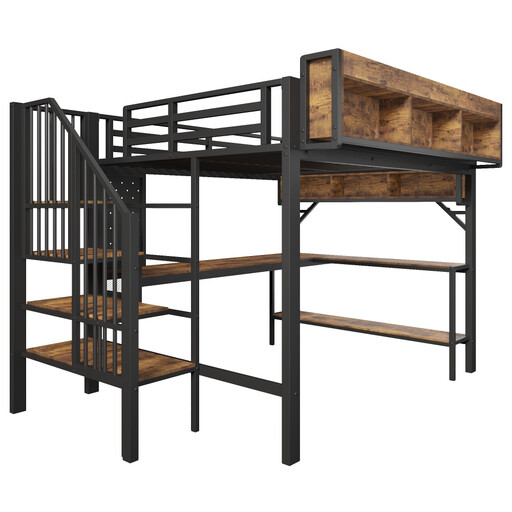
What makes it stand out: This loft bed with a desk is a complete living solution in a minimal footprint. It combines a 140x200 cm sleeping area with a spacious corner desk, integrated power sockets (EU, USB, Type-C), and atmospheric LED lighting. Additional storage in the steps and side shelves maximises space utilisation. Certification according to EN747-1:2024 underscores its focus on safety.
Advantages:
Who it's for: Perfect for teenagers and students who want to create clearly separated sleeping and working zones in their room and value modern tech features.
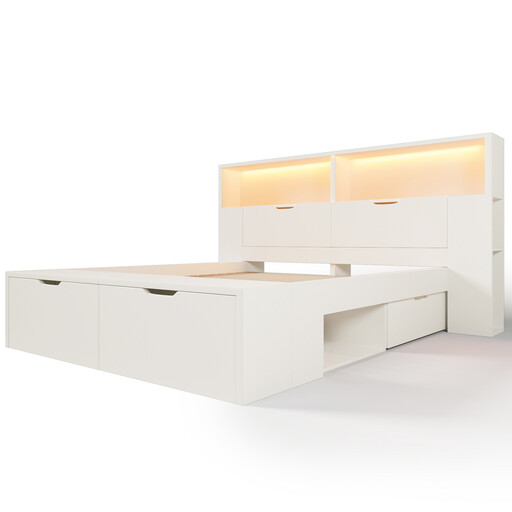
What makes it stand out: This white wooden bed in a 140x200 cm size is a true organisational powerhouse. It offers a wealth of storage solutions, including drawers, open shelves in the headboard, and a lift-up storage bench at the foot of the bed. The integrated LED lighting with over 60,000 colour options and the USB-A and USB-C charging ports make it a highly functional centrepiece for the bedroom.
Advantages:
Who it's for: Ideal for anyone who values maximum organisation and a modern, clean aesthetic. This bed transforms the bedroom into a tidy and technologically well-equipped retreat.
The models featured here offer a glimpse into the variety of functional beds available. If you're looking for different designs, sizes, or specific features, you might find the perfect alternative in our broader selection.
Browse our category for cool teen beds to discover more inspiration and solutions for your home.
What is the difference between a storage bed and a functional bed? The term functional bed is an umbrella term for beds that offer more than just a sleeping function. A storage bed is a specific type of functional bed whose main feature is integrated storage options like drawers or shelves. Other functional beds might include a pull-out second bed (trundle bed) or an integrated desk.
Does a functional bed require a special slatted frame? In most cases, functional beds already come with a suitable slatted frame (often a roll-out or a permanently integrated one). The bed's construction is designed around this frame, especially when there are drawers or other mechanisms under the sleeping surface. A separate, high-profile slatted frame is therefore usually not necessary and often not compatible.
How much weight can a loft bed with a desk support? The maximum weight capacity is an important safety feature and is specified by the manufacturer. For the upper bunk of a loft bed, the weight limit is often around 100 to 150 kg. The integrated desk has a separate, lower weight limit, which is typically between 20 and 30 kg. Always refer to the specific details in the product description and assembly instructions.