
Lieferung heute & morgen

Qualitätsgarantie

Willkommens-Angebote freischalten: KOSTENLOSE Lieferung | Bis zu 80 % RABATT | Kostenlose 30-Tage-JoyPlus-Testphase
App herunterladen
A traditional wire dog crate can disrupt the carefully curated aesthetic of a living space. Many dog owners are therefore looking for a solution that provides a safe retreat for their dog while also blending harmoniously with their decor. A furniture dog crate serves this exact purpose, combining the function of a dog crate with the design of a piece of furniture.
This guide is here to help. It outlines objective criteria for your selection and presents various models to make it easier for you to choose a solution that meets both your dog's needs and your aesthetic preferences.
The right model for you depends on several factors. The following aspects will help you make an informed choice.
The material determines not only the look but also the durability and safety of the crate. Models designed as a dog crate as a piece of furniture often consist of a combination of engineered wood and metal elements. Look for a sturdy construction, especially if your dog is prone to chewing. Reinforced metal frames offer greater stability and resistance. A high-quality indoor wooden dog house or one with a wood-look finish will blend seamlessly into most interior designs.
A modern designer dog crate is more than just a place to sleep. Many models are multifunctional, doubling as an end table, nightstand, or sideboard. A dog crate with storage, such as drawers or shelves, offers added practicality and helps keep your space tidy. For flexibility in your living area, consider a dog crate on wheels. Locking casters ensure it stays securely in place.
The crate must be large enough for your dog to comfortably stand up, turn around, and stretch out. Measure your dog's size and weight and compare these with the manufacturer's specifications. This is especially crucial for a dog crate for large dogs (XL). Also, look for secure locking mechanisms, rounded edges to prevent injuries, and adequate ventilation through bars or openings.
Based on the criteria mentioned, we have compiled a selection of models that cover different requirements for design, functionality, and use.

Why this model stands out: This model from aivituvin is a prime example of seamless integration into the living room. It functions as a stylish sideboard while providing a comfortable space for your dog. The construction, featuring a reinforced metal frame and rustic-style fibreboard, is designed for durability. Its mobility, thanks to the wheels, makes placement in any room incredibly flexible.
Advantages:
Who is it for? For dog owners seeking an aesthetically pleasing and multifunctional solution for small to large dogs (up to 30 kg). Ideal for those who value a tidy appearance and easy cleaning.
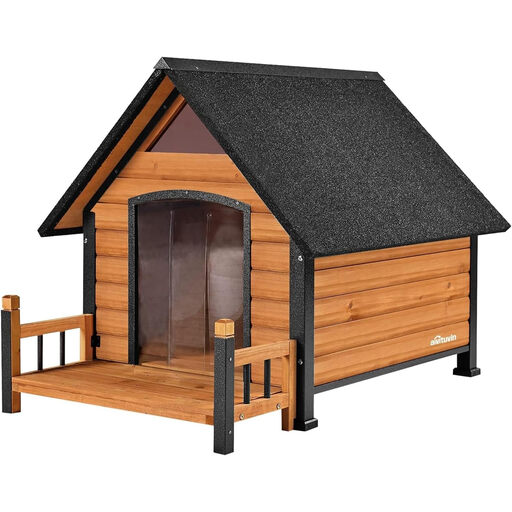
Why this model stands out: Although primarily designed as an outdoor kennel, the aivituvin AIR80 is distinguished by its extremely robust construction. The full iron frame makes it particularly resilient. The covered porch offers an additional, sheltered resting spot. Thanks to its solid craftsmanship, it is also a durable option for indoor use, for instance in a sunroom or a spacious hallway.
Advantages:
Who is it for? For owners of small to medium-sized dogs looking for an exceptionally durable and versatile solution. It's a great choice for households with a garden or patio but can also serve as a resilient indoor option.
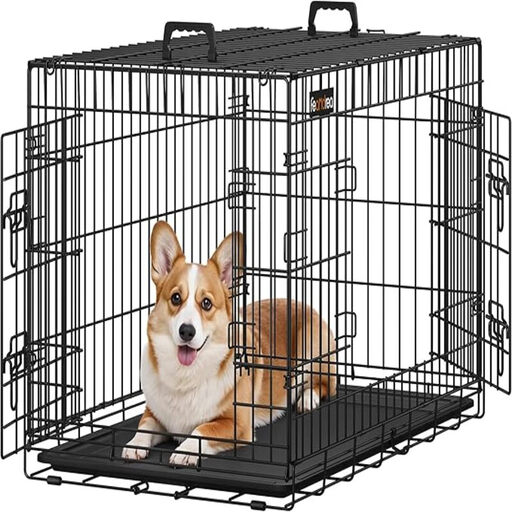
Why this model stands out: This model from Feandrea is a functional alternative to a furniture dog crate. The focus here is on practicality and portability. As a classic folding cage, it can be stored compactly when not in use or taken along on trips. The two doors allow for flexible access.
Advantages:
Who is it for? For dog owners who need a primarily functional, portable, and easy-to-store crate for training, travel, or temporary containment, and for whom a furniture aesthetic is not the main priority.
The models presented cover a wide spectrum, from the elegant furniture dog crate to the practical folding crate. If you need a robust solution specifically for outdoor use, you can find more models optimised for the outdoors in our Outdoor Dog Kennels category.
1. How do I get my dog used to a furniture dog crate? The introduction should be gradual and positive. Place blankets or toys inside to make the crate appealing. Initially, feed your dog in the crate with the door open. Start by closing the door for just a few moments and slowly increase the duration. The crate should never be used as a form of punishment.
2. Is a furniture dog crate sturdy enough for a large dog? The stability depends on the specific model. Pay attention to the manufacturer's specifications for maximum weight capacity and look for design features like a reinforced metal frame. Models like the featured dog crate for large dogs (XL) are specifically designed for heavier loads. Check the material and build quality to ensure the crate can withstand the force of a large dog.
3. Can I use a furniture dog crate as a TV stand? Some models designed as a dog crate cabinet or sideboard can theoretically be used as a TV stand. The crucial factor here is the maximum load capacity of the top surface as specified by the manufacturer. Do not exceed this weight, as it could compromise the structure's stability and safety. Also, check if the height and any cable management options are suitable for your needs.