
Lieferung heute & morgen

Qualitätsgarantie

Willkommens-Angebote freischalten: KOSTENLOSE Lieferung | Bis zu 80 % RABATT | Kostenlose 30-Tage-JoyPlus-Testphase
App herunterladen
The idea of effortlessly breaking down language barriers with a simple pair of glasses is no longer science fiction. An AI translator headset promises exactly that: fluid conversations in foreign languages, hands-free notes in meetings, and discreet information delivered directly to your field of vision or hearing. However, the market is filled with devices whose advertised capabilities often fail to hold up in practice. Before you make a purchase, it's crucial to understand the common pitfalls that lead to disappointment and wasted money.
As a Joybuy Product Recommendation Officer, I analyse product data to provide you with objective, practical guidance. This guide focuses on the critical features that distinguish functional AI-powered smart glasses from an overhyped gadget.
Many user experiences show that certain flaws can render a promising device useless in daily life. Pay special attention to these three points:
To avoid these pitfalls, you should base your choice on objective technical parameters. Three criteria are non-negotiable.
The heart of any AI translator headset is the software and hardware combination for communication. Pay attention to the number of supported languages, but more importantly, the quality of the microphones. Models with multiple microphones and noise cancellation can capture your voice clearly even in noisy environments, which is essential for accurate translation. Good open-ear audio glasses deliver sound clearly to your ear without completely blocking out your surroundings or being audible to others. This is crucial for discreet instructions and maintaining privacy.
Check the manufacturer's stated battery life for active use. A practical value is at least 8 hours of continuous use. A lightweight charging case that provides several full recharges is a significant advantage for business travellers. The weight of the glasses themselves, ideally under 40 grams, is also a critical factor for all-day comfort.
Most AI glasses work in conjunction with a smartphone. A stable Bluetooth 5.3 connection is the standard here to ensure low latency and reliable data transfer. Also, check if the companion app is compatible with your operating system (iOS/Android) and if the glasses support connections to services like ChatGPT for AI glasses for advanced features such as creating summaries. This is particularly relevant for glasses for meeting notes.
Based on the criteria above, we have selected a range of devices suitable for different user profiles and their specific requirements.
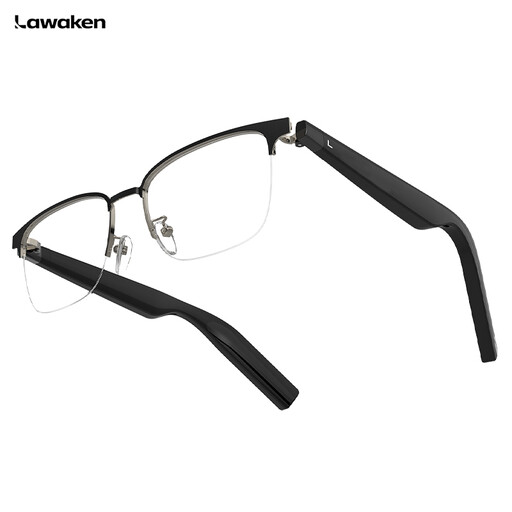
Why This Fits Their Persona: Ideal for professionals who need more than just translation. The "AI Note" feature for automatically generating meeting summaries and the integration of AI assistants like ChatGPT significantly boost productivity in the workplace.
The model focuses on practical productivity functions rather than bloated AR features. Its elegant design and light weight ensure social acceptance and comfort.
Real-time translation for 128 languages (according to the manufacturer) and the unique feature for automatic meeting note generation. Compatible with prescription lenses.
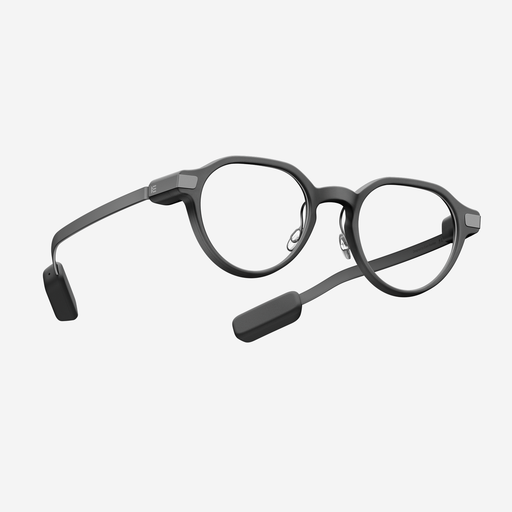
Why This Fits Their Persona: Perfect for international travellers who want a reliable translation solution but value an inconspicuous appearance. The camera-free design respects others' privacy and avoids social barriers.
This model avoids the pitfall of a conspicuous design by looking like a normal, high-quality pair of glasses. The focus on core functions like translation and notifications ensures a long battery life.
Camera-free design for maximum privacy. Extremely lightweight at only 36g. The battery life is up to 2 days with normal use, according to the manufacturer, which is ideal for travel.
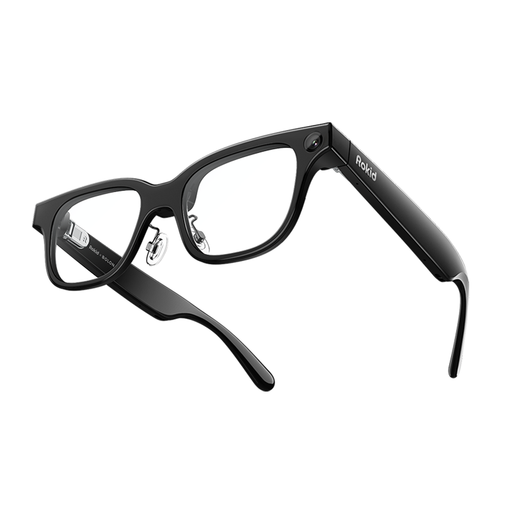
Why This Fits Their Persona: For users who want to experience the next level of human-computer interaction. This model combines AI functions like translation and ChatGPT support with a visual display for navigation and notifications.
Although it has a display, the weight remains very low at 49g (according to the manufacturer). The focus is on useful AI applications rather than pure media playback, creating a good balance between functionality and everyday usability.
Combines audio feedback with a visual display for an enhanced AR experience. In addition to real-time translation, it also offers visual navigation and the ability to display notes directly in your field of view.
We have compiled a complete, up-to-date list of products that fully meet these strict selection criteria and UK/EU safety regulations.
Typically, a microphone integrated into the glasses records the spoken language. This audio data is sent via Bluetooth to an app on your smartphone. The app processes the data using a cloud-based AI and sends the translation back to the glasses. There, it is either output as audio through small speakers (open-ear audio) or displayed as text on a mini-display in your field of view. The entire process usually takes only a few seconds.
For most models, an active internet connection via the paired smartphone is required. The complex AI models for translation run in the cloud to ensure the highest accuracy and broad language coverage. A few devices may offer limited offline functions for selected language pairs, but these are often less accurate and slower than the online version.
Yes, many manufacturers have recognised this need. Models like the LAWAKEN AI glasses or the Even G2 are designed so that an optician can fit them with prescription lenses. However, it is important to verify this before purchasing and to have the fitting done exclusively by qualified professionals to avoid damaging the frame or the integrated electronics.