
Lieferung heute & morgen

Qualitätsgarantie

Willkommens-Angebote freischalten: KOSTENLOSE Lieferung | Bis zu 80 % RABATT | Kostenlose 30-Tage-JoyPlus-Testphase
App herunterladen
When you buy Samsung Galaxy A36 5G accessories, you want to protect your smartphone from scratches, bumps and prying eyes in everyday use. However, not every product labelled as a "Galaxy case" actually fits the A36 5G. Even seemingly technical specifications like "tempered glass", "700 per cent reinforcement" or "privacy" deserve a closer look.
The choice mainly depends on three factors: exact model compatibility, material and intended use. A slim, transparent Galaxy A36 case meets different needs than a protective case with a card slot and stand function. When it comes to screen protection, film, hybrid glass and privacy screen protectors also differ significantly.
The Samsung Galaxy A36 5G and the Galaxy A56 5G are related models, but not every accessory is automatically suitable for both devices. With a Samsung Galaxy A36 5G screen protector, the cut-outs, dimensions and front camera position must match the specific display.
Some products are explicitly designed for Galaxy A36/A56 screen protection. A case, on the other hand, is usually model-specific. Before purchasing, you should therefore check the full compatibility information in the product description.
Labels like "shockproof", "ultra-slim" or "stronger" alone don't explain what features a product actually has. More meaningful are concrete details such as:
A claimed reinforcement of "up to 700 per cent" is a manufacturer's statement. It should not be equated with a guarantee against screen breakage. Even a tempered glass or hardened film can be damaged by an awkward impact.
A particularly robust case can be thicker and heavier. A very slim case is more comfortable to carry in your trouser pocket, but may offer less edge coverage. With a Samsung Galaxy A36 5G phone case, you should therefore consider your own daily routine: commuting, frequent outdoor use, one-handed operation or use in the car.
The case should not put constant pressure on the buttons and must leave the charging port, speakers and camera free. Raised edges can create extra distance between the display or camera lenses and a flat surface. However, this does not protect against every drop.
With a Samsung Galaxy A36 5G screen protector, precise alignment is crucial. Before application, the display should be free of dust and grease. Small dust particles can impair adhesion or cause visible bubbles.
TPU is flexible and usually easy to apply. A transparent TPU case shows off the device's colour and can be designed for everyday use with textured corners or a reinforced construction. Faux leather cases often offer additional compartments, but require more care when exposed to moisture and heat.
Hybrid glass combines the properties of a hard surface with a degree of flexibility. A classic screen protector is generally thinner and more pliable. What matters is not just the label, but also the stated compatibility and what's included in the box.
A Samsung Galaxy A36 5G privacy screen protector can reduce side-on visibility of the display. This is handy on trains, buses or in meetings. Depending on the viewing angle and brightness, the perceived display quality may change. If you often share content with others, you might want to avoid a privacy filter.
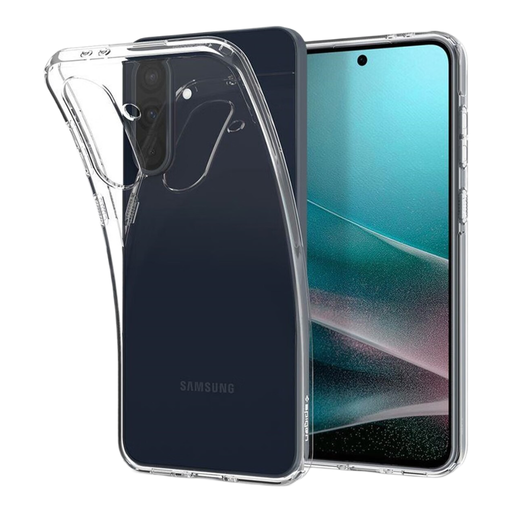
Why this product fits the profile: This transparent TPU case is designed specifically for the Galaxy A36 5G and preserves the visible look of the device. With a stated weight of 36.9 g, it remains relatively light for daily carrying.
The model specification is precise. Accurate cut-outs and flexible sides reduce the risk of ports or buttons being covered during everyday use.
TPU construction, Air Cushion Technology at the corners and a transparent finish.
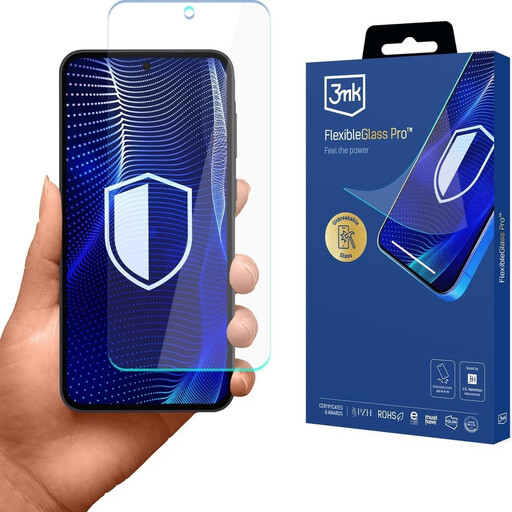
Why this product fits the profile: This screen protector is designed for both Samsung models mentioned and, according to product details, combines a transparent hybrid glass construction with a flexible design.
The compatibility information explicitly mentions the A36 5G and A56 5G. This helps distinguish it from generic Samsung screen protectors.
Hybrid material, anti-fingerprint coating and details on touch sensitivity.
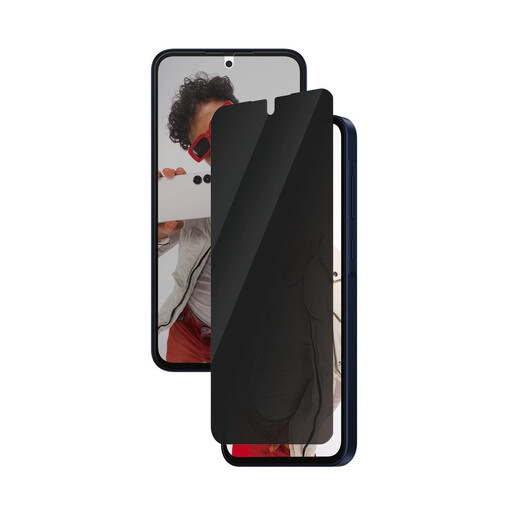
Why this product fits the profile: This privacy screen protector is aimed at people who frequently use their display on public transport, in the office or in waiting areas.
The privacy feature is clearly stated as a product characteristic. The EasyAlligner tool can help with correct positioning during installation.
Privacy filter, case-friendly ultra-wide format, plus coating against fingerprints and moisture.
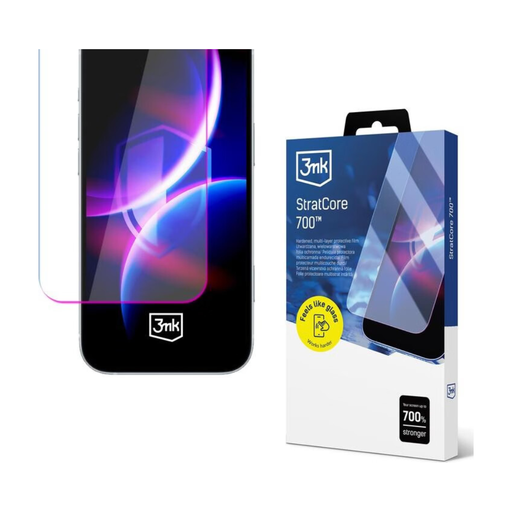
Why this product fits the profile: This multi-layer film is 0.40 mm thick, transparent and specified for the Galaxy A36 5G and A56 5G. It offers an alternative to classic tempered glass.
The stated hardness rating of 7H and thickness of 0.40 mm provide verifiable comparison values rather than just a marketing label.
Multi-layer construction, flexible adaptation to the display surface and a transparent finish.
If you frequently use your smartphone for videos or video calls, you might consider a Galaxy A36 5G protective case with a stand function. The Care Feature Wallet Case has a flip function, a card slot and a construction made from faux leather and plastic. The extra storage does, however, increase the overall size. Cards should only be inserted in a way that they don't press on the display or hinder the closure.
We've put together a full, regularly updated list of products that fully meet these strict selection criteria and the safety regulations in force in the EU.
Only if the manufacturer explicitly mentions both models. Products labelled Galaxy A36/A56 screen protector are designed for this purpose. For cases, however, you should always pay attention to the specific model name.
Clean the display thoroughly with a lint-free cloth and remove any dust before installation. Align the film slowly and press it from the centre outwards. An included alignment frame or squeegee can help with positioning. A film that has already been removed should not be reapplied unless the manufacturer allows it.
Durability depends on usage, pressure, heat and contact with cleaning products. A case should be replaced if it develops cracks, becomes deformed or loses its fit. For a screen protector, visible cracks, deep scratches or lifting edges are signs it needs replacing. No accessory guarantees complete protection against every drop.