
Lieferung heute & morgen

Qualitätsgarantie

Willkommens-Angebote freischalten: KOSTENLOSE Lieferung | Bis zu 80 % RABATT | Kostenlose 30-Tage-JoyPlus-Testphase
App herunterladen
As a dog owner, you want to make an informed decision about your pet's nutrition. Dog food with game, such as venison or wild boar, is often perceived as a natural, protein-rich option. However, the market is crowded, and many products don't live up to their packaging claims. This guide will help you identify the key quality indicators and avoid common purchasing pitfalls.
Before making a choice, you should be aware of two common marketing practices that can lead to poor purchasing decisions.
To make a good choice, focus on objective criteria. The following three points are crucial for assessing the quality of game-based dog food.
A transparent ingredient list is the most important quality feature. Look for an open declaration, where each ingredient is precisely broken down with its percentage. Instead of vague terms like "meat blend," you should find specific details such as "50% venison (consisting of muscle meat, heart, liver)." This gives you the assurance that you are actually getting game meat for dogs in a relevant quantity and not just fillers. A high-meat dog food is characterised by such a clear listing.
Grain-free dog food with game is a common choice, especially for pets with intolerances. However, it's important to understand that "grain-free" does not mean "carbohydrate-free." Instead of grains, alternative carbohydrate sources like potatoes, sweet potatoes, peas, or lentils are used. These are well-tolerated by many dogs but should be in a balanced ratio to the protein content. Check the ingredient list to ensure that meat is listed first and that carbohydrate sources do not make up the bulk of the food.
The choice between wet food with game and dry food with game depends on your dog's individual needs and your preferences.
Both types of food can form the basis of a high-quality diet, provided the composition is right.
Here is a selection of products tailored to different profiles of dogs and owners.
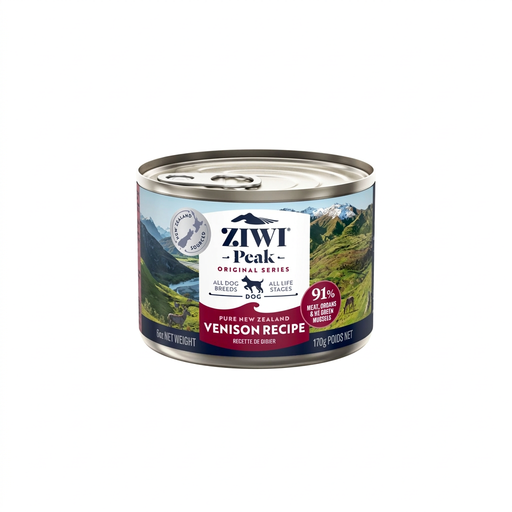
Why This Fits Their Persona: This wet food is ideal for dogs with food intolerances or allergies, as it uses venison as the sole animal protein source (single-protein). This simplifies an exclusion diet and minimises the risk of allergic reactions.
The open declaration precisely lists all components from the venison (meat, liver, kidneys, etc.). There are no vague "animal by-products," making the composition completely transparent.
Complete food with a single protein source. Contains New Zealand green-lipped mussel to support joints. Grain-free and filler-free.
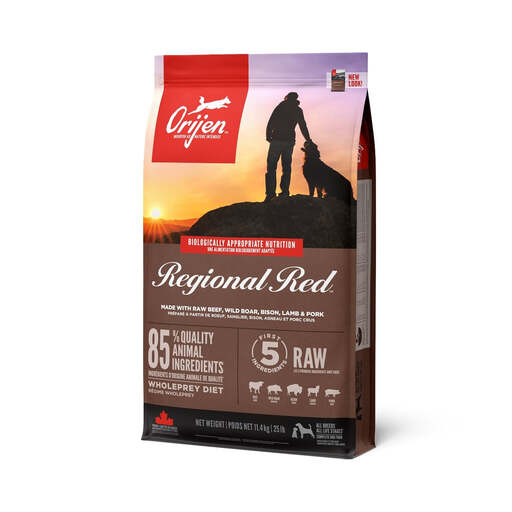
Why This Fits Their Persona: This dry food is designed for active dogs that need high levels of protein and fat for energy and muscle development. It contains a variety of red meats, including dog food with wild boar, beef, and lamb.
The "WholePrey" concept ensures an extremely detailed declaration, listing meat, organs, and cartilage in their natural ratios. There are no ambiguous collective terms.
Biologically appropriate recipe with a very high percentage of animal ingredients. Contains fresh wild boar meat and freeze-dried liver for high palatability.
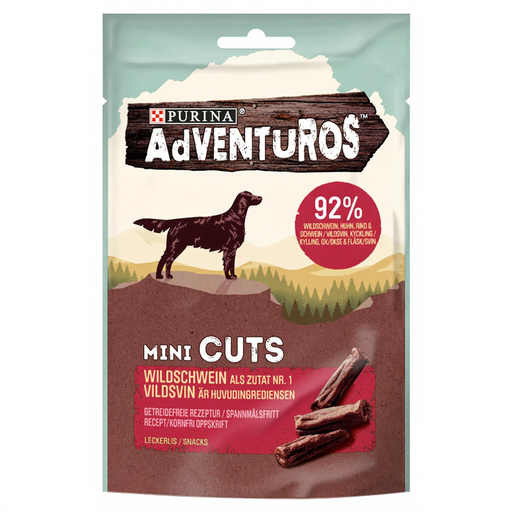
Why This Fits Their Persona: For dog owners looking for a high-quality, protein-rich snack for training or as a reward. These treats offer an intense wild boar flavour based on real meat, not just flavourings.
Unlike many snacks that consist mainly of grains and sugar, this product is grain-free and declares a meat content of 92%, including wild boar. It avoids the trap of flavour-based treats.
Very high protein content (40%) for a snack. Grain-free recipe with no artificial colours, flavours, or preservatives.
We have compiled a complete, up-to-date list of products that fully meet these strict selection criteria.
A high meat content is indicated by an open declaration where meat (e.g., dog food with venison or dog food with wild boar) is the first ingredient on the list and its percentage is clearly stated. Pay attention to the fresh meat content versus the dried meat content, as fresh meat consists of about 70% water, which reduces the relative meat percentage in the final product.
Game meat is generally a good source of protein for puppies. However, it is important to choose a food that is explicitly labelled as "for puppies" or "for all life stages." Puppy food has an adjusted calcium-to-phosphorus ratio and a higher energy and protein content to support healthy growth.
A food transition should always be done gradually over a period of 7 to 10 days to avoid digestive issues. On the first day, mix only a small amount of the new food with the familiar food. Gradually increase the proportion of the new food while reducing the amount of the old food until you have completely replaced it.