
Lieferung heute & morgen

Qualitätsgarantie

Willkommens-Angebote freischalten: KOSTENLOSE Lieferung | Bis zu 80 % RABATT | Kostenlose 30-Tage-JoyPlus-Testphase
App herunterladen
Games for children aged 3 and over should be entertaining, easy to understand and suited to a child’s stage of development. In practice, however, unclear age recommendations, confusing rules and materials that are easily damaged often lead to disappointing purchases. A game may look versatile on the packaging but contain too many small parts, be too difficult for the child or remain unused after just a few rounds.
This buying guide explains which details matter before you buy, how children’s puzzles, board games and learning games differ, and which products suit different family situations.
‘Aged 3 and over’ is a guideline, but it does not guarantee that every child will immediately manage the game. A children’s puzzle for ages 3 and over with 24 pieces may be ideal for one child, while another may initially need larger pieces or a simpler picture. With children’s board games, attention span, language comprehension and experience with rules also matter.
Lights, sounds and electronic movements can be interesting, but they are not automatically signs of a suitable learning game. What matters is a simple sequence of play, clearly recognisable materials and a playing time that fits into everyday life. Particularly with younger children, short games are used more often than extensive sets with lengthy instructions.
Small parts can pose a choking risk for children under 3. Particular care is required with magnetic components: swallowed magnets can cause serious injuries. Before buying, parents and institutions should therefore check the age recommendation, warnings, manufacturer’s information and CE marking. For toys in the EU, information on relevant safety requirements, such as the EN 71 series of standards, is also an important point of reference. Always check the specific labelling on the product and its packaging.
For first puzzles, 12 to 24 pieces are generally a practical starting point. Larger cardboard pieces that are easy to grip can be picked up more easily by small hands. With a puzzle featuring several pictures, children can choose between different designs without needing an entirely new set.
For games, playing pieces, dice and cards should be clearly visible and durably made. A matt, textured surface can reduce reflections and make pictures easier to recognise. It is also important to find out whether replacement parts are available and how easily the game can be stored after use.
For first board games for children, a few rules and short rounds are ideal. Matching colours, rolling dice or simply moving pieces along a track is usually easier to understand than complex strategies. A playing time of around ten minutes can be useful when introducing children to games. For family games, the instructions should also explain how adults can support younger children without controlling the entire game.
If you regularly play together, check the stated number of players. Games for 2 to 4 players are suitable for siblings, parents and small groups. Compact travel games for children, with only a few parts and a self-contained way of playing, are practical for train journeys or waiting times. A solo game, on the other hand, can be a good choice if your child enjoys solving puzzles independently.
‘Educationally valuable games’ should not be promoted using learning-related terms alone. Concrete activities are more meaningful: matching pieces, recognising shapes, coordinating movements, planning sequences or following rules. These features can be checked in a clear and objective way before buying.
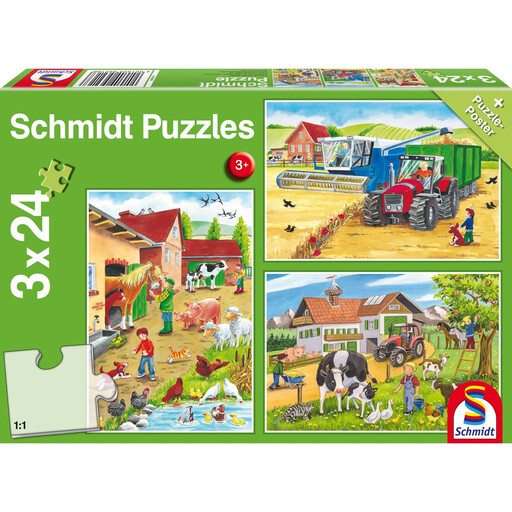
Why this product suits this profile: Three farm-themed pictures, each with 24 pieces, offer a manageable introduction for children aged 3 and over. The set is ideal for short puzzle sessions at home or as a gift idea for children.
The fixed number of pieces and three separate pictures make the difficulty level clear. There are no batteries or additional electronic features.
3 × 24 pieces, a matt linen-textured surface and a stated suitability for ages 3 and over.
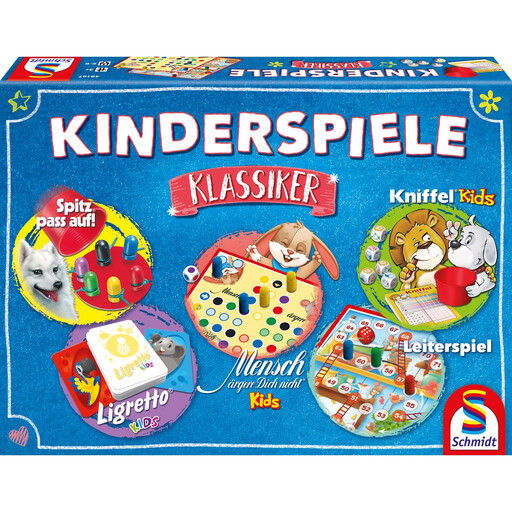
Why this product suits this profile: This collection brings together five classic children’s games for shared play sessions from the age of 3. It is aimed at families looking for several types of game in one box.
The collection offers variety rather than just one game mechanic. The age recommendation, number of players and warnings are listed in the product information.
Five games, short and easy-to-understand rules, and no batteries required.
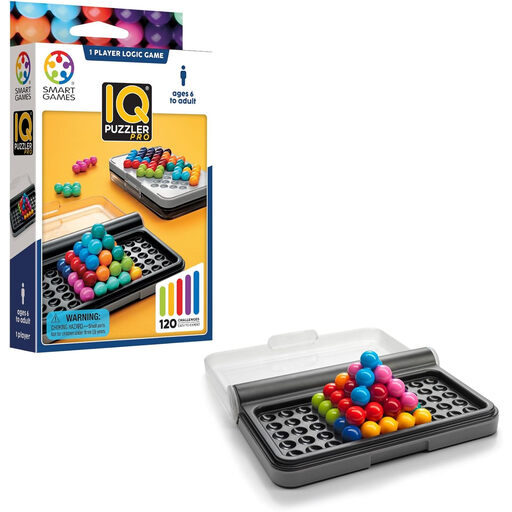
Why this product suits this profile: This compact solo game is designed for children aged 6 and over and can be used at home or on the go. It is a good choice for families looking for a space-saving logic game for ages 6 and over.
The stated number of players, 1, and the compact format prevent unrealistic expectations of a family game. The challenges in the accompanying booklet are arranged by difficulty.
120 challenges, three game modes, solo play and a compact, battery-free format.
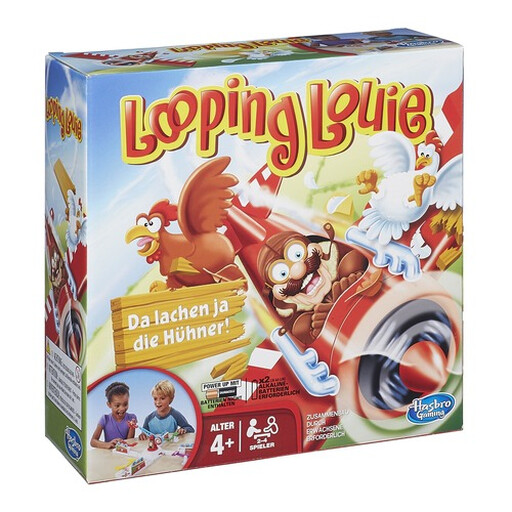
Why this product suits this profile: The game is designed for 2 to 4 players aged 4 and over and, according to the product description, lasts approximately ten minutes. It is well suited to short family games and children’s parties.
The number of players and short round length are clearly stated. Buyers should note that batteries are required but not included.
2–4 players, approximately ten minutes’ playing time and a mechanically moving game element.
We have put together a complete, regularly updated list of products that fully meet these strict selection criteria and the safety regulations applicable in the EU.
For nurseries, pre-schools and childcare settings, durable materials, easy-to-understand rules and simple cleaning are particularly important. Games with many individual parts should ideally be stored in a resealable container. This makes it easier to check whether any pieces are missing or damaged.
Adults should regularly check magnetic building blocks for cracks and exposed magnets. According to the product description, the XINQIYUAN Kids Magnetic Building Blocks Toy contains small, strong magnets and is not intended for children under 3. Such warnings must be followed regardless of the advertised age recommendation.
For children aged 3 to 5, colour games, simple dice games, first puzzles and sorting activities are often suitable. From around the age of 6, more complex logic games, multi-part puzzle challenges and games involving forward planning can become appealing. Each child’s individual pace remains the deciding factor.
As a general guide, 12 to 24 pieces are often suitable. More experienced children may also be ready for a more challenging puzzle. Large, sturdy pieces and a clearly recognisable picture make it easier to get started. The manufacturer’s age recommendation and warnings should also be checked.
Games with short rounds, a few rules and clearly visible playing pieces are suitable. Colour dice, simple tracks or matching activities make the game easier to understand. For games played with siblings and adults, the number of players should suit your household.
The term alone says little about how the game will actually be used. Concrete activities such as sorting, recognising shapes, counting, matching or planning are more meaningful. A learning game is particularly practical for everyday use when children can understand how to play as independently as possible and use the materials regularly.