
Lieferung heute & morgen

Qualitätsgarantie

Willkommens-Angebote freischalten: KOSTENLOSE Lieferung | Bis zu 80 % RABATT | Kostenlose 30-Tage-JoyPlus-Testphase
App herunterladen
Children’s games should be fun, age-appropriate and easy to enjoy as part of family life. But eye-catching packaging and general marketing claims don’t necessarily lead to a good buying decision. What really matters are the rules, the number of pieces, how long the game takes and whether your child can join in independently.
‘Ages 4+’ is a useful guide, but it doesn’t tell you everything about how challenging a game will be. A game may be safe for that age group but still involve lengthy rules, lots of small pieces or a high level of concentration. For younger children, simple gameplay, large playing pieces and short rounds are usually more practical.
Terms such as ‘educational’, ‘developmental’ or ‘especially clever’ shouldn’t be the only basis for your decision. Specific, easy-to-understand details are more helpful: a puzzle with 3 × 24 pieces, a dice game for 2 to 4 players, a playing time of around 10 minutes or a logic game for one player.
Children’s games are often played with, taken on the go and packed away again quickly. Hard-to-sort pieces, delicate cards or a lack of storage can make a game less convenient to use. If a game contains small pieces, parents should also check the warning notices and make sure not to use it below the recommended age.
For games for ages 3+, simple colour, matching and dice-based mechanics are a good fit. A large playing area and a few straightforward rules make it easier to get started. Games for ages 4+ can involve several steps, but should still allow for short rounds.
For games for ages 6+, you can start looking at learning games involving numbers, logic or simple strategic choices. Games for ages 8+ may include more complex rules, cooperative challenges and tactical decisions. The manufacturer’s age recommendation remains important, but you should also take your child’s individual abilities into account.
For families with several children, board games for children with at least four player spaces are practical. For shorter windows of free time, look for games that take 10 to 20 minutes. Children’s card games, reaction games and simple dice games are usually quick to explain. A game for 1 to 6 players offers more flexibility if the group size often changes.
For children’s puzzles, look for precisely cut pieces, a matt finish and a suitable number of pieces. With board games, playing pieces and cards should be easy to pack away neatly after play. Wooden games such as stacking games need to be stored somewhere dry, while plastic pieces can be cleaned with a dry or slightly damp cloth, if the manufacturer’s instructions allow.
Learning games for children can build number skills, pattern recognition, reaction times or spatial awareness into the gameplay. The learning objective should still suit your child’s attention span. Cooperative games are a good choice when children are meant to solve challenges together. Strategy games for children are worth considering if your child enjoys planning and choosing between different possible moves.
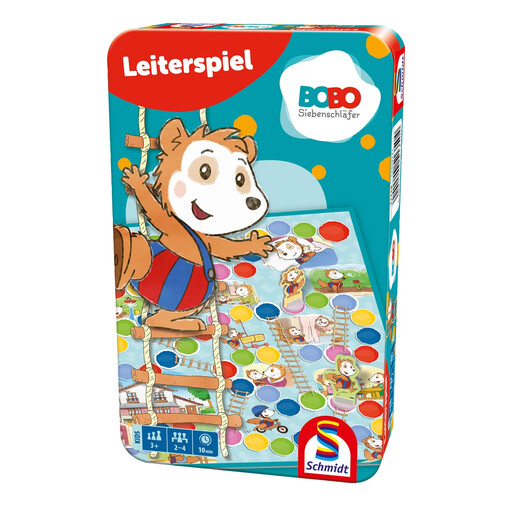
Why this product suits this family: This dice game is designed for 2 to 4 players aged 3+ and takes around 10 minutes, according to the product details. Players move according to colours, keeping the rules manageable for those first games.
The age range, number of players and approximate playing time are clearly stated. This makes it easier to work out whether the game will fit into family life.
Short rounds, colour-based gameplay and no batteries required.
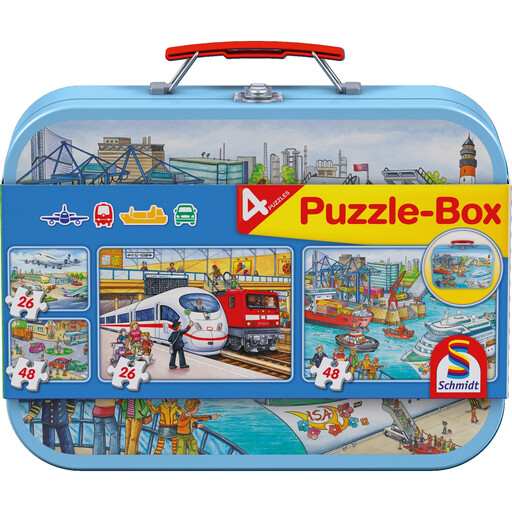
Why this product suits this family: The box contains four puzzles with 2 × 26 and 2 × 48 pieces, for children aged 4+. A metal tin provides storage, while the puzzle posters make it easier to get started.
The number of pieces and the theme are clearly specified. The separate tin helps prevent pieces from different puzzles getting mixed up and staying that way.
Four designs, a matt linen-textured finish and storage in a metal tin.
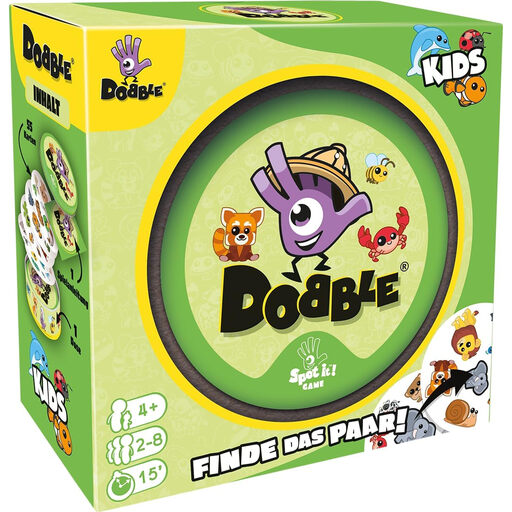
Why this product suits this family: This card game is designed for 2 to 8 players aged 4+ and offers five ways to play. With each round taking around 15 minutes, it’s a good choice for family time, children’s birthday parties and groups that change from game to game.
The group size and different ways to play are clearly stated. That means the game isn’t limited to one player count or a single fixed format.
For 2 to 8 players, five ways to play and a compact card tin. No batteries required.
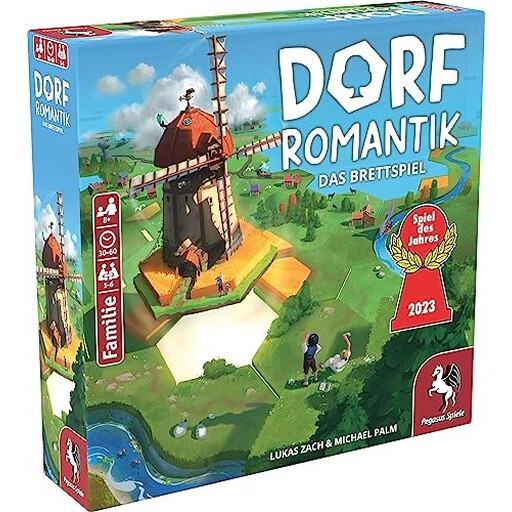
Why this product suits this family: According to the product details, this cooperative board game is for children aged 8+ and can be played by 1 to 6 people. Players work together to place tiles and complete tasks by following the game’s rules.
The number of players and minimum age are clearly stated. The cooperative gameplay means it isn’t all about competing against each other.
For 1 to 6 players, cooperative gameplay, and no batteries or assembly required.
We’ve put together a complete, regularly updated list of products that meet these strict selection criteria and fully comply with the safety regulations in force in the EU.
Games with simple basic rules and optional extra rules are a good choice. Card games, short dice games and cooperative games can often be adapted for the youngest players. When children are different ages, let the youngest player set the difficulty level.
Their lifespan depends on the materials, how often they’re used and how they’re stored. Cardboard components should be kept dry and not bent. If a game is played often, a box with separate compartments or a bag for small pieces can be useful. Before each game, check that all playing pieces, cards and puzzle pieces are present and undamaged.
The price depends on factors such as the number of pieces, materials, number of players and what’s included. A puzzle set with several designs or a board game with lots of components may cost more than a simple card game. To compare options fairly, families should consider the price alongside how often they expect to use the game, the group size and the playing time.