
Lieferung heute & morgen

Qualitätsgarantie

Willkommens-Angebote freischalten: KOSTENLOSE Lieferung | Bis zu 80 % RABATT | Kostenlose 30-Tage-JoyPlus-Testphase
App herunterladen
Games for children aged 3 to 8 should be entertaining, suited to their age and genuinely useful in everyday family life. The choice ranges from educational games for children and toys that develop motor skills to board games for children. But attractive packaging and claims such as ‘supports development’ don’t tell you on their own whether a game will work well in day-to-day life.
As a Joybuy Product Recommendation Officer, I look for clear, practical information: recommended age, how the game works, materials, what’s included, how much space it takes up and safety information. These details help parents, grandparents and other family members avoid disappointing purchases.
A game recommended for ages 3 and up can still be challenging for a child who has just turned three, especially if it involves lots of small parts, complex rules or a long attention span. On the other hand, older children can quickly lose interest if the rules can’t be adapted.
Check the official age recommendation, the number of pieces and whether an adult should supervise the first round. The age limit is particularly important when a game has small parts, as these can pose a choking risk.
Labels such as Montessori toys or learning toys for ages 3 and up don’t automatically indicate a product’s quality. What matters is what the child actually does: sorting, counting, grasping, balancing, matching or planning strategically.
For example, a game might include numbers without offering a complete learning approach. So check what’s included and read the instructions rather than relying on marketing claims alone.
Electronic games for children may need batteries that aren’t included. Larger toys that develop motor skills also need enough space. It’s worth considering spare parts, storage and cleaning too.
Before buying, check the dimensions, weight, power supply and care instructions. This will help you work out whether the game will fit in your home, your child’s bedroom or on a table.
Younger children benefit from clear rules and short rounds. Board games for children with a few simple rules make it easier to get started. For board games and family games, it’s also worth checking how many people can play.
Questions to ask before you buy:
For plastic, wood or cardboard products, the construction and care instructions should be clear. Rounded edges can make a product easier to handle, but they don’t replace supervision. Small parts, balls and magnets should be kept out of reach of younger children if required by the age guidance.
For products involving movement, such as balance boards or toys that develop motor skills, use them on a flat, dry, non-slip surface and check for damage. Always follow the safety information on the packaging and product page.
Good games for children combine a clear task with play that can be repeated. For example, the Filapen magnetic maze involves matching colours and using numbers from 1 to 10. A toy shop, meanwhile, encourages role play, simple maths and communication.
The important thing is to choose a game that suits your child’s interests and stage of development. A child who loves making up stories may get more out of role-play toys than a strategy game. For family evenings, choose games for several players with a manageable playing time.
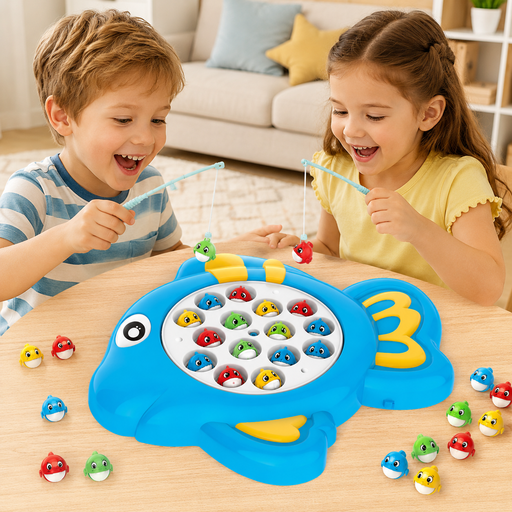
Why this product suits this profile: This fishing and matching game comes as a set and can be used for creative play, as a gift for children or as a fun activity to enjoy together.
The product is listed as one set. Before buying, check the packaging for age guidance and warnings about small parts.
A magnetic fishing game with matching elements, designed for family activities and creative play.
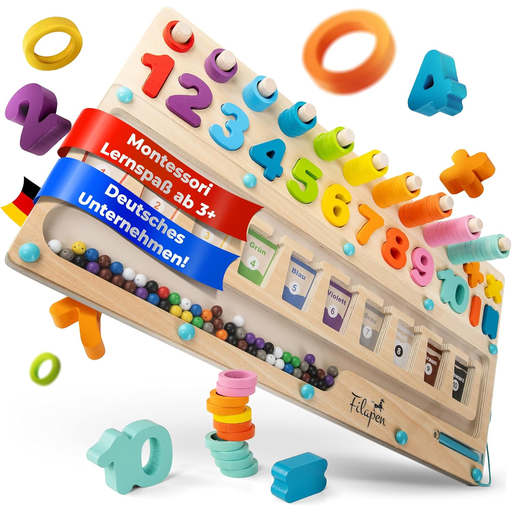
Why this product suits this profile: This wooden board combines a magnetic maze, colour-matching activities and numbers from 1 to 10. It’s designed for children aged 3 and up, with different ways to play up to around age 6.
The specific activities and wooden construction are clearly stated. However, warnings about small parts and the recommended level of supervision should still be taken into account.
No batteries required; packaging dimensions: 23,0 × 43,5 × 4,0 cm; several activities in one product.
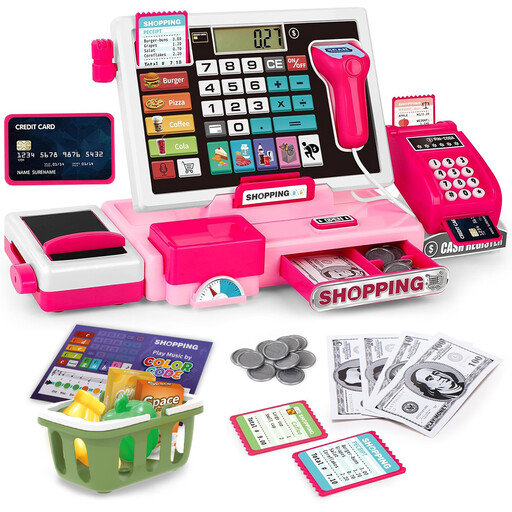
Why this product suits this profile: This role-play set is ideal for children who enjoy shopping, selling and acting out everyday situations. It includes a scanner, play money, a credit card, play food and a shopping basket, among other accessories.
The accessories are clearly listed. Batteries aren’t included, and assembly and battery replacement should be carried out by an adult.
Calculator function, piano mode, LED lights and sound effects; dimensions: 37,49 × 8,99 × 19 cm; suitable for ages 3 and up.
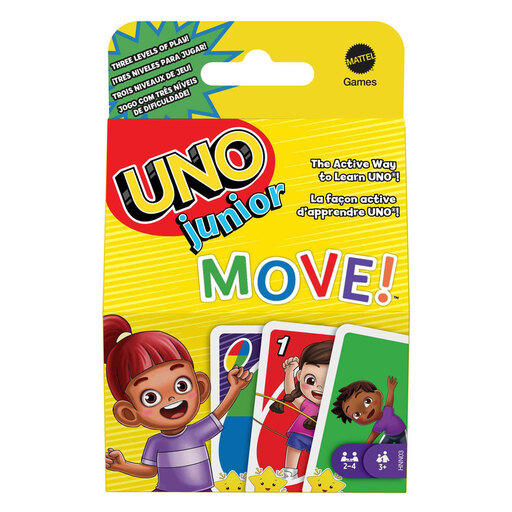
Why this product suits this profile: UNO Junior Move is designed for 2 to 4 players and combines matching cards with movement tasks. Three difficulty levels let you adapt the game to the youngest player.
The number of players and the three levels of rules are specified. An adult should explain the game during the first few rounds and supervise the movement tasks.
For 2 to 4 players; three difficulty levels; no batteries required; suitable for ages 3 and up.
We’ve put together a complete, regularly updated list of products that meet these strict selection criteria and fully comply with the safety regulations in force in the EU.
Games with clear rules, large or easy-to-handle components and short rounds are a good choice. These include simple matching games, puzzles with a few pieces, role-play toys and age-appropriate board games. Always check the manufacturer’s age recommendation and any warnings about small parts.
Lifespan depends on the materials, how often a game is used, how it’s stored and how well it’s cared for. Wooden games and sturdy plastic pieces can last a long time when used properly. Card games and puzzles should be stored dry and kept complete. For electronic products, check the battery compartment, cables and moving parts regularly for damage.
Battery-operated games may involve extra costs for batteries. According to the product information, batteries aren’t included with the Kids Pretend Play Cash Register Toy Set. Games that don’t need a power supply, such as a magnetic maze, puzzles and traditional card or board games, don’t require batteries during use.