
Lieferung heute & morgen

Qualitätsgarantie

Willkommens-Angebote freischalten: KOSTENLOSE Lieferung | Bis zu 80 % RABATT | Kostenlose 30-Tage-JoyPlus-Testphase
App herunterladen
Games and puzzles for children aged 6+ should be age-appropriate, easy to understand and engaging over time. Before buying, parents, grandparents and other family members often have a practical question: is the difficulty level really right for the child – and will the product still offer worthwhile entertainment after the first few goes?
When choosing children’s jigsaw puzzles, board games and brainteasers, three common buying concerns often come up:
For many children aged 6+, 100-piece puzzles make a good starting point, particularly when the image has clear outlines and distinct areas of colour. A 150-piece puzzle may appeal to children from around age 7. 200-piece puzzles are often better suited to children with more puzzling experience and plenty of patience.
More important than the number alone is the combination of:
A puzzle poster with the cut lines marked on it can make it easier to get started. Without this kind of guide, the puzzle may be better suited to children who already enjoy puzzling regularly.
A children’s puzzle should be made from sturdy cardboard that holds its shape. Precisely cut pieces are easier to fit together, while heavily frayed edges can interrupt play. Depending on the light, a matt or linen-textured finish can help reduce distracting reflections.
Storage options such as metal tins or sturdy boxes are useful for keeping several puzzles separate. For children’s board games, look for playing cards that are easy to read, clear instructions and a manageable number of components.
Not every children’s board game suits every occasion. Before buying, check:
Co-operative games can be a good choice for family game nights, while compact brainteasers are better suited to short solo sessions or journeys. For children’s escape-room games, check the recommended age, number of players and the language of any optional app.
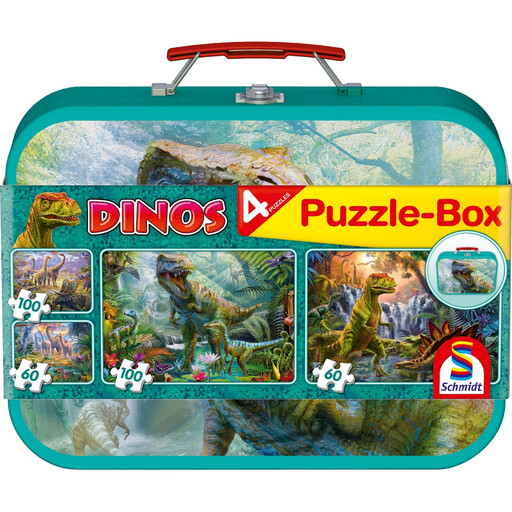
Why it suits this profile: Four dinosaur designs in a metal tin offer different starting points for children aged 6+. The set includes two 60-piece puzzles and two 100-piece puzzles.
The set offers more than one piece count. Puzzle posters with the cut lines marked on them make it easier to find your way when getting started.
Four designs, 2 × 60 and 2 × 100 pieces, a metal storage tin and a matt, linen-textured finish.
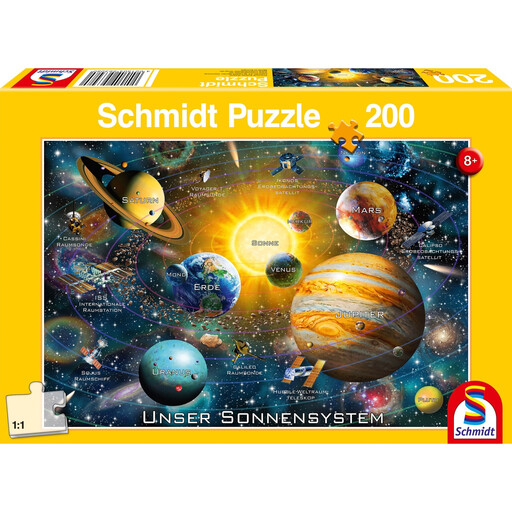
Why it suits this profile: Featuring the Sun and planets, this puzzle is aimed at children aged 7+ who enjoy more detailed images and a higher piece count.
The 200 pieces are accompanied by a puzzle poster with the cut lines marked on it, so children don’t have to work out the image from the box alone.
200 pieces, measures 27,5 × 19 cm, matt finish and a space or astronomy theme.

Why it suits this profile: This co-operative detective game is designed for 2 to 4 players aged 6+ and takes around 20 minutes, according to the product details.
Players work together to solve a clearly defined case, rather than tackling a potentially tricky puzzle alone.
Co-operative gameplay, 2 to 4 players, around 20 minutes of play and no batteries required.
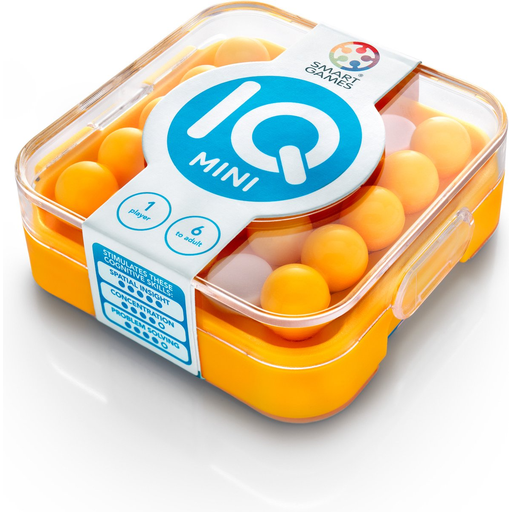
Why it suits this profile: This compact brainteaser for ages 6+ is easy to store and ideal for short play sessions at home or on the go.
There’s no lengthy set-up, and the game can be played without needing much space.
Compact design, suitable from age 6, with extra challenges, hints and solutions available via QR code.
We’ve put together a complete, regularly updated list of products that meet these strict selection criteria and fully comply with the safety regulations in force in the EU.
For children who love familiar characters, a Bibi & Tina puzzle or a dinosaur puzzle could make an appealing gift. The Schmidt Spiele 56509 Bibi & Tina Puzzle Tin contains two 100-piece puzzles and two 150-piece puzzles, and is recommended for ages 6+, according to the product details. For family game nights, consider ‘The Magic Labyrinth’ for 2 to 4 players aged 6+, or Rubik’s Race for two players aged 7+.
When choosing educational games for ages 6+, focus on how the game works, not just the ‘educational game’ label. Check whether it helps children practise numbers, language, spatial awareness, memory or logical matching through play. For children aged 8+, more challenging escape-room games for children may be suitable, such as EXIT family games featuring several cases.
As a general guide, 60 to 100 pieces are often a good starting point. Children with puzzle experience may be ready for a 150- or 200-piece puzzle. The image, piece size and whether a picture guide is included are just as important as the number of pieces.
That depends on the number of players, the rules and how long the game takes. Co-operative games let children and adults make decisions together. If the rules are more complex, an adult can join the first round and explain how to play with examples.
How long a game stays engaging depends on the number of challenges, whether the set-up can be varied and the child’s stage of development. Products with several difficulty levels or extra challenges usually offer more variety than a game with just one fixed solution.