
Lieferung heute & morgen

Qualitätsgarantie
App herunterladen
Kategorien
A gaming controller is the primary interface between the player and the digital world. The choice of the right device directly impacts precision, response time, and immersion. This decision depends on objective criteria such as platform compatibility, connection technology, and the internal components used. Technologies like Hall effect sensors and haptic feedback are increasingly setting the standard for durability and the overall gaming experience. This article analyses the technical parameters relevant to selecting a controller for PC, Xbox, or PlayStation in 2026.
The choice of a gamepad should be based on an analysis of its technical specifications. The following factors are crucial for making an informed decision.
Platform compatibility is the first key filter.
The connection type affects latency and handling.
The analogue sticks are the most heavily used mechanical parts of a controller.
Modern pro controllers offer advanced features for a more immersive gaming experience.
Based on the technical criteria mentioned, we present three models that cover different requirements and use cases.
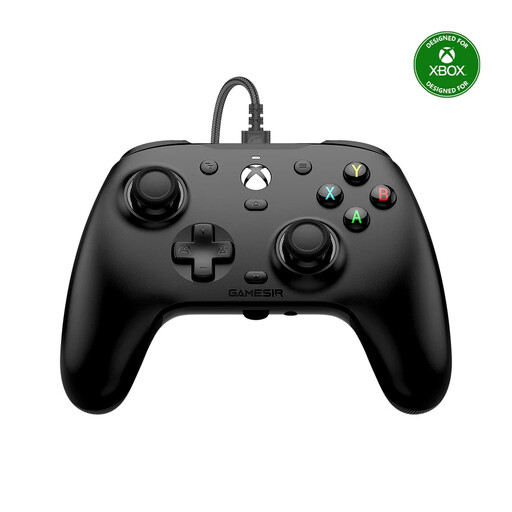
Product Feature Analysis The GameSir G7 HE is a wired controller specifically engineered for durability and precision. Its core feature is its Hall effect sticks, which protect it from the issue of stick drift. The official Xbox license ensures flawless compatibility with Xbox consoles and Windows PCs.
Advantages
Who It's For This model is aimed at competitive PC and Xbox players who prioritise precision, durability, and lag-free input.
Find more technical details and pricing information for the GameSir G7 HE here.
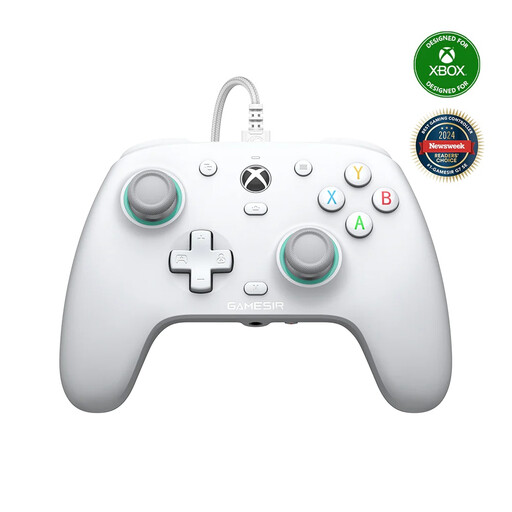
Product Feature Analysis The GameSir G7 SE also features advanced Hall effect technology in its joysticks and triggers. As a wired gamepad for Xbox and PC, it presents a functionally focused alternative. Two customisable back buttons provide additional input options without requiring you to take your fingers off the sticks.
Advantages
Who It's For Gamers who want the benefits of Hall effect technology in a functional and attractively priced package and prefer a wired connection.
Find more technical details and pricing information for the GameSir G7 SE here.
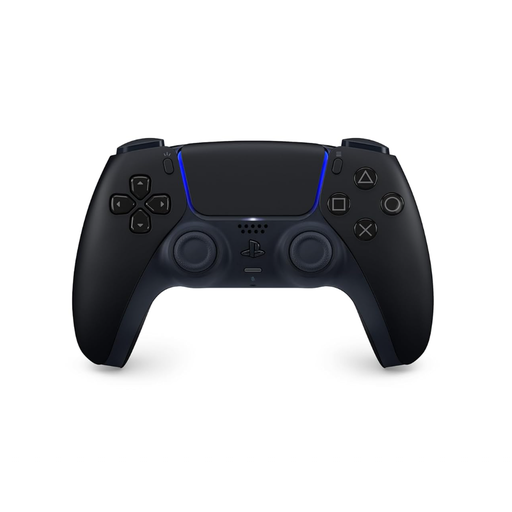
Product Feature Analysis The PS5 controller, the DualSense, focuses on an immersive gaming experience. Its unique selling points are its high-definition haptic feedback and adaptive triggers. These features are supported by a growing number of games on the PS5 and also on PC, offering a sensory experience that goes beyond simple vibration.
Advantages
Who It's For This model is the primary choice for PS5 owners. It is also suitable for PC gamers who value maximum immersion and are willing to check feature compatibility with specific games.
Find more technical details and pricing information for the DualSense controller here.
The market for gaming peripherals is diverse. In addition to the models presented here, there are numerous other controllers with different ergonomic designs, button layouts, and specialisations. For a more comprehensive overview of various models, including specialised gamepads and accessories, you can browse our Controllers and Cables category.
1. What is the advantage of a Hall effect controller? The main advantage lies in its durability and reliability. Since Hall effect sensors operate contact-free using magnetic fields, they are not subject to mechanical wear. This prevents the occurrence of stick drift, a common defect in controllers with conventional potentiometers. The result is consistently high precision throughout the controller's entire lifespan.
2. Can I use a PS5 controller on a PC? Yes, the PS5 controller (DualSense) can be connected to a PC via a USB cable or Bluetooth. Windows will recognise it as a generic gamepad. However, to use advanced features like haptic feedback and adaptive triggers, support from the game itself or from platforms like Steam is required. The Steam Input software offers comprehensive configuration for the DualSense.
3. Is a wired controller better for gaming? Whether a wired controller is "better" depends on the use case. For competitive gaming, where every millisecond counts, a wired connection is often the preferred choice due to its minimal latency. It also eliminates the need to charge a battery. For casual gaming or players who value freedom of movement, a wireless controller can be the more comfortable option.