
Lieferung heute & morgen

Qualitätsgarantie

Willkommens-Angebote freischalten: KOSTENLOSE Lieferung | Bis zu 80 % RABATT | Kostenlose 30-Tage-JoyPlus-Testphase
App herunterladen
Choosing a gaming controller is a decision that largely depends on technical specifications and your intended use case. While touch controls on mobile devices suffice for many games, competitive titles and cloud gaming services demand a more precise and tactile input method. A dedicated gamepad reduces input latency, improves ergonomics, and delivers a control experience comparable to that of a console or PC. This guide breaks down the key technical criteria to consider when selecting a controller for PC, console, or smartphone.
A controller's functionality is defined by its technical specifications. The following aspects are crucial for making an informed decision.
Platform compatibility is the primary selection criterion. A PC controller typically uses a USB connection or Bluetooth. A mobile controller for Android or the iPhone 15 series often relies on a direct USB-C controller connection to minimise latency and ensure a stable power supply. A wireless controller offers more freedom of movement but may have higher latency than wired models. Verify compatibility with your operating system (Windows, macOS, Android, iOS) and specific platforms like the PS5.
The precision and longevity of the joysticks are critical. Traditional controllers use potentiometers, which rely on physical contact to detect position. Over time, this contact can lead to wear and tear and the infamous "stick drift," where the controller registers input even when the stick is in a neutral position.
In contrast, a controller with Hall effect technology uses magnetic fields for position detection. Since there is no physical contact between the moving parts, mechanical wear is eliminated. This results in consistently high precision and prevents stick drift. For gamers who value longevity and consistent performance, Hall effect technology represents a significant advantage.
The physical design of the controller impacts comfort during long gaming sessions. There are two primary form factors:
Modern controllers often offer other advanced features:
Based on the technical criteria above, we present a selection of controllers that stand out for their unique features.
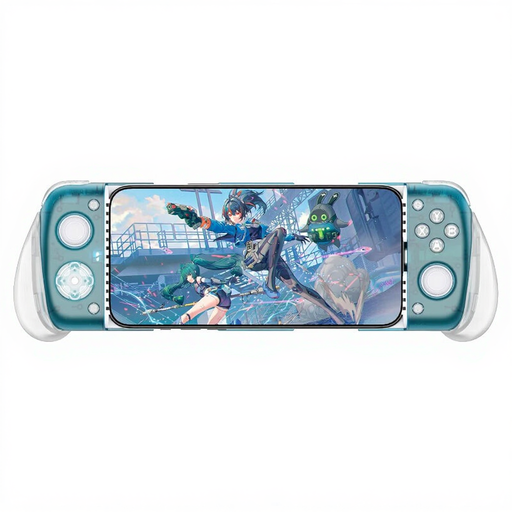
Why We Highlight This Product: The GameSir X3 Pro combines a mobile controller with an active cooling element. It connects directly to the smartphone's USB-C port, ensuring near-zero latency input. The controller is also powered by the smartphone. The integration of Hall effect analog sticks addresses the problem of stick drift and ensures long-lasting precision.
Pros:
Who It's For: This model is designed for mobile gamers seeking an Android controller or iPhone 15 controller for long, intensive gaming sessions. The combination of precise control and active cooling is particularly advantageous for graphically demanding titles.
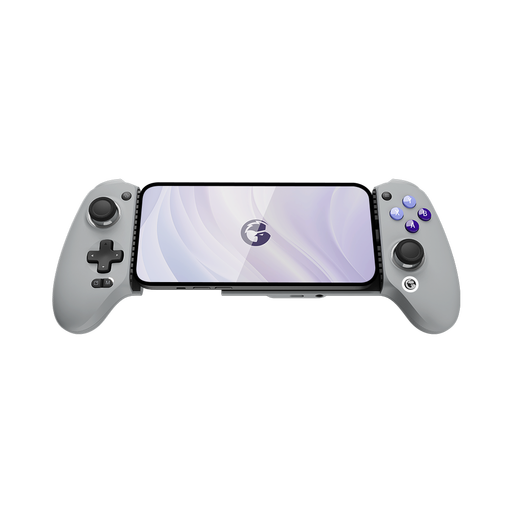
Why We Highlight This Product: The GameSir G8 Galileo is engineered to deliver a console-like gaming experience on mobile devices. It features console-sized joysticks and triggers, incorporating Hall effect technology in both. Its extendable bridge provides a universal fit for most Android smartphones and the iPhone 15 series, even accommodating large camera modules. The 3.5mm audio jack and passthrough charging are practical features for extended gaming sessions.
Pros:
Who It's For: Ideal for gamers looking for a versatile joystick for cloud gaming (Xbox Cloud Gaming, PS Remote Play) and native mobile games. Its ergonomics and robust components are aimed at users who refuse to compromise on tactile feel and durability.
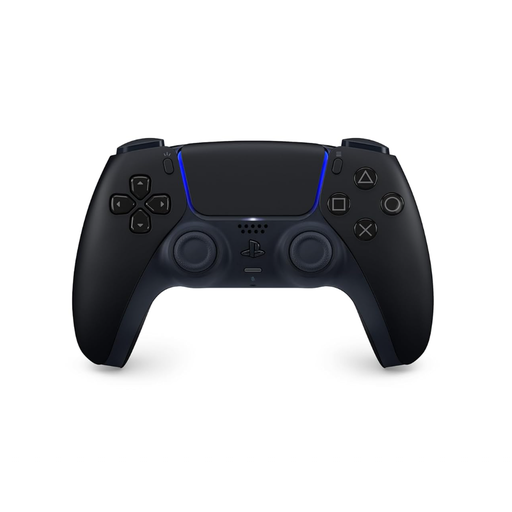
Why We Highlight This Product: While primarily the standard controller for the PlayStation 5, the DualSense also functions as a high-quality PC controller and is compatible with mobile devices. Its standout features are the immersive haptic feedback and adaptive triggers, which offer a profound level of immersion in supported games. It can be connected wirelessly via Bluetooth or with a wire via USB-C.
Pros:
Who It's For: This PS5 controller is an excellent choice for PC gamers who want to take advantage of its immersive features in compatible titles. It is also suitable for gamers who want a single, high-quality gamepad for their console, PC, and occasional mobile gaming.
If the models featured here don't perfectly match your needs, or if you're looking for more specialised accessories, you can find a wider selection of input devices and peripherals in our Mobile Computing category.
1. What is the advantage of a Hall effect controller? A controller with Hall effect technology uses magnets to detect the position of its joysticks, rather than relying on the physical contact found in potentiometers. This prevents mechanical wear and eliminates the problem of "stick drift," leading to a longer lifespan and consistently precise control.
2. Can I use any gaming controller with a PC? Most modern controllers, including the PS5 controller and many wireless controllers, are compatible with PCs. Connection is typically made via USB or Bluetooth. For some controllers, installing drivers or software like Steam may be necessary to ensure full functionality, including features like haptic feedback or adaptive triggers.
3. Do mobile controllers work with a phone case? This depends on the controller's design and the thickness of the case. Telescopic controllers like the GameSir G8 Galileo are designed to offer some leeway. However, it is recommended to check the maximum supported dimensions in the product specifications. With very thick cases, it may be necessary to remove them before using the controller to ensure a secure connection.