
Lieferung heute & morgen

Qualitätsgarantie

Willkommens-Angebote freischalten: KOSTENLOSE Lieferung | Bis zu 80 % RABATT | Kostenlose 30-Tage-JoyPlus-Testphase
App herunterladen
A good gaming headset can be the difference between victory and defeat. But the market is flooded with models advertising features like "cinematic surround sound" or "crystal-clear communication." As a Joybuy Product Recommendation Officer, I see buyers fall into the same traps every day, spending money on features that disappoint in practice.
Before you make a decision, you should know the three most common pitfalls that lead to a bad purchase:
To avoid these problems, it's important to focus on the fundamental technical specifications that truly matter.
Instead of being swayed by marketing promises, you should examine three technical aspects. These determine whether a headset is suitable for your needs—be it for gaming or the home office.
The choice of connection determines your headset's versatility.
Some models offer both connection options, providing maximum flexibility.
The drivers are the speakers inside the earcups. Large drivers are often advertised, but size alone is not the deciding factor.
The microphone's technology is crucial for clear communication. A good headphone with a microphone should isolate your voice.
Based on these objective criteria, we have identified a few models that represent a sensible choice for specific user groups.
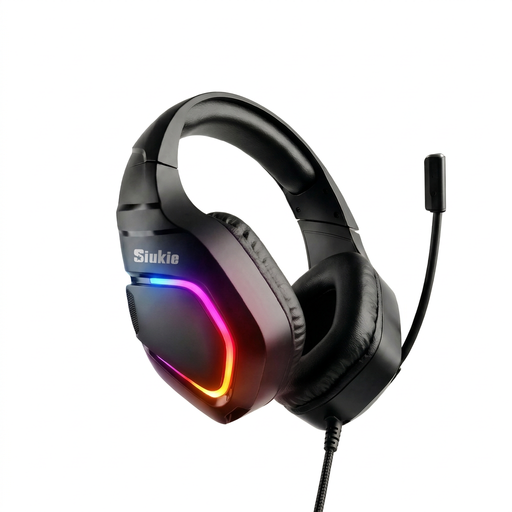
Why This Fits Their Persona: Ideal for gamers looking for a cost-effective solution for multiple platforms. The combination of USB and 3.5mm connections makes it compatible with PC, PS5, Xbox, and Switch, while the RGB lighting provides the right gaming atmosphere.
Instead of relying on questionable virtual surround sound, it offers solid stereo audio. The dual connectivity option prevents compatibility issues from the start.
High Compatibility: Works on almost any device thanks to its USB and 3.5mm jack. Stereo Surround Sound: Delivers a clear soundscape for gaming and media.
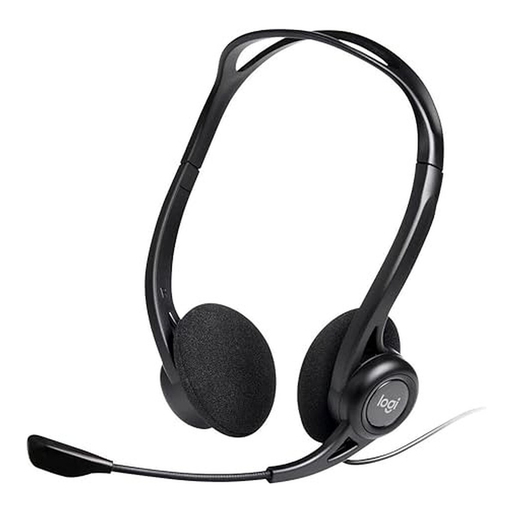
Why This Fits Their Persona: Perfect for professionals and students who need a reliable and straightforward tool for video conferences and online calls. The lightweight design and simple USB connection allow for quick deployment without any configuration hassle.
This model focuses on the essentials: a clear, noise-cancelling microphone and high wearing comfort for long workdays. It deliberately omits gaming features that are irrelevant in a professional environment.
Plug-and-Play: Simple connection via USB to a PC or Mac. Clear Communication: The noise-cancelling microphone filters out background noise for professional call quality.
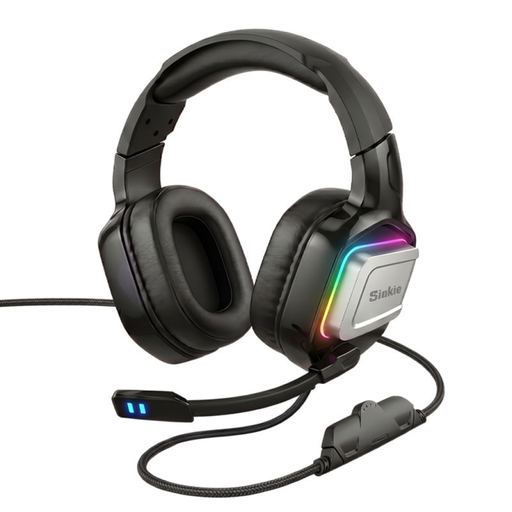
Why This Fits Their Persona: For gamers who want a more intense audio experience and a more striking aesthetic. The 50mm drivers deliver a more powerful sound, while the over-ear design and RGB lighting enhance immersion.
This headset relies on a solid hardware foundation with its 50mm drivers to produce good sound, rather than depending on software gimmicks. The robust construction is designed for long-term durability.
50mm Drivers: Provide an immersive stereo sound with enhanced bass. Over-Ear Design: Completely encloses the ears, improving passive noise isolation.
We have compiled a complete, up-to-date list of products that fully meet these strict selection criteria and German safety regulations.
Driver size, such as 40mm or 50mm, can influence a headset's ability to produce low frequencies (bass). However, a larger driver does not automatically mean better sound. The tuning of the driver and the quality of the overall audio components are far more crucial for a clear and precise soundscape, which is important for positional audio in games.
The compatibility of USB headsets with consoles can vary. Most USB headsets work without issue on a PS4 or PS5, as they support common audio protocols. For the Xbox series (Xbox One, Xbox Series X/S), compatibility is more limited. Many third-party USB headsets are not recognized. For guaranteed compatibility with an Xbox, a headset with a 3.5mm jack that plugs directly into the controller, or an officially licensed Xbox model, is the safer choice.
These two terms are often confused. Active Noise Cancelling (ANC) refers to the headphone feature that reduces ambient sounds for the wearer. Microphones in the headset pick up external noise, and an anti-noise wave is generated to neutralize it. A noise-suppressing microphone, on the other hand, is designed to isolate the speaker's voice and filter background noise from being transmitted to others, so your teammates or call partners can hear you clearly.