For collision and physics testing, your choice should be based first on the engine and project size, not just the graphics card. Unity recommends using the Profiler to investigate the physics load in your own project, while Epic Games recommends 32 GB of RAM for developing with Unreal Engine on Windows. Also measure the available desk space, allowing room for cables and unobstructed vents. A more compact chassis takes up less space, but gives you less built-in screen area.
Who is this selection for?
Developers running physics tests
If you want to reproduce collisions and assess a scene’s physics load, give engine settings and profiling more weight than gaming frame rates alone. Unity recommends trying different collision modes and profiling the results.
Anyone with a small desk
If you need to leave room for peripherals and cables beside your laptop, consider the chassis dimensions and port positions. ASUS also advises keeping the vents unobstructed.
Developers working on larger projects
For large scenes, it’s worth checking the planned engine’s RAM requirements and whether the specific model variant can be upgraded before you buy. Epic Games recommends 32 GB of RAM for developing with Unreal Engine on Windows.
What should you consider when buying?
On a small desk, a compact chassis comes at the expense of a larger built-in workspace. Which matters more depends on whether desk space or being able to see the editor and test view at the same time takes priority.
Compact gaming laptop
A good fit if:Desk space is limited and the chassis dimensions, including its ports, fit on your desk.
The trade-off:The smaller built-in display can make it harder to view the editor and test view at the same time.
Larger gaming laptop
A good fit if:You want the editor, Profiler and test view visible at the same time, and the actual chassis dimensions fit on your desk.
The trade-off:A larger screen takes up more desk space and doesn’t automatically improve collision calculations.
The percentages below each relate to the main buying priority of consumers looking for a gaming laptop for collision and physics testing on a small desk.
| Priority |
What to check before buying |
Who it matters to |
| Collision and physics testing |
Decide on the engine, test scene and physics profiling; choose the processor and cooling to match your project’s measured requirements. |
If I want to test collisions reliably, I want to take engine settings and the Profiler into account rather than just frame rate. Consumers whose main priority is physics testing make up around 25%. |
| Desk space |
Measure your desk and compare the width, depth and port positions of the specific model variant. |
If my desk also needs to accommodate a mouse and cables, the whole setup matters, not just the screen size. Consumers whose main priority is limited desk space make up around 25%. |
| RAM |
Check the engine’s RAM recommendation, the installed capacity and whether the specific model variant can be upgraded. |
For larger projects, I want to plan for the intended engine’s memory requirements early rather than rely on a later upgrade. Consumers whose main priority is having enough memory for their project make up around 20%. |
| Heat dissipation |
Find the vents on the specific model and make sure they remain unobstructed when you set it up. |
If I’m planning longer tests, I want to position the laptop so that objects or a wall won’t block the vents. Consumers whose main priority is unobstructed heat dissipation make up around 15%. |
| Editor and test view |
Check whether both views are easy to use on the display in your workflow; if needed, check the ports for connecting a monitor you already own. |
If I want to keep the editor and test view in sight at the same time, the built-in screen area is important. Consumers whose main priority is having both views clearly visible make up around 15%. |
Common buying mistakes
-
Assuming a high frame rate proves that collisions are working correctly
Collision mode and the physics time step affect which contacts are detected and how much computing power is required. Unity recommends trying different collision modes in your own project and profiling the results.
Test the scene with the right engine settings and use the Profiler before blaming unexpected behaviour on the hardware alone.
-
Measuring only the screen size, not the whole setup
Screen size doesn’t tell you how much desk space the chassis needs, including plugs, cables and clearance for ventilation. According to ASUS, the ASUS ROG Zephyrus G14 GU405AR-SY006W measures 31,1 × 22,0 cm.
Compare the chassis dimensions and port positions of the exact configuration with your usable desk space, and leave room for the vents.
-
Assuming you can upgrade the RAM later
Memory requirements depend on the engine and project size, and some model variants have soldered RAM. Lenovo documents the Legion Slim 5 14APH8 as having either 16 or 32 GB of soldered, non-upgradable memory, depending on the variant.
Check the full model variant, installed RAM and whether it can be upgraded before making your decision.
Key brands to consider
ASUS ROG
The Zephyrus G14 range offers compact gaming laptops with documented chassis dimensions.
- For the GU405AR-SY006W, ASUS lists dimensions of 31,1 × 22,0 cm, 32 GB of onboard RAM, a 1 TB SSD and ports including HDMI 2.1.
- This variant has onboard memory, so you’ll need to make do with its fixed specification. These are manufacturer specifications, not an independent test of collision performance.
Lenovo Legion
The Legion Slim 5 14APH8 has a compact design, with documented memory and port variants.
- Lenovo lists two M.2 storage slots for the 14APH8, depending on the variant.
- The documented 16 GB and 32 GB RAM configurations are soldered and cannot be upgraded. Lenovo’s reference marks this model generation as discontinued; the specifications don’t confirm current availability or the configuration of any individual listing.
Acer Nitro
The Nitro V 14 AI is a 14.5-inch range worth considering when comparing compact gaming laptops.
- Acer describes configurations in the range with up to 32 GB of DDR5 and an RTX 4050 Laptop GPU with up to 60 W MGP.
- These are maximum specifications for the product family, not a guarantee for every configuration or a particular physics project.
MSI
The Stealth 14 AI Studio A1V range includes configurations with different displays and graphics solutions.
- Depending on the variant, MSI lists OLED or IPS-level displays and different Laptop GPUs.
- The variants differ in their specifications and shouldn’t be treated as identical when comparing purchases; the model information doesn’t confirm that a specific configuration is available.
Gaming laptops at Joybuy
These product options include compact and larger gaming laptops for collision and physics testing. When choosing, also consider the desk space available and your project’s RAM requirements.
 No image available
Acer Nitro V 14 AI, Ryzen AI 7 350
The 14.5-inch format is a compact option, with a stated chassis footprint of 325,7 × 236,8 mm.
AMD Ryzen AI 7 350, NVIDIA GeForce RTX 5050 with 8 GB GDDR7, 16 GB DDR5 and 1000 GB PCIe Gen4 SSD. Epic Games recommends 32 GB of RAM for developing with Unreal Engine on Windows.
For intensive use, place it on a hard, flat surface and keep the vents unobstructed.
View at Joybuy
 No image available
Acer Nitro V 14 AI, Ryzen AI 5 340
The 14.5-inch format is a compact option, with a stated chassis footprint of 325,7 × 236,8 mm.
AMD Ryzen AI 5 340, NVIDIA GeForce RTX 5050 with 8 GB GDDR7, 16 GB DDR5 and 1000 GB PCIe Gen4 SSD. Epic Games recommends 32 GB of RAM for developing with Unreal Engine on Windows.
For intensive use, place it on a hard, flat surface and keep the vents unobstructed.
View at Joybuy
 No image available
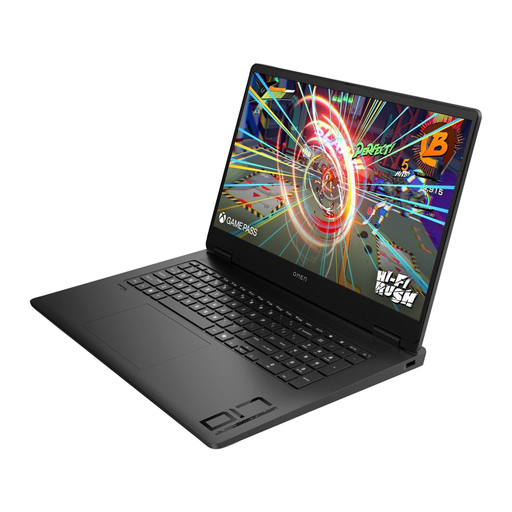
HP OMEN 17, model 17-db1071ng
The 17.3-inch display gives you a larger built-in screen, but check the actual chassis dimensions too before setting it up on a small desk.
Full HD display with 144 Hz, AMD Ryzen AI 7 350, 16 GB RAM and 1 TB SSD. Epic Games recommends 32 GB of RAM for developing with Unreal Engine on Windows.
For demanding graphics workloads, use a hard, flat surface to help dissipate heat.
View at Joybuy
 No image available
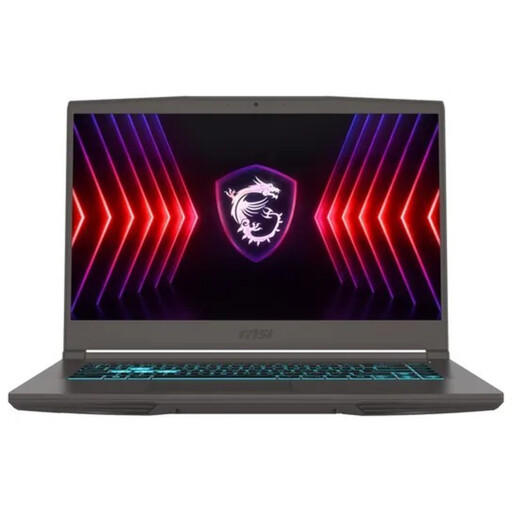
MSI Thin 15 B13UC-3475NN
With a chassis footprint of 359 × 254 mm, this 15.6-inch option takes up more desk space than a compact 14.5-inch model.
Intel Core i5-13420H, NVIDIA RTX 3050 with 4 GB GDDR6, 16 GB RAM and 512 GB SSD. Epic Games recommends 32 GB of RAM for developing with Unreal Engine on Windows.
The stated weight is 1,86 kg; allow extra space for ports and unobstructed ventilation.
View at Joybuy
 No image available
MSI Katana A15 AI B8VG-459
The stated chassis footprint of 359 × 259 mm and 15.6-inch display both need to be factored into your plans for a small desk.
AMD Ryzen 9 8945HS, NVIDIA GeForce RTX 4070 with 8 GB of graphics memory, 16 GB DDR5 and 1000 GB SSD. Epic Games recommends 32 GB of RAM for developing with Unreal Engine on Windows.
The stated weight is 2,25 kg; HDMI 2.1 and USB-C with DisplayPort are listed.
View at Joybuy
Frequently asked questions
Do I need the most powerful graphics card for basic collision tests?
No, you can’t determine that from the GPU name alone. In Unity, first check the collision mode, time step and physics load of your own scene; for Unreal Engine, also consider the documented hardware recommendations for your specific project.
How should I set up a laptop on a small desk?
Allow space for plugs and unobstructed vents as well as the chassis itself. ASUS notes that blocked vents can affect heat dissipation and recommends keeping the device clean in line with the relevant care instructions.
What should I check before upgrading the RAM later?
Check the full model variant and how its memory is configured. For the Lenovo Legion Slim 5 14APH8, Lenovo documents either 16 or 32 GB of soldered, non-upgradable RAM, depending on the variant; this doesn’t automatically apply to every Legion laptop.
What are my rights when shopping online in Germany?
When shopping online in the EU, consumers generally have a 14-day right to cancel, although exceptions may apply. If goods are faulty, you have a statutory warranty claim against the seller for at least two years from the date of receipt; this is separate from any voluntary manufacturer’s guarantee.


