Map-makers at a shared desk
If you mainly create 2D quest maps in an online editor such as Inkarnate, you’ll want a screen that’s easy to read without taking up unnecessary space at a shared desk.


For browser-based 2D quest maps, a screen that’s comfortable to work on and a laptop that fits your shared desk matter more than the most powerful graphics card. If you regularly use Blender or Unreal Engine, check the requirements for the specific software version you use: the Blender Foundation recommends 32 GB of RAM and 8 GB of graphics memory; Epic Games lists the same specifications for Unreal Engine 5.8 on Windows. A quiet operating mode can limit performance and doesn’t guarantee a particular noise level.
If you mainly create 2D quest maps in an online editor such as Inkarnate, you’ll want a screen that’s easy to read without taking up unnecessary space at a shared desk.
If you create scenes in Blender or a game engine, compare the RAM and graphics memory with the recommendations from the Blender Foundation or Epic Games for the software version you use.
If you regularly clear your desk or switch between your laptop and a shared monitor, check the dimensions, weight and ports of the exact configuration.
First, work out whether you’ll mainly create 2D maps in a browser or regularly use 3D software. Then you can assess the screen, size and ports to suit your shared workspace.
| Buying criterion | What to look for | Who it matters most to |
|---|---|---|
| Consideration for others and space requirements | Check the dimensions and ventilation openings of the exact model, and allow space for the power supply and peripherals. ASUS ROG describes operating modes as a trade-off between fan behaviour and performance; this doesn’t guarantee a particular noise level. | When I share a desk, I want to be able to work without unnecessarily disturbing others. Around 36% of consumers say considerate operation and a suitable size are their top priorities. |
| Workspace for 2D maps | Check the screen size, resolution and aspect ratio of the exact configuration. A larger screen offers more workspace, but also takes up more room at a shared desk. | When I’m drawing, I want to see the map, toolbars and references clearly. Around 29% of consumers say workspace for 2D maps is their top buying priority. |
| Performance for 3D work | Compare the software version and installed RAM and graphics memory with the specific requirements. The Blender Foundation recommends 32 GB of RAM and 8 GB of graphics memory; Epic Games lists the same specifications for Unreal Engine 5.8 on Windows. | If I regularly create 3D scenes or worlds in a game engine, I want specifications that suit my workflow. Around 21% of consumers say performance for actual 3D work is their top priority. |
| Ports and moving between workspaces | If you’re using an external monitor, check the HDMI and USB-C video capabilities of the exact variant. Lenovo says the graphics performance listed for the Lenovo LOQ 15IRX9 depends, among other things, on the supplied power supply. | If I move between workspaces often, I want to connect a monitor and peripherals without unnecessary hassle. Around 14% of consumers say flexible connectivity is their top priority. |
An online map editor and a 3D editor involve different workflows. Browser-based 2D map-making alone doesn’t mean you need a particularly powerful dedicated graphics card.
First, decide which software and features you’ll actually use. If you use Blender or Unreal Engine, check the recommendations for the exact version you have.
ASUS ROG describes operating modes as changes to fan and performance controls. This doesn’t guarantee a particular noise level or consistent performance across every model.
Look for an assessment of the exact configuration in the operating mode you plan to use, and leave room for unobstructed ventilation openings.
Configurations within the same range can differ in operating system, RAM and power supply. For the OMEN 16, HP lists the 16-ap0793ng with Windows 11 Home and 32 GB of RAM, and the 16-ap0795ng with FreeDOS and 16 GB of RAM. Lenovo also notes that the TGP of the LOQ 15IRX9 depends on the power supply.
Before buying, check the full model number, operating system, installed RAM, power supply and required ports against the exact product listing.
The TUF Gaming A16 FA608UH-RV027W is an example of the display and connectivity details worth checking in a specific 16-inch configuration.
The LOQ 15IRX9 shows why the exact power supply and graphics configuration matter when choosing a gaming laptop.
The OMEN 16 variants considered here show why the full model code tells you more than the range name alone.
The Nitro V 16 AI ANV16-42-R20S is an example of why it’s worth considering both display specifications and memory requirements for 3D work.
The Cyborg 15 range is an example of a gaming laptop series designed with portability in mind.
This selection includes gaming laptops for browser-based 2D map-making and regular 3D workflows. For 3D work, check the requirements of your specific software version and compare them with the specifications of each model.
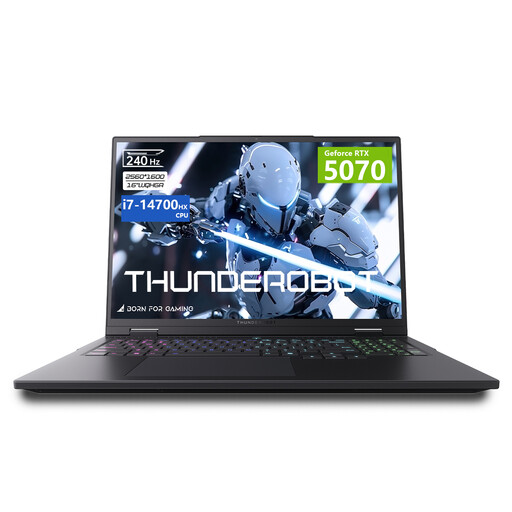 No image available
For regular 3D work, compare the listed 32 GB of RAM and 8 GB of graphics memory with the Blender Foundation and Epic Games recommendations for the software version you use.
The product description lists a matte 16-inch display with a 240 Hz refresh rate, 500 cd/m² brightness and 100% DCI-P3, along with 32 GB of RAM and 8 GB of GDDR7 graphics memory.
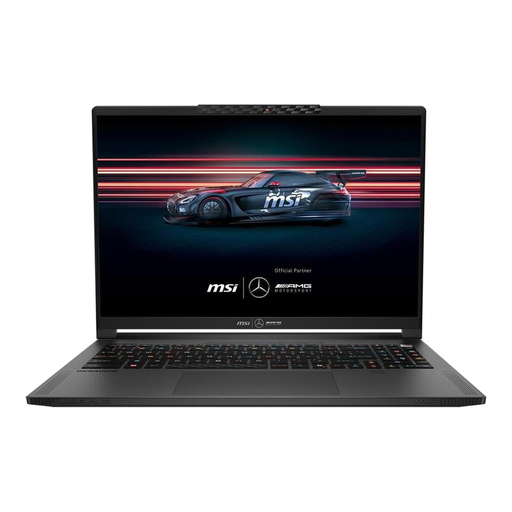 No image available
The listed 32 GB of RAM may be useful for regular 3D work; still, check that the specifications suit the software version you use.
The product description lists a 16-inch QHD+ OLED display, a Ryzen AI 9 370, 32 GB of RAM, a 2 TB SSD, an RTX 5070 and Windows 11.
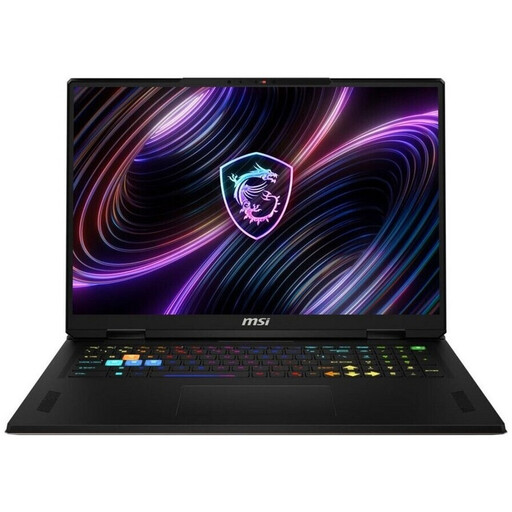 No image available
The product description lists 32 GB of RAM and 12 GB of graphics memory; for regular 3D work, consider the exact software version and its requirements. The 18-inch format takes up more room at a shared desk, and the listed weight is 3.6 kg.
Other specifications listed in the product description include a QHD+ display with a 240 Hz refresh rate, an Intel Core Ultra 9 275HX, a 1 TB SSD and Windows 11 Home.
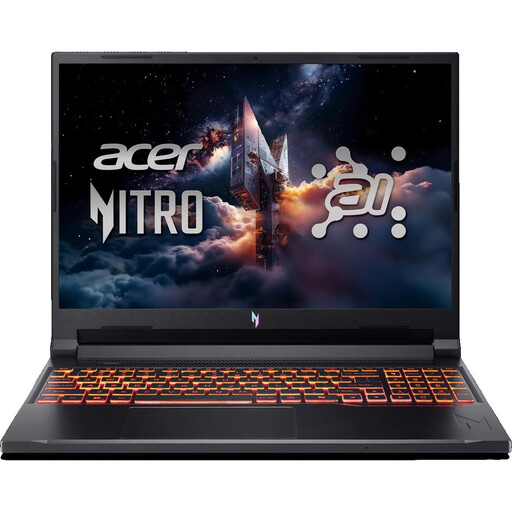 No image available
With the listed 16 GB of RAM, check whether the specifications meet the recommendations for your software version if you regularly use Blender or Unreal Engine. Also note the listed US keyboard layout.
The product description lists a 16-inch screen, 16 GB of RAM, a 1 TB SSD, an RTX 5060 and Windows 11 Home.
 No image available
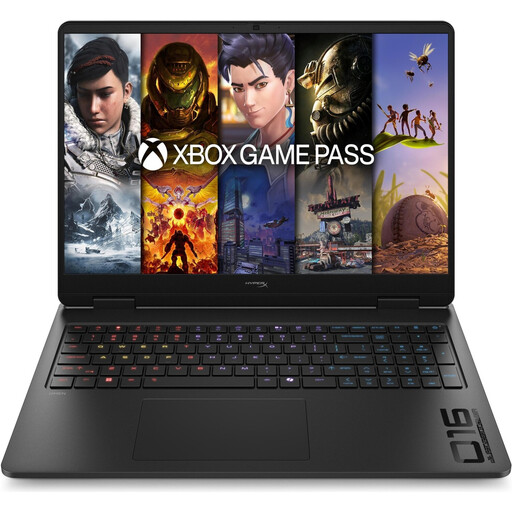
The product description lists 16 GB of RAM. If you regularly use Blender or Unreal Engine, compare these specifications with the recommendations for the software version you use.
Other listed specifications include a 16-inch QHD display, a 1 TB SSD and Windows 11 Home.
No. The description of an online map editor alone doesn’t tell you what hardware you need. Check the requirements of the editor you actually use; if you also use 3D applications, their own recommendations are what matter.
Allow room for the power supply and unobstructed ventilation openings, and check that your monitor and peripherals are compatible with the ports on the exact variant. A quieter operating mode may reduce performance and doesn’t guarantee a particular noise level for that model.
Before buying, check the operating system listed against the full model number: HP lists both a Windows and a FreeDOS variant among the OMEN 16 models considered here. The Verbraucherzentrale distinguishes between your statutory rights against the seller and a voluntary guarantee. For online orders, it generally states that you have a 14-day right to cancel from the date of delivery; check separately for any exceptions.
As the German Federal Network Agency explains, CE marking is required for products covered by the relevant EU harmonisation legislation. For radio equipment, the European Commission outlines requirements including safety and electromagnetic compatibility. A CE mark is not an independent quality endorsement and doesn’t prove that a product is suitable for map-making.