Choose your laptop based on the games you actually play and the full specification, not just the graphics card name. For a home-office desk, fan noise, screen size and the right ports matter too. A larger display could replace a second monitor, but it takes up more space, and test results for a different model variant may not apply.
Who this laptop could suit
Gamers with specific titles in mind
If you mainly want to play particular role-playing or tactical games, compare their requirements with the laptop’s full specification and your preferred settings. The genre alone doesn’t tell you how well a specific device will perform.
People working at a shared desk
If you also use the space for long periods of screen-based work, take fan noise and ports for separate input devices into account. Noise levels vary depending on the device and operating mode.
Gamers without a second monitor
If you want to fit both work and play onto the built-in display, you’ll need to weigh screen space against the room available on your desk. Manufacturers list configurations with both 15.1-inch and 18-inch displays, including models from Lenovo and ASUS; this doesn’t establish an overall ranking.
What to look for when buying
First, check that the full specification suits your games. Then consider noise levels, your workspace and what’s included, based on how you’ll use the laptop day to day.
| Buying consideration |
What to check |
Who it matters most to |
| Game requirements and graphics card |
Compare the requirements of the games you play with the operating system, processor, graphics card, RAM and available storage. NVIDIA lists a GPU subsystem power of 45 to 100 W for the RTX 5060 Laptop GPU; ASUS’s figure of 115 W for one variant includes Dynamic Boost, so it isn’t a directly comparable measurement. |
If I want to play my chosen games at my preferred settings, I check the full specification rather than just the GPU name. For around 33% of consumers, suitability for their games is the top buying priority. |
| Fan noise at your workspace |
Look for measurements of the exact variant in the operating mode you plan to use. Notebookcheck’s criticism of the noisy Turbo mode refers to the ASUS TUF Gaming A18 FA808UM-S8060W they tested, not every configuration in the range. |
If I work during the day and play in the evening, I want to know how noisy my exact variant will be in the relevant mode. For around 27% of consumers, keeping noise to a minimum comes first. |
| Display and desk space |
Compare the display size, resolution, reflections and chassis footprint with the space available on your desk. ASUS lists an 18-inch display and dimensions of 39,9 × 28,3 cm for the TUF Gaming A18 FA808UM-S8012W; Lenovo lists the Legion 5 83F1004BGE with a 15.1-inch display. For longer work sessions, the DGUV recommends using a separate keyboard and mouse and, where possible, an external monitor. |
If I want to work and play on the built-in display, I need to weigh screen space against room for my mouse and work equipment. For around 20% of consumers, this is the main consideration. |
| Full specification |
Check the model number, operating system, RAM, SSD and included components in the specific offer. Lenovo describes the 83F1004BGE model as being supplied without an operating system; this applies to this exact configuration. |
If I want to avoid paying for a specification that doesn’t suit me, I check the full model code and what’s included. For around 20% of consumers, the overall specification is their top buying priority. |
Common buying misconceptions
-
Assuming similar model variants are identical
Different variants may have different graphics cards or come with different items. ASUS lists an RTX 5060 for the FA808UM-S8012W; the Joybuy product page for the FA808UH-S8017W lists an RTX 5050. Lenovo lists the Legion 5 83F1004BGE as being supplied without an operating system.
Before ordering, compare the full model identifier and what’s included in the specific offer.
If an operating system isn’t included, you may need to spend extra time setting one up and possibly buy a licence.
-
Applying one test result to every variant in a range
Notebookcheck’s comments on resolution and Turbo-mode noise are based on its test of the ASUS TUF Gaming A18 FA808UM-S8060W. This is not a measurement of the FA808UM-S8012W.
Check that the tested device and the variant you’re buying match exactly. Treat any findings that may apply to both with appropriate caution.
-
Assuming the laptop screen is a complete workstation
For longer periods of work, the DGUV recommends using separate input devices and, where possible, an external monitor. An 18-inch laptop also needs room on your desk.
Before buying, check the space available, the ports on the exact device and whether it’s compatible with the work equipment you already own.
A suitable monitor, separate input devices or the right adapters may take up additional space.
Key brands to consider
ASUS
The TUF Gaming A18 FA808UM-S8012W is a documented 18-inch configuration with an RTX 5060, 16 GB RAM and a 1 TB SSD. It could suit you if a large built-in display is important for your permanent workspace.
- ASUS lists HDMI 2.1 and USB4 for this variant.
- Notebookcheck’s test of a different variant, the FA808UM-S8060W, criticises its noisy Turbo mode and the resolution relative to the display size. These aren’t test results for the S8012W.
Lenovo
The Legion 5 83F1004BGE is a documented 15.1-inch example with an RTX 5060, 32 GB RAM and a 1 TB SSD, for anyone considering a smaller built-in display.
- Lenovo lists an OLED display with a resolution of 2560 × 1600 pixels for this configuration.
- This model is described as having a reflective display and no operating system. These details apply to this configuration, not all Legion laptops.
Dell Alienware
The Alienware 16 Aurora AC16250 is a configurable 16-inch option for a permanent workspace.
- Dell lists configurations including an RTX 5060 and either 16 or 32 GB RAM.
- The options and what’s included vary by configuration. Check the details of the variant you actually select; manufacturer specifications aren’t an independent performance test.
Gaming laptops at Joybuy
This selection includes gaming laptops with 16- to 18-inch displays for a permanent workspace, from more compact devices to models with a larger built-in screen.
 No image available
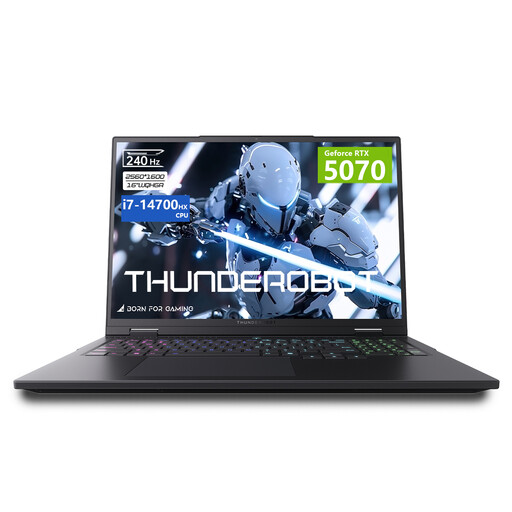
THUNDEROBOT Radiant 16
A 16-inch configuration for anyone who prefers a smaller display than those found on 18-inch models.
Intel Core i7-14700HX and NVIDIA GeForce RTX 5070.
32 GB RAM; matt 16-inch display with a 240 Hz refresh rate.
View at Joybuy
 No image available
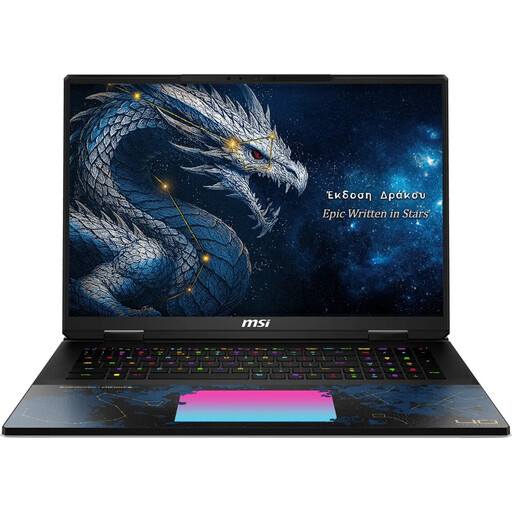
MSI Titan 18 HX Dragon Edition Draco Epic A2WJ-1218
The 18-inch display could suit you if you want a large built-in screen and have plenty of desk space.
Intel Core Ultra 9 290HX Plus and NVIDIA GeForce RTX 5090 with 24 GB.
96 GB DDR5; 4 TB SSD; UHD+ Mini-LED display with a 240 Hz refresh rate; Windows 11 Home.
View at Joybuy
 No image available
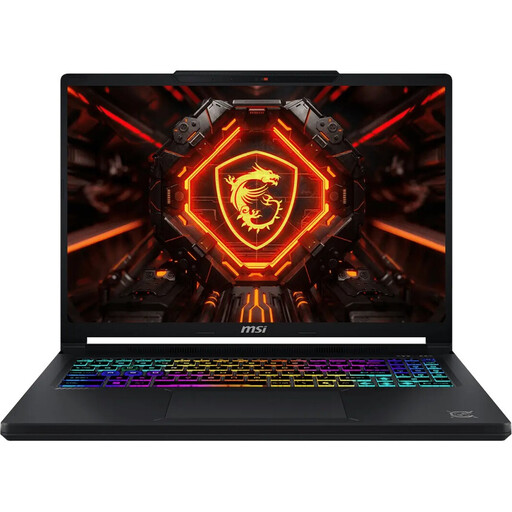
MSI Crosshair 16 Max HX E2WGXK-023
A 16-inch option if you prefer a more compact display than an 18-inch device offers.
Intel Core Ultra 9 275HX and NVIDIA GeForce RTX 5070 with 12 GB.
16 GB DDR5; 1 TB SSD; QHD+ OLED display with a 165 Hz refresh rate; Windows 11 Home.
View at Joybuy
 No image available
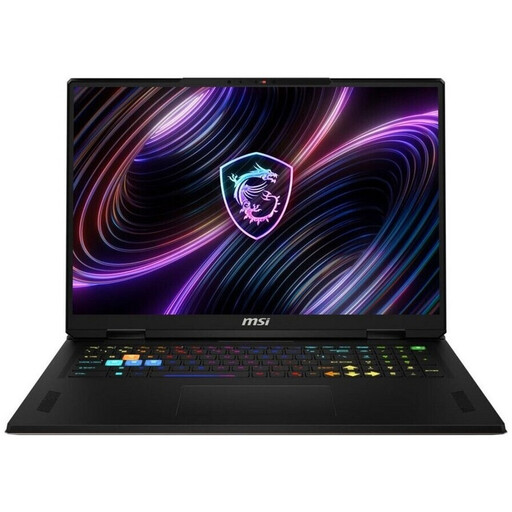
MSI Raider 18 HX A2WH-1088
The 18-inch display gives you a large built-in screen, but it also needs plenty of room at your workstation.
Intel Core Ultra 9 275HX and NVIDIA GeForce RTX 5070 Ti with 12 GB.
32 GB DDR5; 1 TB SSD; QHD+ display with a 240 Hz refresh rate; Windows 11 Home.
View at Joybuy
 No image available
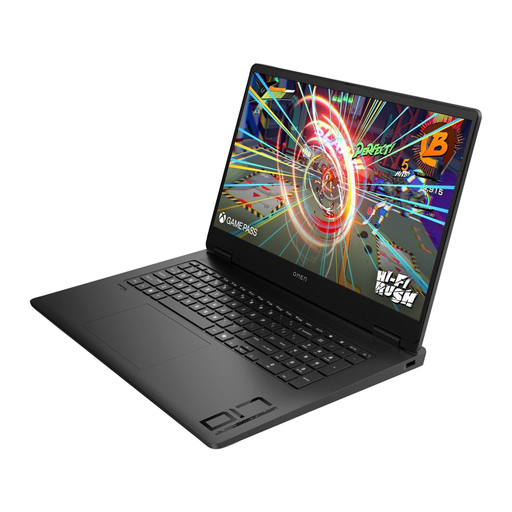
HP OMEN 17 17-db1071ng
A larger built-in display for a permanent desk setup; compare the space it takes up with your other work equipment.
17.3-inch Full HD display with a 144 Hz refresh rate; AMD Ryzen AI 7.
NVIDIA GeForce RTX 5050; 16 GB RAM; 1 TB SSD; Windows 11.
USB-C Power Delivery.
View at Joybuy
Frequently asked questions
Is the graphics card name enough to help me choose a laptop for my games?
No. Compare the requirements of each game you play with the operating system, processor, graphics card, RAM and available storage in the full specification. NVIDIA lists different power consumption figures for the RTX 5060 Laptop GPU; these alone don’t tell you what frame rate you’ll get in your game.
How should I set up my laptop for longer periods of work at the same desk?
The German Social Accident Insurance (DGUV) recommends using a separate keyboard and mouse for longer work sessions and, where possible, an external monitor. Check that the ports are compatible with your devices, and keep the ventilation openings clear in line with the manufacturer’s instructions.
Who should I contact if there’s a fault, and is a manufacturer’s warranty the same as my statutory rights?
Your statutory rights are generally against the seller; a manufacturer’s warranty is an additional voluntary promise with its own terms. According to the Verbraucherzentrale, if a product is faulty, the first remedy to consider is having it repaired or replaced.
Can I return a laptop bought online in Germany under the right to cancel?
For an eligible consumer contract, you generally have 14 days from receiving the goods to cancel; you must notify the other party to the contract. The same right doesn’t apply to an in-store purchase simply because you’ve changed your mind. The Verbraucherzentrale explains this rule in its consumer information dated 13 August 2026.
What compliance information should I check for a laptop sold in Germany?
As part of its market surveillance, the Bundesnetzagentur lists CE marking, product identification, manufacturer details, any required German-language information and the declaration of conformity among the points to check. A CE mark alone doesn’t prove that a specific, unchecked variant meets all requirements.


