Unity physics testers
If you’re testing colliders and moving objects, choose specifications to suit your project’s size and the physics settings you use. Unity notes that larger projects may need more memory.


Choose a gaming laptop to suit your engine and project size. For Unreal Engine 5 on Windows, Epic Games recommends 32 GB of RAM and at least 8 GB of graphics memory, while Unity projects may need more memory depending on their scope. At a shared desk, you’ll also need to consider the space available, unobstructed vents, the display finish and suitable ports. Manufacturer specifications don’t tell you how loud a laptop will be at your workstation. Before buying, check the CE marking and declaration of conformity for the exact variant. These relate to applicable product requirements, but aren’t proof of performance.
If you’re testing colliders and moving objects, choose specifications to suit your project’s size and the physics settings you use. Unity notes that larger projects may need more memory.
Working with Unreal Engine calls for a suitable development setup, while leaving enough room for your screen, ventilation and peripherals in a shared workspace.
If you regularly set up and pack away your laptop, check in advance that its ports, power adapter and footprint suit your workspace and existing peripherals.
First, work out which engine you use and how large your projects are. Then compare the specifications of the exact variant with your workspace and the devices you want to connect.
| Buying criterion | What to look for | Who should pay particular attention? |
|---|---|---|
| Engine and memory | Check the engine version, project size, RAM, graphics memory and operating system for the exact variant. For Unreal Engine 5 on Windows, Epic Games recommends 32 GB of RAM and at least 8 GB of graphics memory. Unity notes that more complex projects may need additional memory. | If I run physics tests in a particular engine, I want to choose specifications to suit my project rather than relying on a broad GPU category. Around 33% of consumers put their engine’s requirements first. |
| Desk space and setup | Measure the space available for the laptop, power adapter and cables, and check where the vents are. Performance profiles don’t tell you how loud the exact variant is. | If I share a desk, the laptop needs to fit in the space available without blocking its ventilation. Around 27% of consumers prioritise shared workspace. |
| Graphics and display | Match the graphics memory and target resolution to your test scenes. The refresh rate and display resolution alone don’t tell you how quickly physics simulations will run. | If I want to assess my test scenes visually, I look for a display that suits the task without confusing display specifications with the accuracy of collision calculations. Around 20% of consumers prioritise visual previews. |
| Ports and setup | Compare the ports on the exact variant with your monitor, network and input devices. Also check the operating system, power adapter and compatibility with any dock you might use. | If I change workspaces often, I want to connect my existing peripherals without unnecessary rearranging. Around 20% of consumers prioritise ports and an easy setup and pack-up. |
Refresh rate describes the display. Unity, on the other hand, explains the workload involved in collision detection in terms of physics settings. Some continuous modes can put more strain on the CPU.
Start by checking your engine, test scenes and physics mode. Then assess the display separately to see whether it suits your previews.
RAM and the operating system can vary between versions. The documented Lenovo 83F1004BGE variant is listed with no operating system and 32 GB of RAM; the ASUS FA608UM-RV138W variant is listed with 16 GB of RAM. For Unreal Engine 5 on Windows, Epic Games recommends 32 GB.
Before buying, compare the full model number, installed memory, operating system and the terms for any possible upgrade.
Depending on the variant, you may need to budget separately for an operating system or a memory upgrade. Check in advance that you can get the configuration you need.
Port lists, power supply and what’s included in the box are different things. All can affect how you set up the laptop at a shared desk.
For the exact configuration, check which power adapter is included and whether your existing peripherals are compatible with its ports and power supply.
For the Nitro V 16 AI ANV16-61 variant with reference NH.QUEEG.00M, Acer lists 32 GB of RAM, an RTX 5060 and a matte 16-inch display.
Lenovo lists the Legion 5 83F1004BGE variant with 32 GB of RAM, 8 GB of graphics memory and a glossy 15.1-inch OLED display.
For the TUF Gaming A16 FA608UM-RV138W, ASUS lists Windows 11 Home, USB4, HDMI 2.1 and RJ45 LAN.
Dell offers the Alienware 16 Aurora AC16250 in configurations that include an RTX 5060 and an option with 32 GB of RAM.
The Joybuy laptops below offer a range of RAM, graphics and display configurations for development work with Unity or Unreal Engine. Compare the specifications of the exact variant with your engine, project and available space.
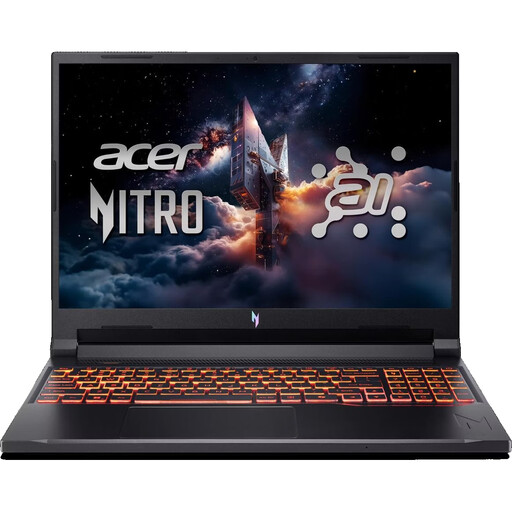 No image available
This variant is worth considering for Unreal Engine 5 on Windows if you’re following Epic’s memory recommendations: the product title lists 32 GB of RAM and 8 GB of graphics memory.
16-inch WUXGA display with 180 Hz; AMD Ryzen 7 260, RTX 5070, 1 TB SSD, Wi-Fi 6E and Windows 11 Home.
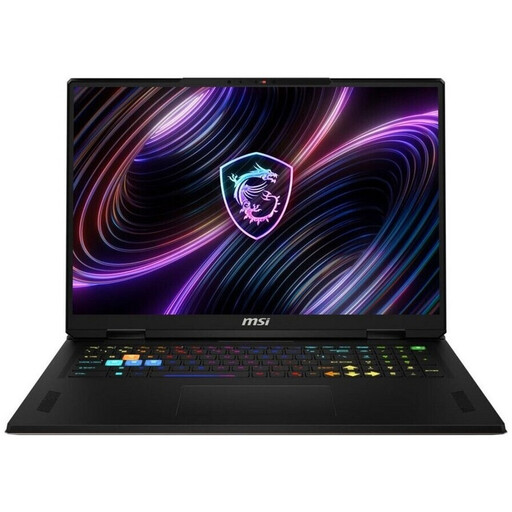 No image available
This variant comes with 32 GB of RAM and 12 GB of graphics memory, making it worth comparing with Epic’s recommendations for Unreal Engine 5 on Windows. Check that the 18-inch display will fit on your shared desk.
Intel Core Ultra 9 275HX, RTX 5070 Ti, 1 TB SSD, QHD+ display with 240 Hz and Windows 11 Home.
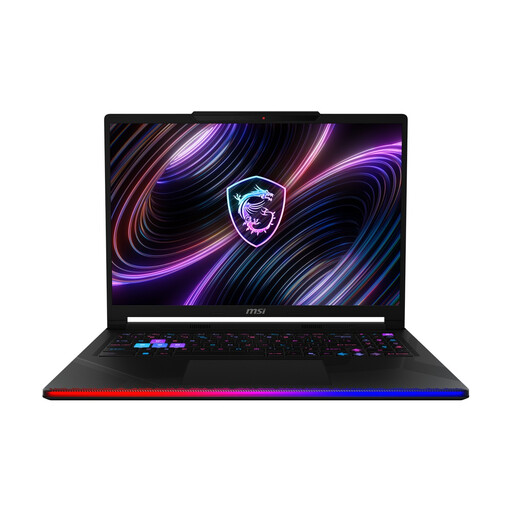 No image available
For Unreal Engine 5 on Windows, the product title lists 32 GB of RAM. Also check the graphics memory and the requirements of your specific projects.
16-inch OLED WQXGA display, Intel Core Ultra 9 290HX, RTX 5090, 2 TB SSD and Windows 11 Home.
 No image available
This variant may suit Unity-focused testing if its RAM is enough for your project size; Unity notes that larger projects may need more. For Unreal Engine 5 on Windows, its listed 16 GB of RAM is below Epic’s 32 GB recommendation.
14.5-inch WUXGA display with 120 Hz, Ryzen AI 7 350, RTX 5050 with 8 GB, 1 TB SSD and Windows 11 Pro.
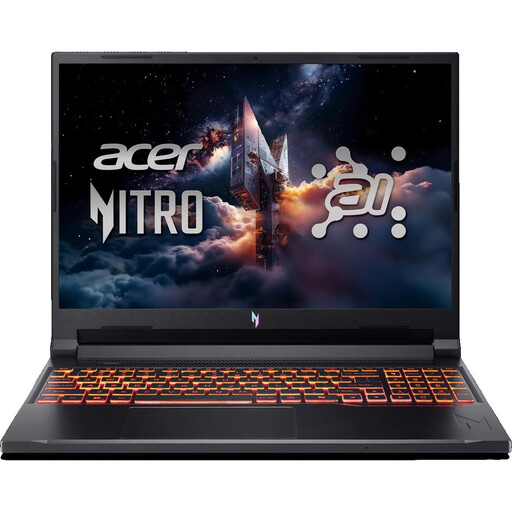 No image available
For Unity-focused collision testing, assess this variant against the size of your project. Its listed 16 GB of RAM is below Epic’s 32 GB recommendation for Unreal Engine 5 on Windows.
16-inch WQXGA display with 180 Hz, RTX 5060 with 8 GB, 1 TB SSD and Windows 11 Home.
No. The graphics card alone isn’t enough to judge a laptop. Unity says RAM requirements depend on the project and notes that continuous collision detection can put more strain on the CPU. Check your specific scene and its physics settings.
First, check the discrete mode. If fast-moving objects are passing through others, consider a suitable continuous mode. Unity notes that continuous modes can increase CPU load, so use them selectively and check how they affect your project.
Measure the space needed for the laptop, power adapter and cables, and keep the vents unobstructed. Check that the ports on the exact variant suit your monitor and network. A single data port doesn’t guarantee that a dock will provide enough power for development work.
For consumer purchases in the EU, you generally have statutory rights if goods are faulty for at least two years from receipt. The European Union distinguishes these rights from a voluntary manufacturer’s warranty. Cancelling an online purchase, on the other hand, is a return without needing to prove a fault. In Germany, you can usually do this within 14 days; tell the retailer that you wish to cancel.
No. For products covered by the rules, the manufacturer uses the CE marking to declare that the product meets applicable EU requirements; it isn’t proof of performance. Check the marking and related information for the exact laptop variant on offer separately from its RAM, graphics memory and engine requirements.