
Lieferung heute & morgen

Qualitätsgarantie

Willkommens-Angebote freischalten: KOSTENLOSE Lieferung | Bis zu 80 % RABATT | Kostenlose 30-Tage-JoyPlus-Testphase
App herunterladen
Designing a gaming setup or streaming background requires more than just powerful hardware. The right lighting is crucial for creating an immersive atmosphere and giving your space a personal, aesthetic touch. Gaming LED Panels and RGB wall lights have emerged as a popular solution. However, the market offers a vast array of options, which can make choosing difficult.
This article serves as a practical guide. It's designed to help you understand the functionality and key features of modular wall lighting, so you can make an informed decision that suits your style and needs.
Before you decide on a product, several technical and design aspects should be considered. These criteria will help you find the perfect lighting for your gaming room.
One of the biggest advantages of modular wall light systems is their flexibility. The panels are available in various shapes, most commonly as LED triangles or hexagons.
Modern smart light panels offer far more than just static light. Their control options are a key differentiator.
The quality of the LEDs themselves is crucial for the visual experience. Pay attention to the specified colour palette and available effects. High-quality panels provide uniform illumination without visible hotspots and deliver precise colour representation across the entire RGB spectrum. Features like dimmable brightness and adjustable colour temperature (from cool to warm white) increase their versatility for everyday use beyond gaming.
Here, we present a few products that take different approaches to creating atmospheric lighting.
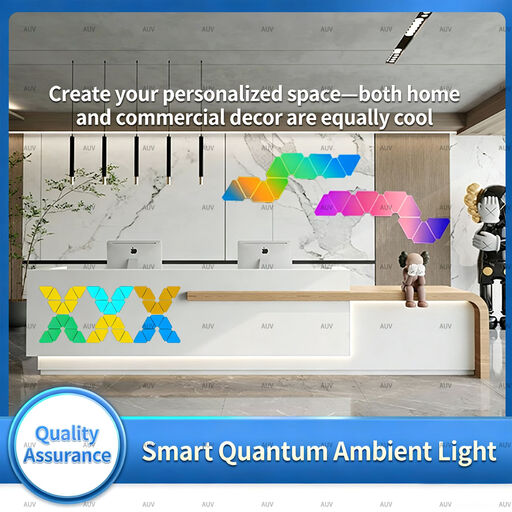
Why It Stands Out: This set is a classic example of gaming LED panels. It combines the popular triangle shape with extensive smart features, providing a solid foundation for creative wall design. Control via app and remote offers flexible customisation.
Pros:
Who It's For: Ideal for gamers and content creators looking for dynamic, customisable wall lighting as a centrepiece for their setup. It's also an interesting Nanoleaf alternative for anyone wanting a modular light system with app control and music sync.
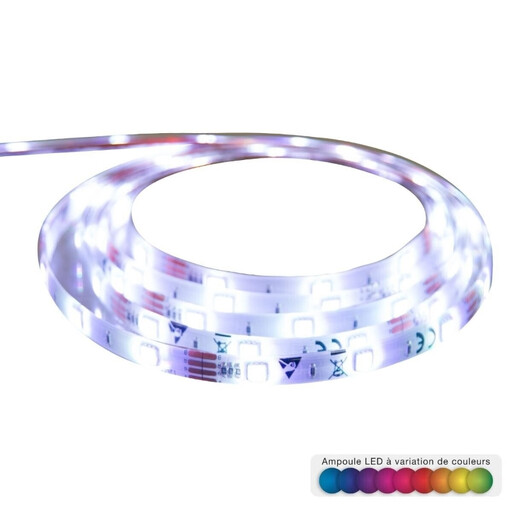
Why It Stands Out: This 5-metre LED strip from Atmosphera offers a straightforward solution for indirect accent lighting. Instead of a wall installation, this product focuses on tracing the contours of furniture, monitors, or architectural elements.
Pros:
Who It's For: For users who prefer subtle, indirect lighting to add depth to their space. It's a practical addition to an existing setup for highlighting edges and contours rather than creating a bold statement wall piece.
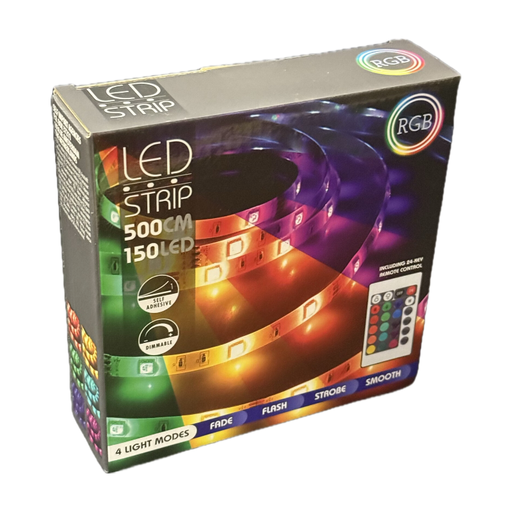
Why It Stands Out: This kit relies on a stable 24V power supply, which, according to the manufacturer, ensures more consistent brightness and colour uniformity across the entire 5-metre length of the strip. It uses 5050 SMD LEDs, known for their brightness and colour mixing capabilities.
Pros:
Who It's For: For users who value reliable and bright accent lighting for areas like under-cabinet kitchen lighting, home bars, or along ceiling coving. Its stable performance makes it a great choice for installations where uniform illumination is important.
The right lighting can set the mood for any occasion. If you're thinking beyond your gaming room and looking for inspiration for seasonal decorations, such as for the holidays, you can find more options in our decorative lighting categories.
Discover our selection of Christmas front entry decorations
A good Nanoleaf alternative offers similar core features like modularity, app control, and music sync. Products like the triangular LED panels featured above allow users to create their own designs on the wall and control them dynamically via an app. The key factors are the shape of the panels (e.g., triangles, hexagons), the quality of the app, and the reliability of the lighting effects.
LED panels with music sync typically use one of two methods. Either a small microphone is built directly into the control unit or one of the panels, which picks up ambient sounds. Alternatively, synchronisation can be handled through the smartphone app, which uses the phone's microphone or accesses the audio output of other apps. The software then analyses the frequency and rhythm of the music and translates them into corresponding light effects and colour changes.
Most modular wall lighting systems are designed for easy installation. Typically, the panels come with double-sided adhesive pads that are applied to the back. The process usually involves the following steps: