
Lieferung heute & morgen

Qualitätsgarantie

Willkommens-Angebote freischalten: KOSTENLOSE Lieferung | Bis zu 80 % RABATT | Kostenlose 30-Tage-JoyPlus-Testphase
App herunterladen
The right lighting can transform a gaming setup from a simple desk into an immersive command center. A well-designed gaming lighting system not only creates atmosphere but can also improve focus and reduce eye strain during long sessions. However, with a wide array of options—from modular LED panels to flexible RGB strips—making a choice can be complex.
This article serves as your guide. We'll introduce different types of smart lighting and explain the key features to look for when making your selection. Our goal is to provide you with an informed basis for designing your personal gaming space.
Before you make a decision, several technical and functional aspects should be considered. These criteria will help you find the right solution for your needs.
The most fundamental decision concerns the form of the lighting. Both options offer different design possibilities:
Modern gaming lighting is more than just a colored lamp. The smart features are often the deciding factor for a dynamic experience. Look for the following control options:
Installation should be straightforward. Most LED lights for rooms use double-sided adhesive tape for mounting. For a secure bond, it's important that the surface is clean, dry, and dust-free. There are also differences in power supply: some systems are powered by USB, which offers flexibility, while others require a dedicated power adapter for higher and more stable performance.
Here is a selection of products that cater to different needs and design preferences.
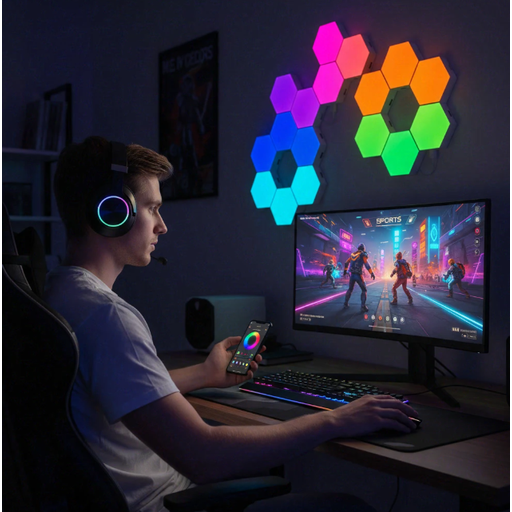
Why It Stands Out: This set is distinguished by its modular honeycomb design. The eight hexagonal panels can be connected in any pattern via their USB ports to create a custom gaming wall light display.
Advantages:
Who It's For: Creatives who want to build a central, artistic light installation on their wall and value flexible, geometric patterns.
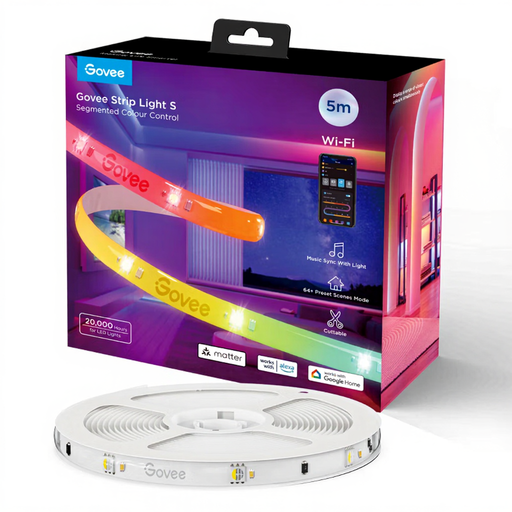
Why It Stands Out: This RGB LED strip from Govee supports the Matter standard for universal smart home compatibility. Its RGBIC technology allows multiple colors to be displayed simultaneously on a single strip, creating smooth, flowing color gradients.
Advantages:
Who It's For: Tech-savvy users who already have a smart home system and are looking for high-quality, durable accent lighting with advanced color control.
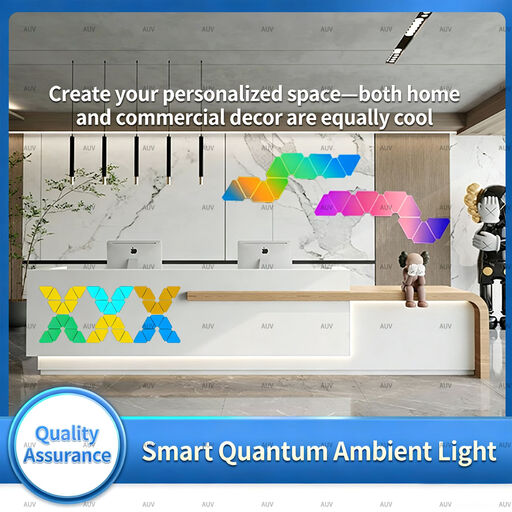
Why It Stands Out: The triangular shape of these LED panels for gaming offers an alternative to the common hexagons and enables different geometric arrangements. With over 210 pre-programmed scene modes, the system provides a huge variety of effects.
Advantages:
Who It's For: Gamers and content creators who want eye-catching gaming room decor with dynamic patterns and a large selection of preset lighting effects.
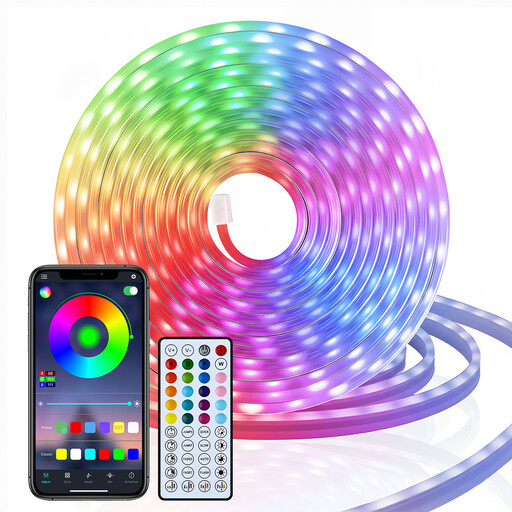
Why It Stands Out: This 10-meter light strip features a silicone coating that diffuses the light, creating a continuous, dot-free neon effect. Its high flexibility makes it ideal for creating lettering or complex shapes.
Advantages:
Who It's For: Users who want to illuminate large areas or entire rooms and prefer a smooth, modern neon look over the dotted light of conventional LED lights for rooms.
The products featured here cover common use cases for gaming and interior design. If you are looking for more specialized lighting solutions, such as for architectural accents or stairs, you can find additional options in our broader LED Step Lights category.
1. How does gaming lighting sync with music?Smart lighting with music sync typically uses a small microphone integrated into the control unit or the light strip itself. This microphone picks up ambient sound waves. Internal software then analyzes the frequency and rhythm of the music or game audio and translates this information into real-time commands for changing the LEDs' color, brightness, and speed.
2. What is the difference between RGB and RGBIC? Standard RGB LED strips can only display a single color along their entire length at one time. While they can change color, the whole strip remains uniform. RGBIC (RGB + Independent Chip) strips, on the other hand, have a dedicated control chip for each segment. This allows different sections of the strip to display different colors simultaneously, making it possible to create dynamic effects like rainbows, flowing gradients, or chasing light animations.
3. Can you combine LED panels and LED strips? Yes, combining them is highly effective for creating layered lighting. For example, you can use RGB LED strips for indirect background lighting on your desk and monitor, while LED panels for gaming serve as a decorative highlight on the wall. However, be aware that systems from different manufacturers are usually controlled via separate apps and cannot be synced directly with each other, unless they are both compatible with an overarching smart home system like Google Home or Alexa.